A hearty breakfast was delivered to our room on both mornings of our stay. It consisted of fresh fruit, bread, eggs, vegetables, juice, and tea. The Naqsh-e Jahan Square was just a few blocks from the hotel. The morning weather was lovely, so we set out on foot. There was a brief stop at the Meydoon Cafe in the alley leading to the square. The square is a center for many activities, such as riding in carriages, bicycling, kite flying, playing games, and just peacefully strolling in the sunshine and fresh air. From a street vendor Tim bought a t-shirt with an image of the Zoroastrian faravahar printed on it.
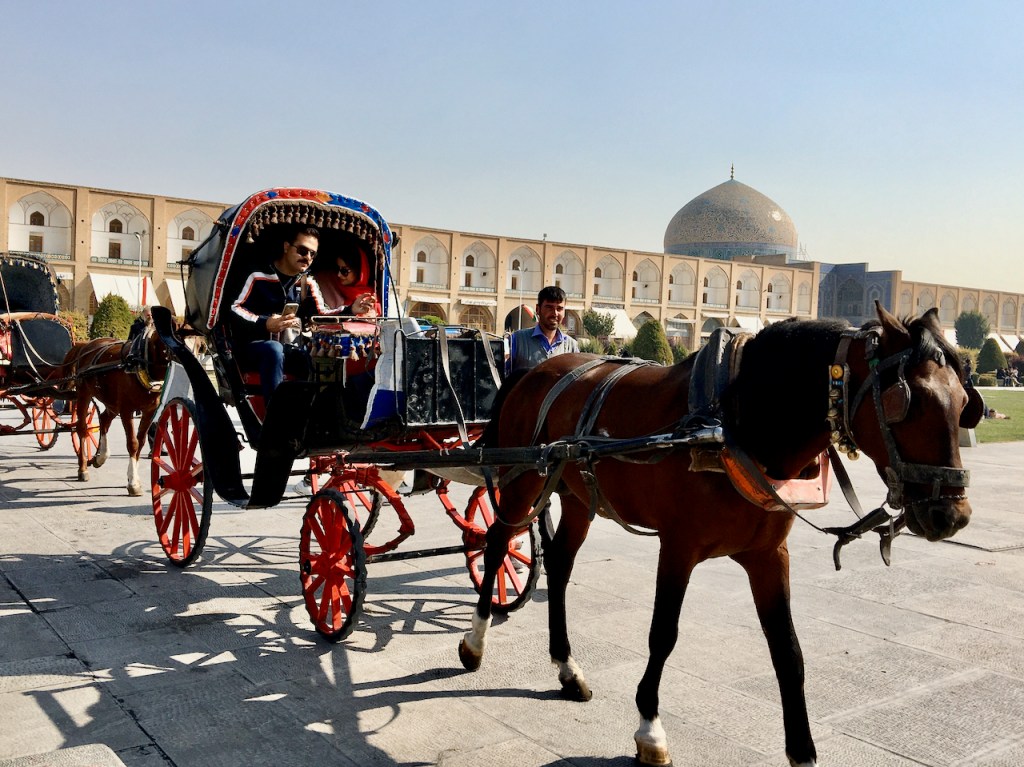
Naqsh-e Jahan Square is among the largest public squares in the world–and surely one of the most beautiful. It is about 520 feet wide and 1840 feet long, covering an area of more than 20 acres. The brief video below gives a sense of its size and scale. The video was taken from the Ali Qapu Palace on the western side of the square. Directly across from it is the Lotfallah Mosque. The entry to the Esfahan Bazaar is at the end to the left of the Lotfallah Mosque. To the right of the Lotfallah Mosque is the Imam Mosque.
From there we entered the Imam Mosque (no longer used as such) at the end of the square.
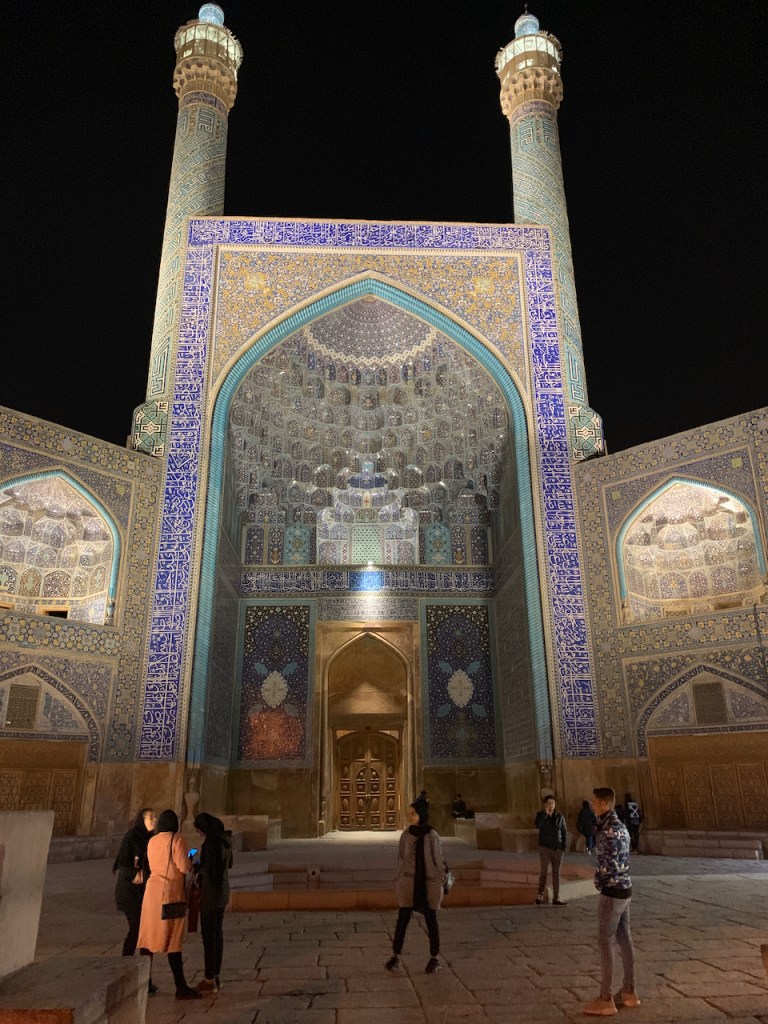
One of the iwans (portals) of Imam Mosque 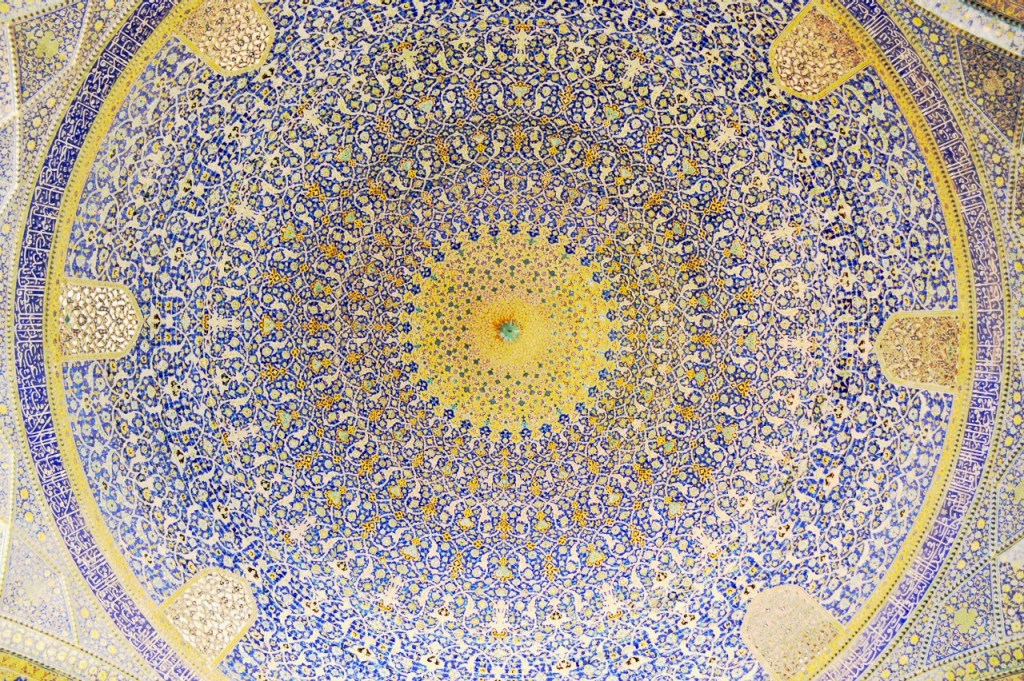
Dome of the Imam Mosque (Photo by Sheldon Ricketts)
At the far side of the square inside the mosque there was one small spot whose location was perfectly situated within the structure of the building so as to produce multiple echoes of any sound made at that spot. Nate first demonstrated this by snapping a piece of currency over the spot. Then Vahid stood on the spot and sang the call to prayer in a glorious and wonderful way.
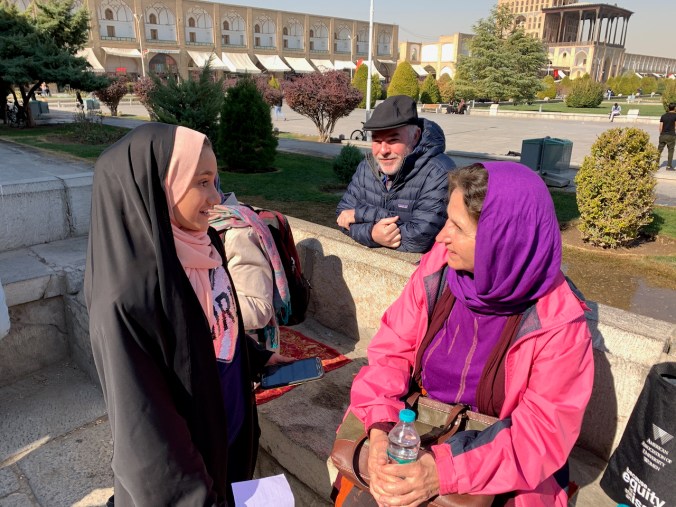
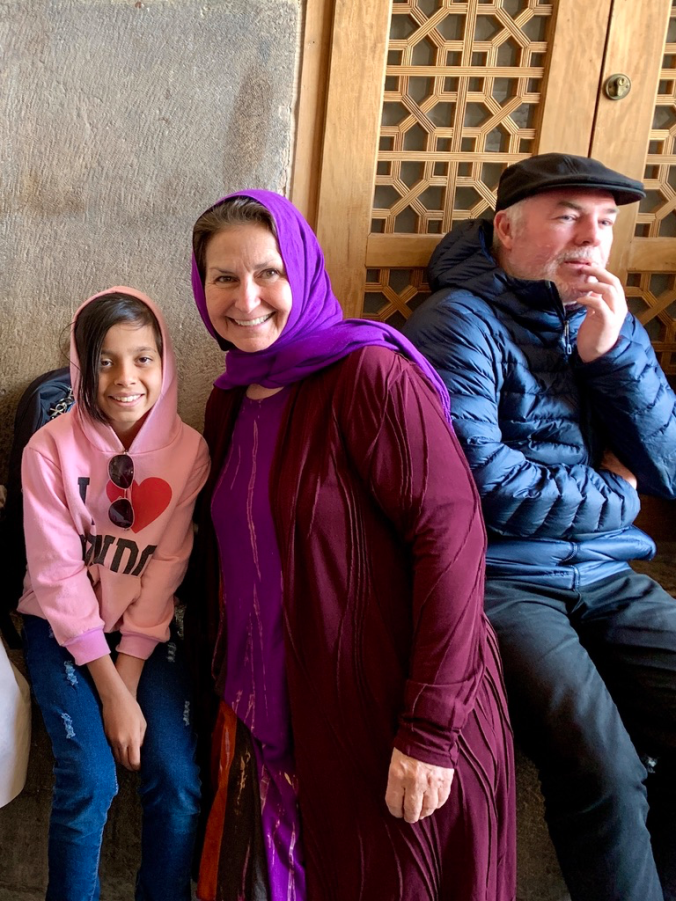
As our group was gathering outside the mosque, a little girl approached some of the women, including Suzan, to ask for help with a school assignment: she needed to interview native English speakers. Her questions were of the sort that any new language learner would use to initiate conversation. She said things such as, “Hello, my name is…,” “What is your name?” “Nice to meet you,” “Where are you from?” and “How do you like the weather in Iran?” Later that morning another young girl initiated a similar conversation. Suzan was impressed not only with the children’s language skills, but also with their parents’ willingness to allow their daughters to approach strangers in this way. She could not imagine that many American parents would encourage their daughters to speak to foreigners. She was delighted to have these conversations with young Iranian children.
We next visited the Sheikh Lotfallah Mosque on the eastern side of the square. This is the oldest of the major structures in the square, having been completed in 1619. The design and execution of the tile work inside the mosque is absolutely exquisite! Demonstrating the depth and breadth of his knowledge, Vahid delivered a nice mini-lecture on some of the iconography of the design.
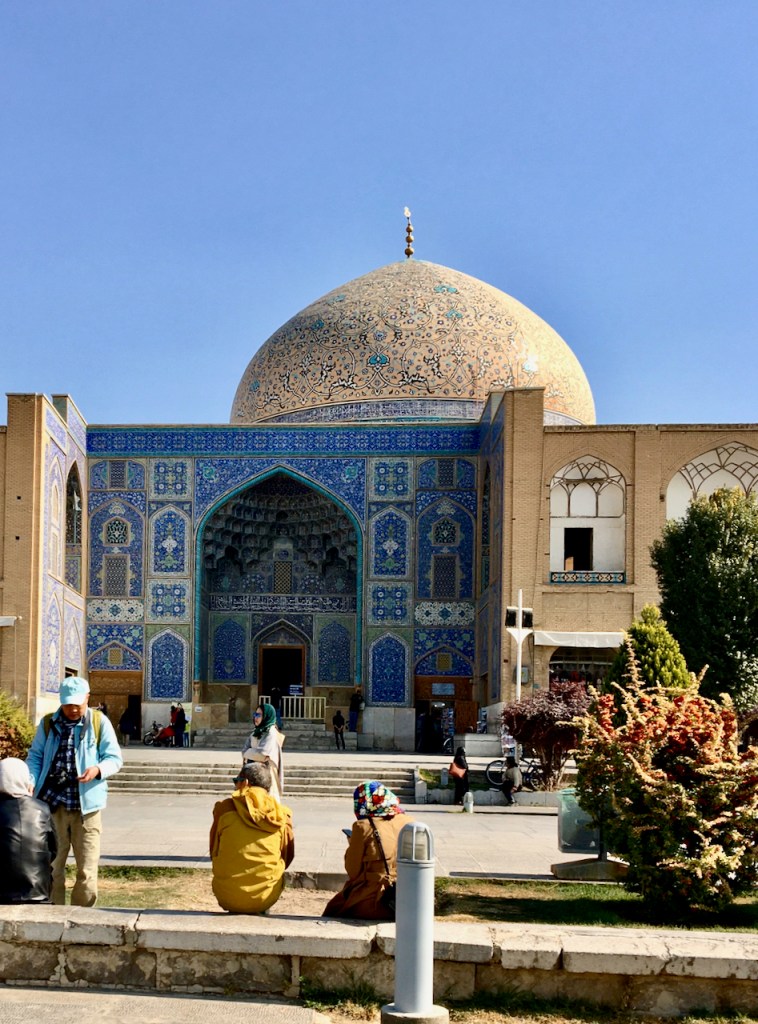
Exterior of Lotfallah Mosque 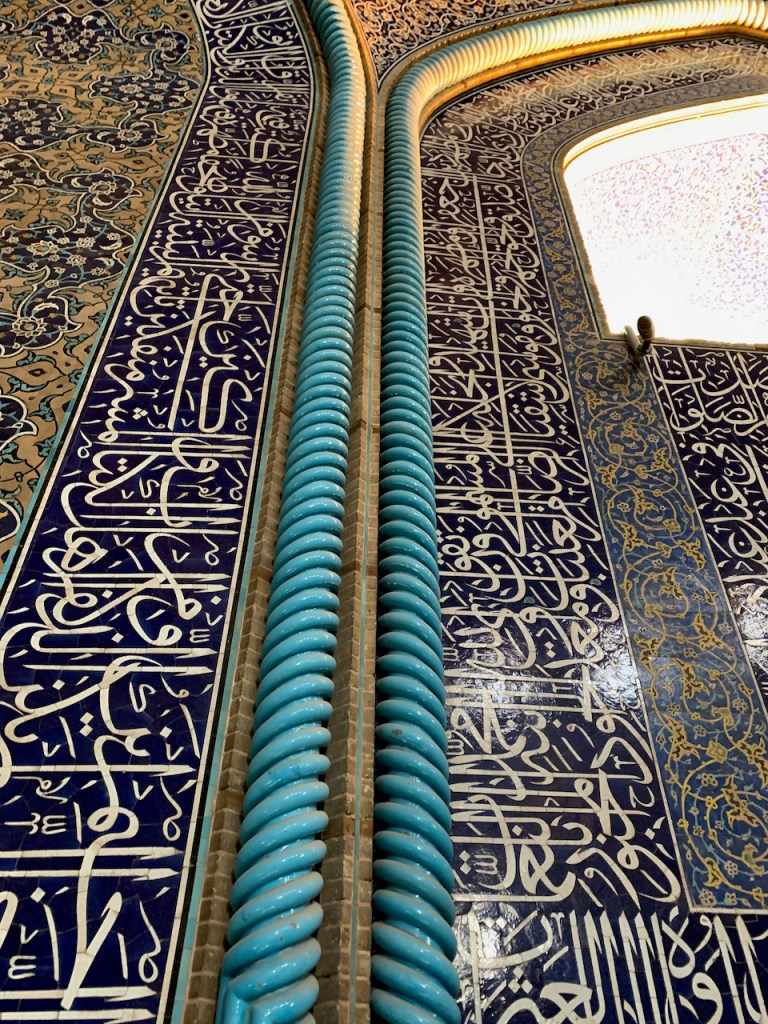
Interior stone- and tile work. The coiled columns symbolize water. 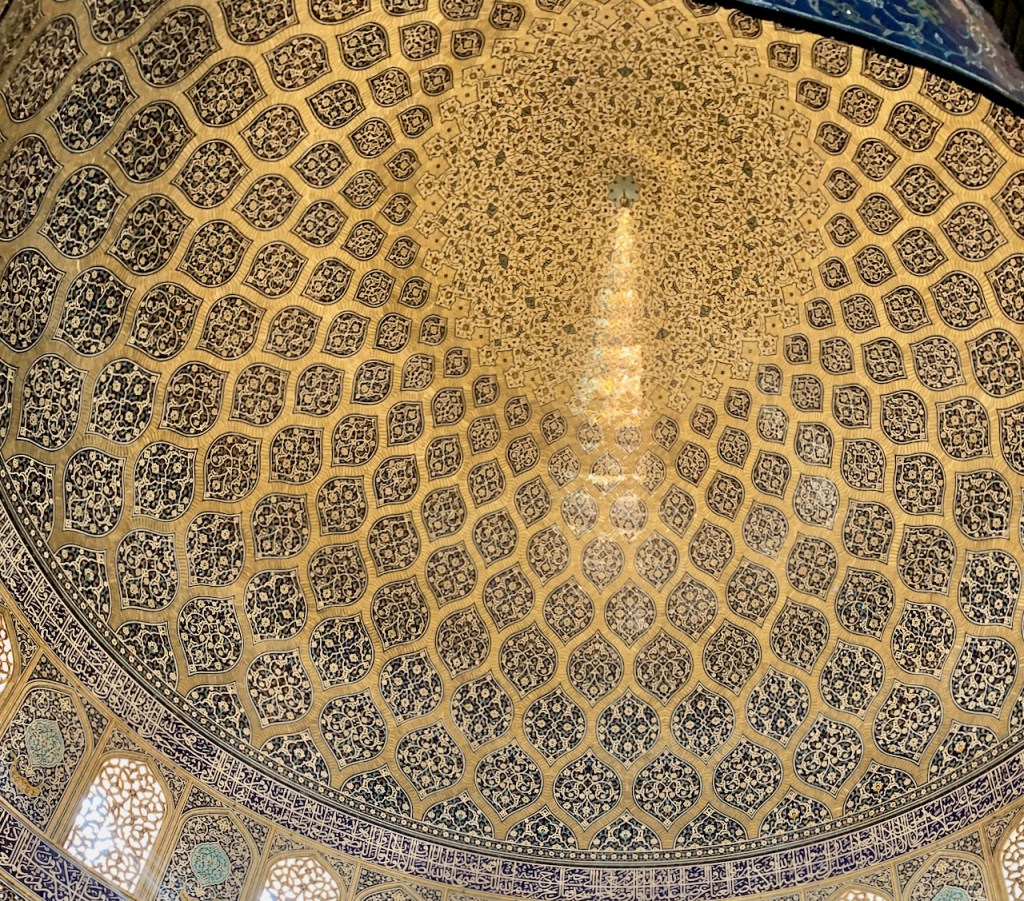
At the top of this dome is a picture of a peacock. A shaft of light forms its tail.
We then walked through part of the arcade of shops on the far side of the square from where we had entered. We stopped at a shop which sold clocks, fancy boxes, chess/backgammon boards, etc. Nate made a brief description of how some of the deccorative work was done, using tiny pieces of inlaid camel bone. We looked around and decided to buy a wall clock for our home. Vahid arranged with the owner of the store to have it sent to our hotel. We intended to ship it, but we found that shipping would cost far more than the cost of the clock itself. So we decided to carry it with us on our flights home. It arrived safely.
We crossed the square and climbed several flights of stairs up the tower of the Ali Qapu palace, which allows a great view of the entire square. It is the place from which the shahs of days gone by could survey the square. At the very top of the tower is a music room.
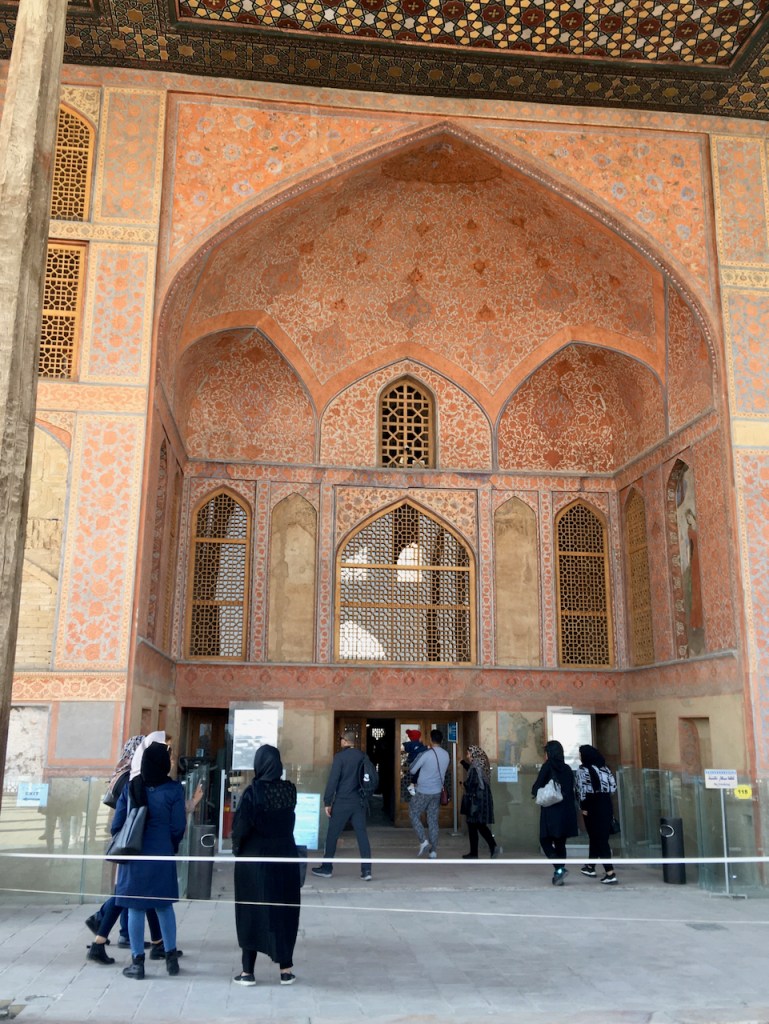
Entrance to Ali Qapu Palace 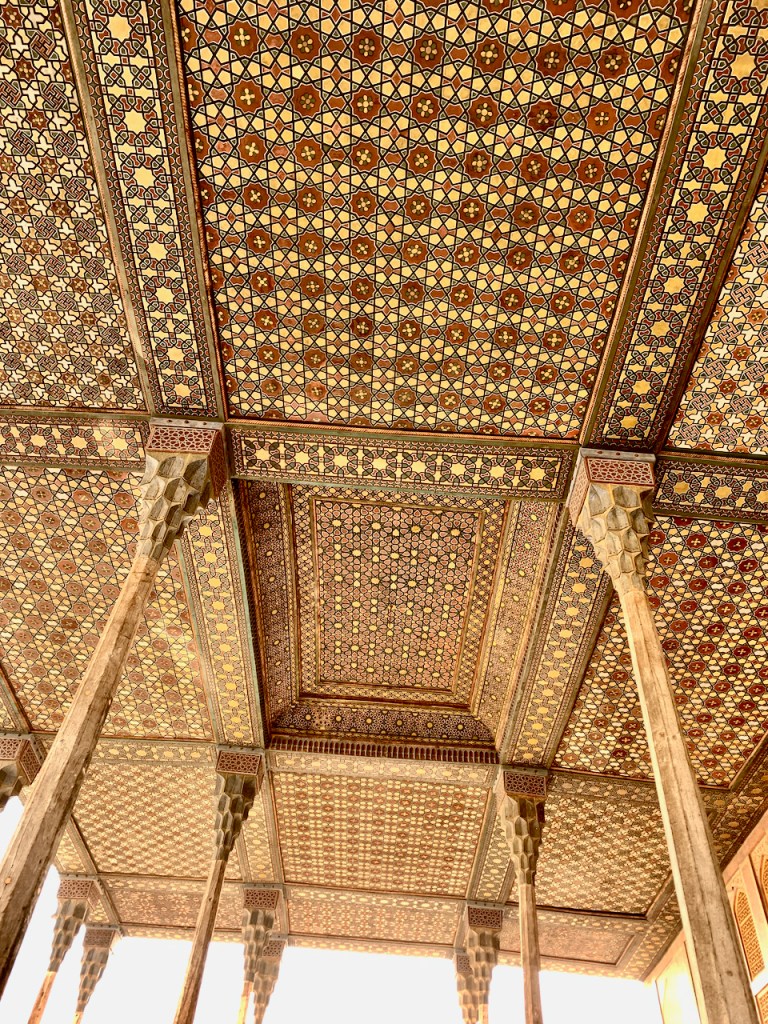
Ceiling of the balcony overlooking the square 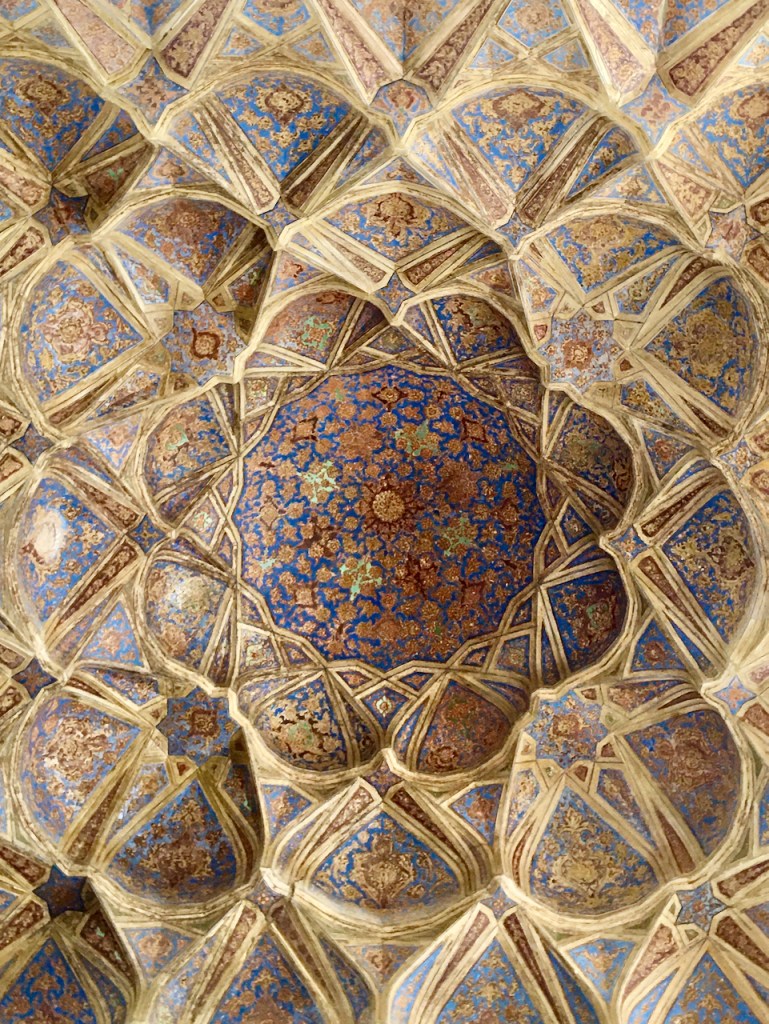
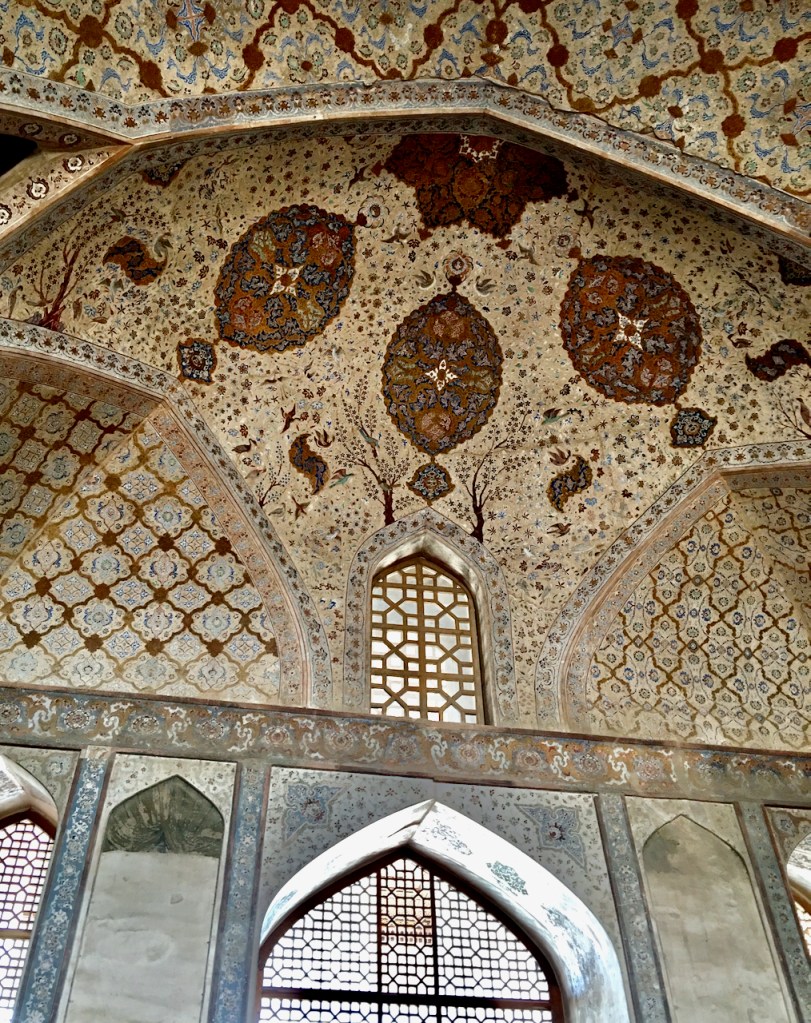
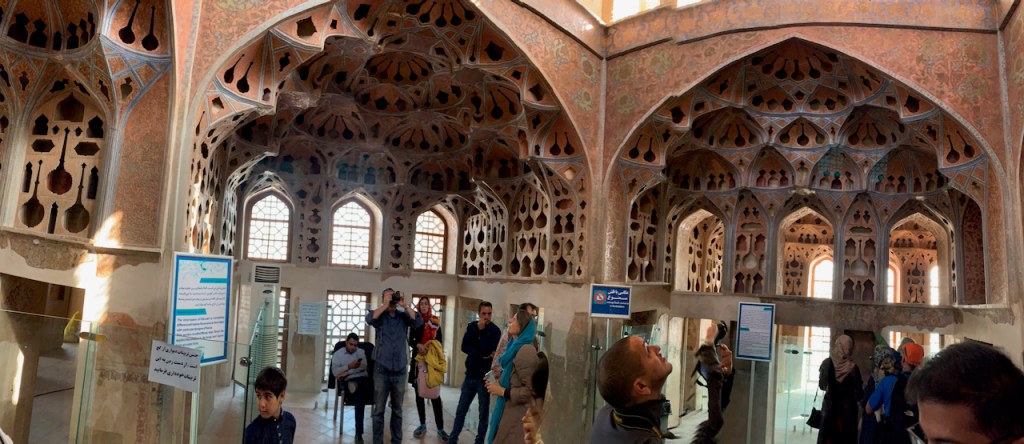
Ali Qapu Palace – Music Room. The indentations in the walls are shaped like musical instruments.
We had a delightful lunch at a nearby rooftop restaurant…
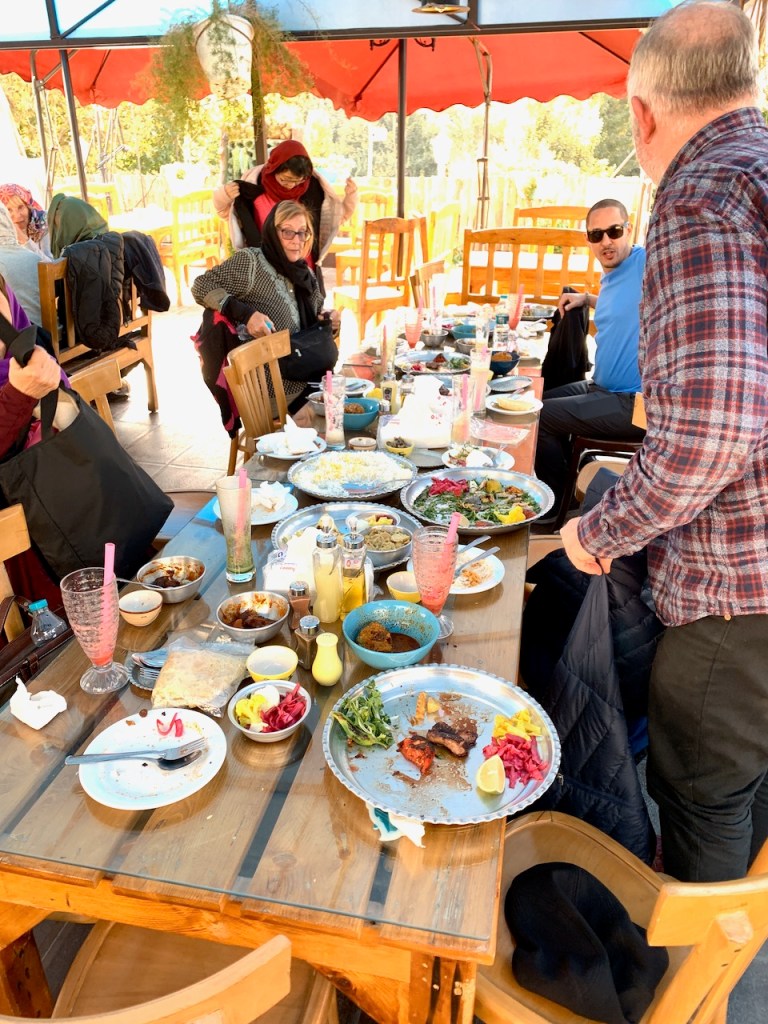
Lunch at rooftop restaurant 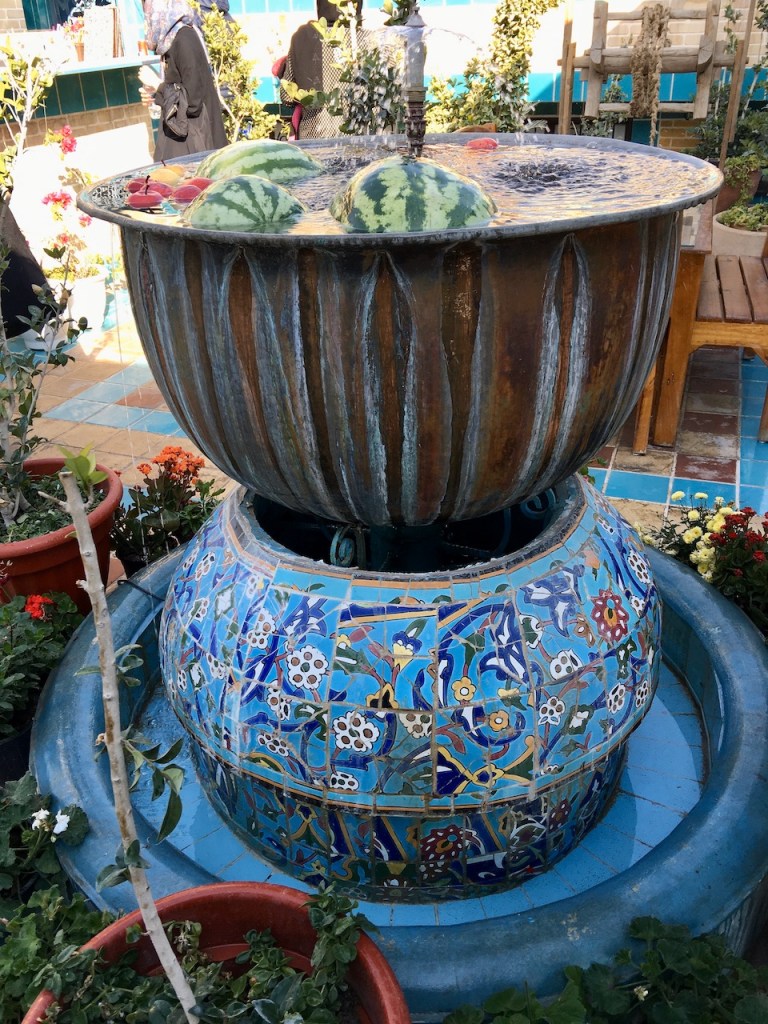
How to keep fruit cool!
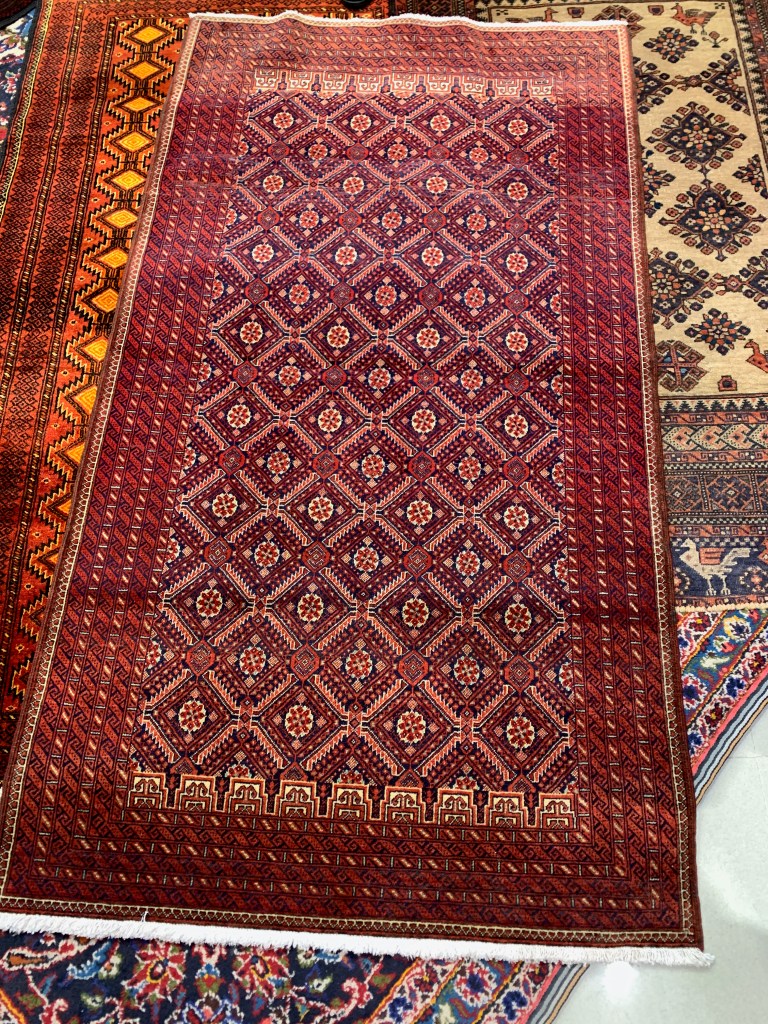
…and then we visited the Isfahan Rug shop, highly recommended by Nate and Philippa. One of the owners gave a nice, brief talk on different types of carpets and how they are made and showed examples of each. We purchased the one shown in the photo.
Our next stop was Vank Cathedral, a church built by Armenians who had been forcibly resettled to Esfahan at the time of Shah Abbas I, some 400 years ago. After the beautiful tile work in the mosques, the style of the art work in this church was very different from what we had seen in the Islamic buildings. Here the decorations were paintings of both Biblical and historical scenes of gruesome and appalling tortures. The atmosphere was dark both literally (few windows) and metaphorically. This further enhanced our appreciation for the non-representational nature of most Islamic art.
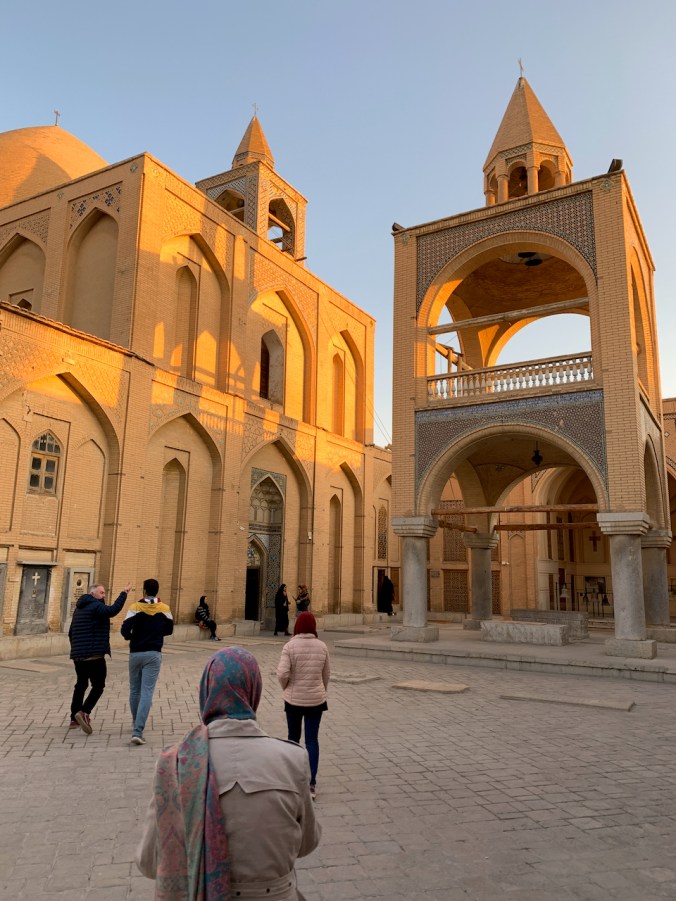
Esfahan – Vank Cathedral 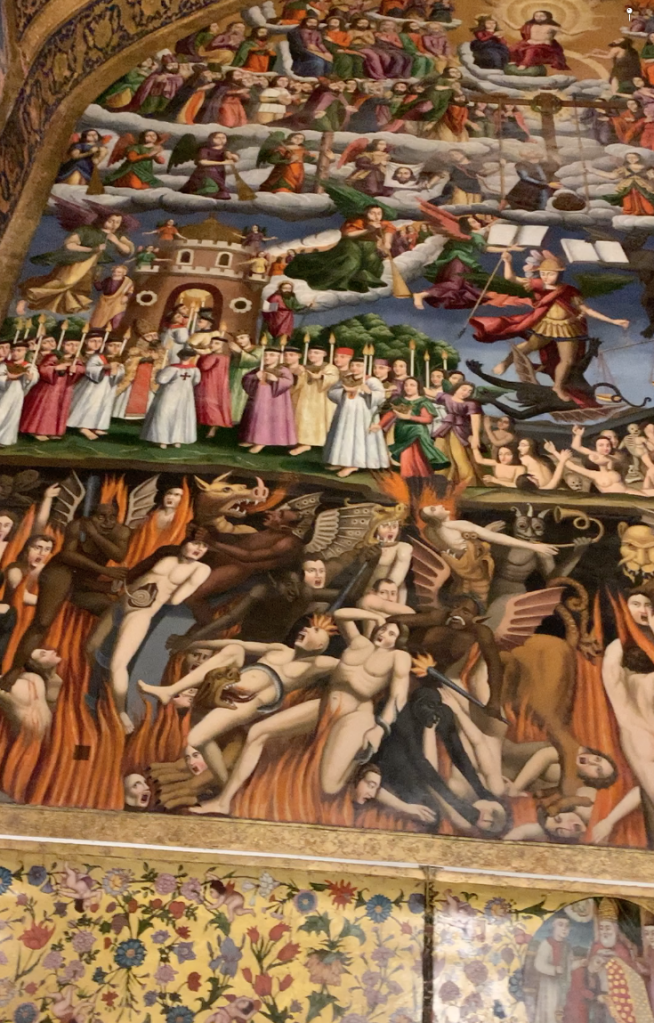
Esfahan – Vank Cathedral interior
In the early evening we visited the famous pedestrian Khaju Bridge, which crosses the Zayanderud River. With two levels, it’s not merely a way to get across the river, but also both a social gathering place and an architectural gem. Just where we began to cross the bridge we saw a group of old men sitting together on a bench, talking and laughing. The group reminded Suzan of a scene described by Ivo Andrič in his book The Bridge on the Drina.
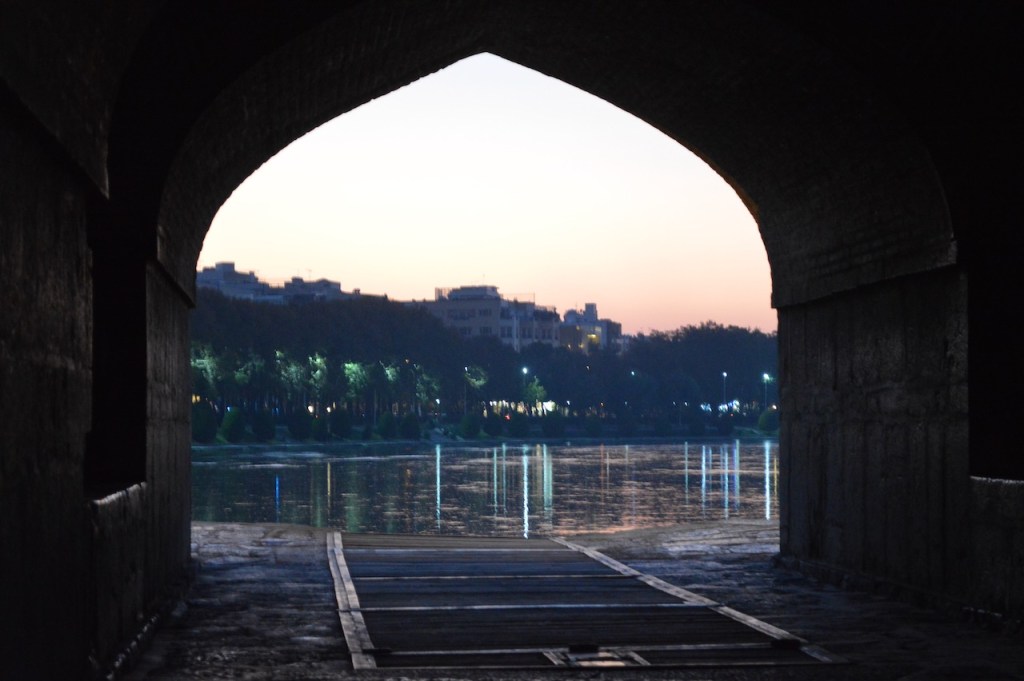
Khaju Bridge in Esfahan 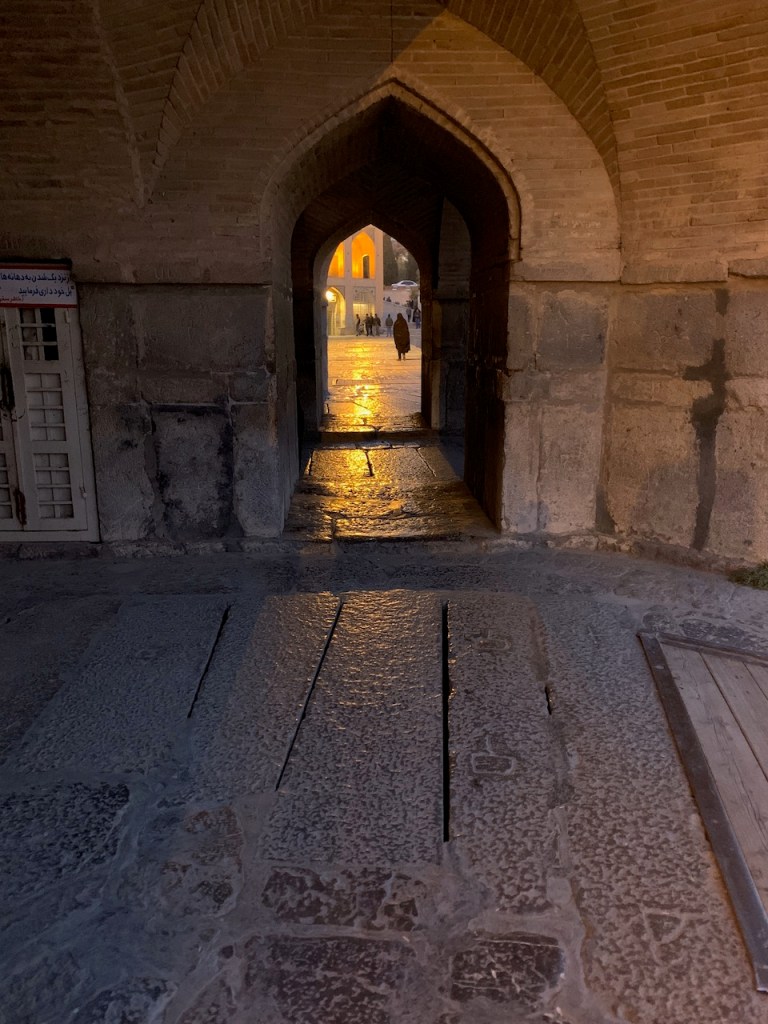
Khaju Bridge in Esfahan (Photo by Sheldon Ricketts) 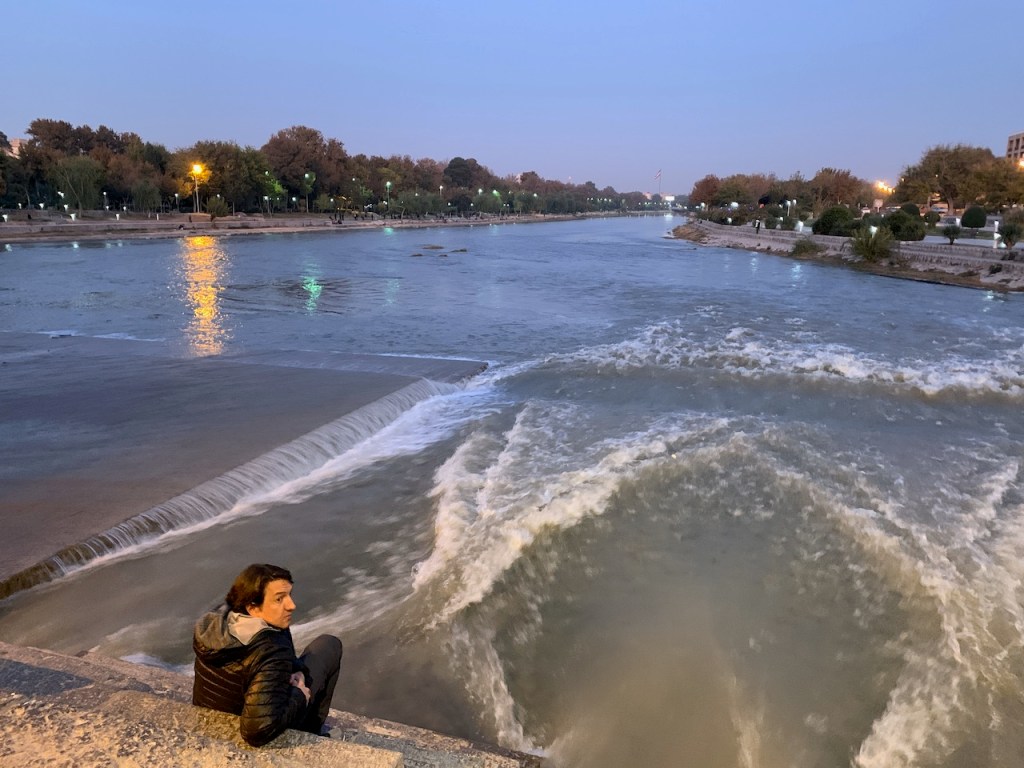
Khaju Bridge in Esfahan 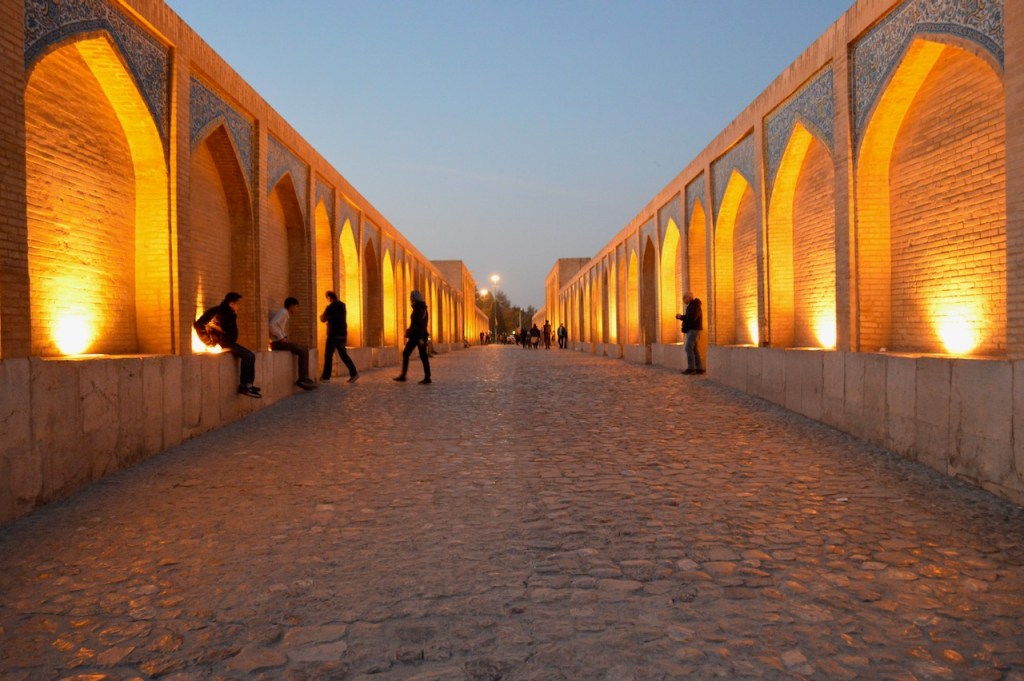
Khaju Bridge in Esfahan (Photo by Sheldon Ricketts) 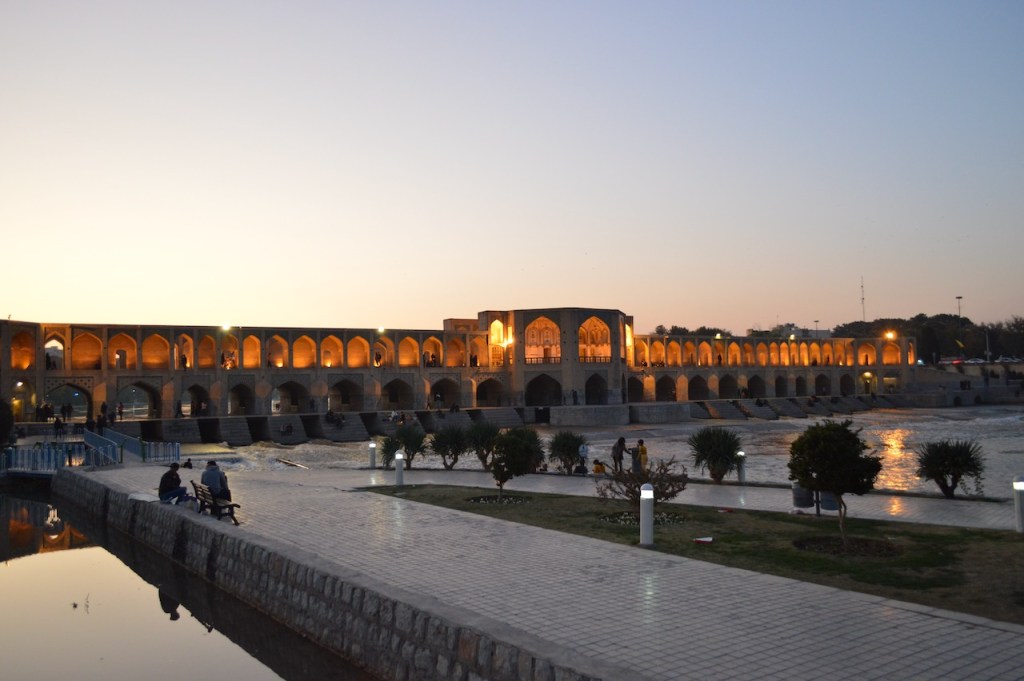
Khaju Bridge in Esfahan (Photo by Sheldon Ricketts)
In a dark passageway near the middle of the bridge we heard a group of men singing a cappella. Vahid joined them and later told us that they were singing about Autumn, when the leaves change color and Winter is coming on.
Tim went out with Nate, Philippa, and Vahid for Iranian fast food. At the Meydoon Coffee Shop Tim met a young man who imparted his great view of the world. He thinks of Esfahan Province as a village; Iran as a city; and the whole world as a country. And that we’re all just people belonging to one country. If only the rest of the world shared his attitude! Tim brought back sandwiches for himself and Suzan to eat in the hotel room. We noticed that the internet connection was intermittent–a harbinger of things to come.
 Trip to Iran - November 2019