We all assembled in the hotel lobby around 9am and headed out for a full day of sightseeing and eating Persian style. Our first stop was the notorious former US Embassy, now known as the Den of Espionage Museum (or sometimes the Garden of Anti-Arrogance). On the streetside walls there are numerous murals depicting American wrongdoing to Iran and to the rest of the world. Inside the embassy was clear, and somewhat shocking, evidence about the takeover of the embassy in 1979. The words and images vividly convey why the protesters were motivated to capture the embassy and hold hostages. It added much to our understanding of those events.
Here is a gallery of photos from the former embassy:
Inside the embassy, we saw the highly secret Faraday cage room, designed to be impervious to electronic eavesdropping. There is also a lot of 1979 vintage spy communication equipment, as well as the shredder which embassy officials used to destroy secret documents. When the revolutionaries found these shredded documents, they managed to reassemble a number of them into readable pages through sheer time and effort, a lot of it done by students. It felt absolutely amazing to be visiting this crucial historical site whose repercussions are still heavily influencing the world 40 years later. Very sobering to see the “other” side of the story.
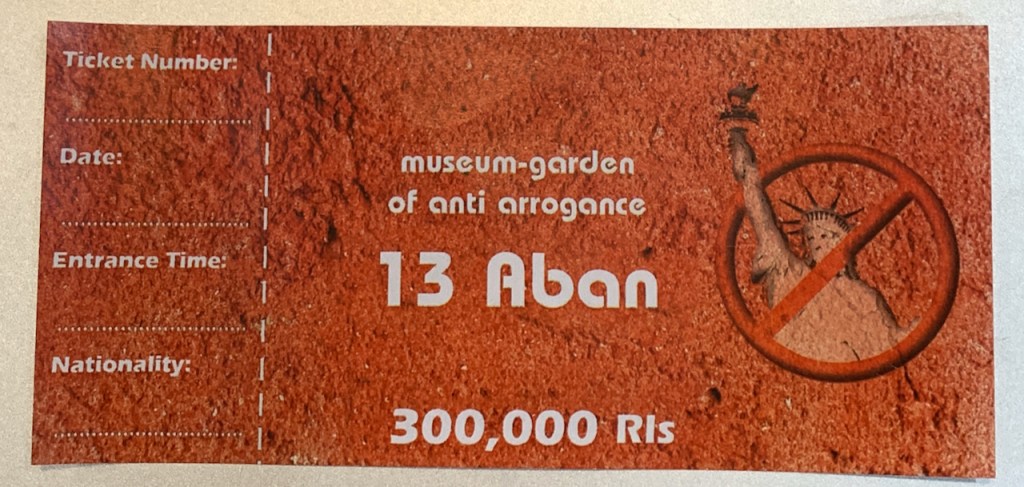
Entry ticket to former US Embassy 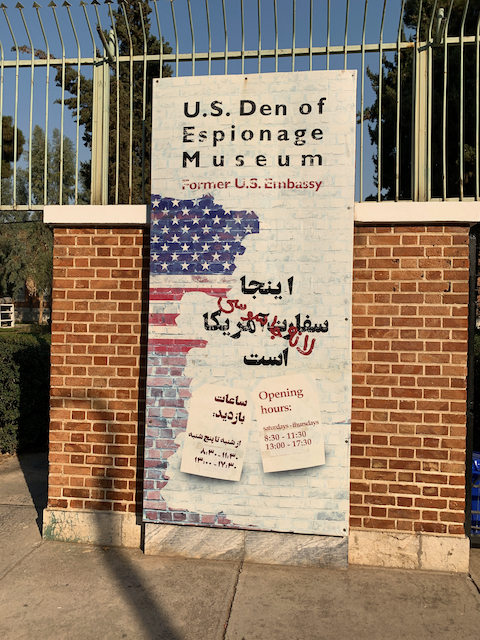
Sign at the gate 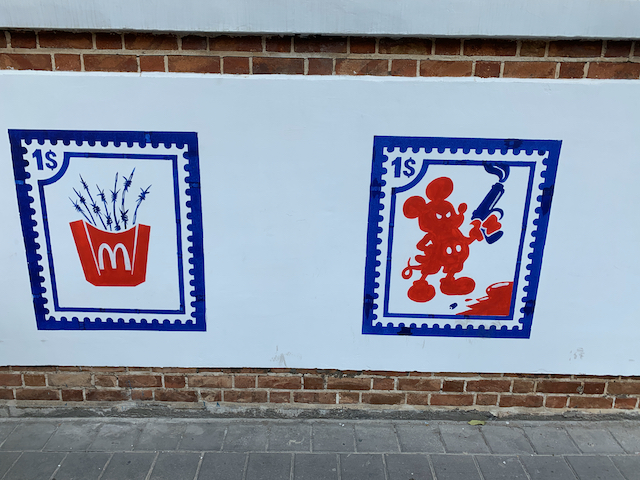
One of milder of many propaganda graphics along the sidewalk 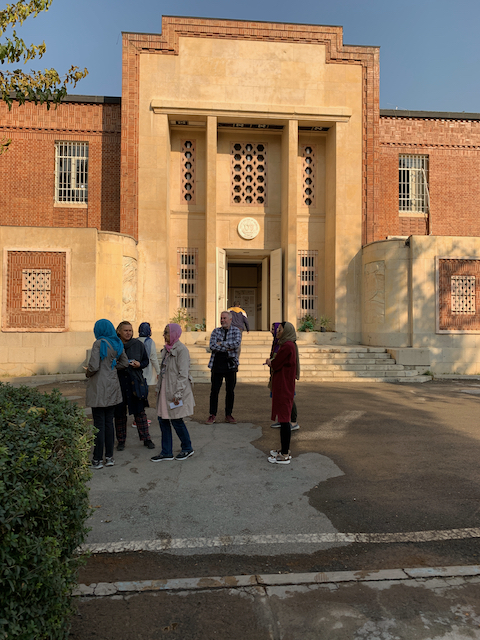
Entry to the former chancellery 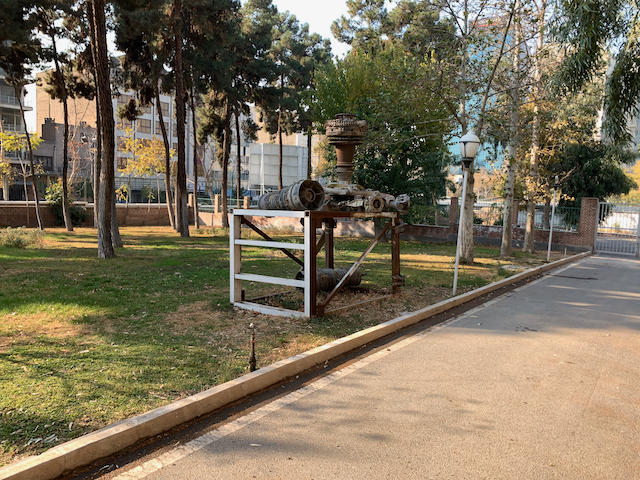
Remains of the helicopter that crashed during the failed rescue mission in 1980 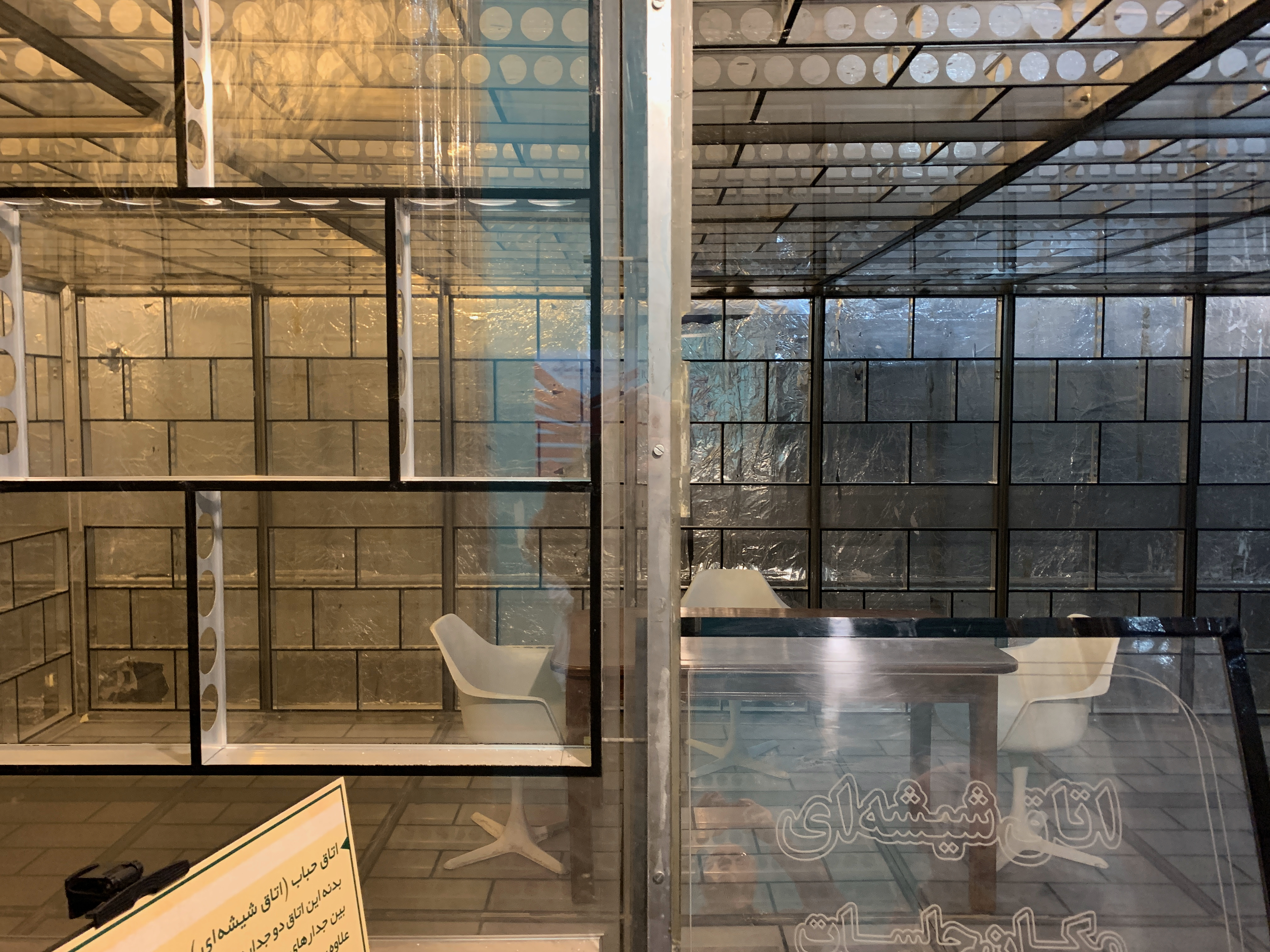
The Faraday Room, impervious to electronic eavesdropping 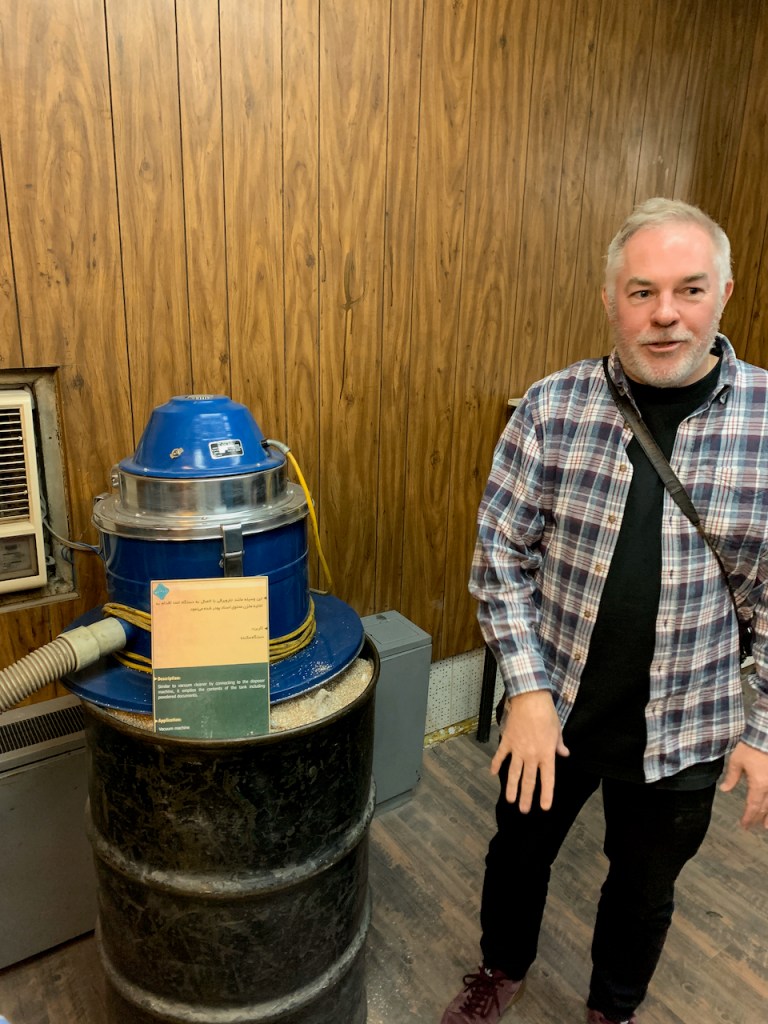
Nate with one of the document shredders 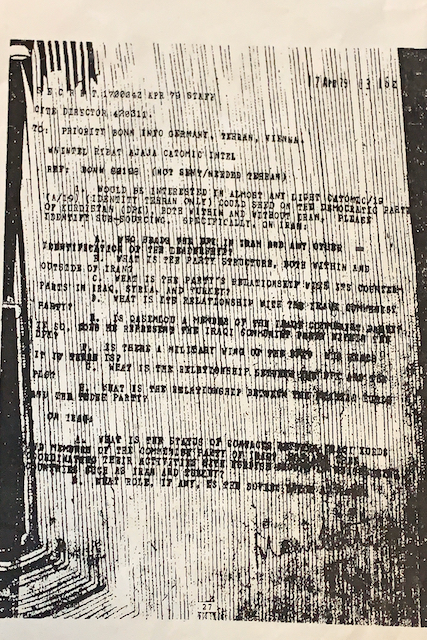
A secret document reassembled by the Iranians from shredded fragments 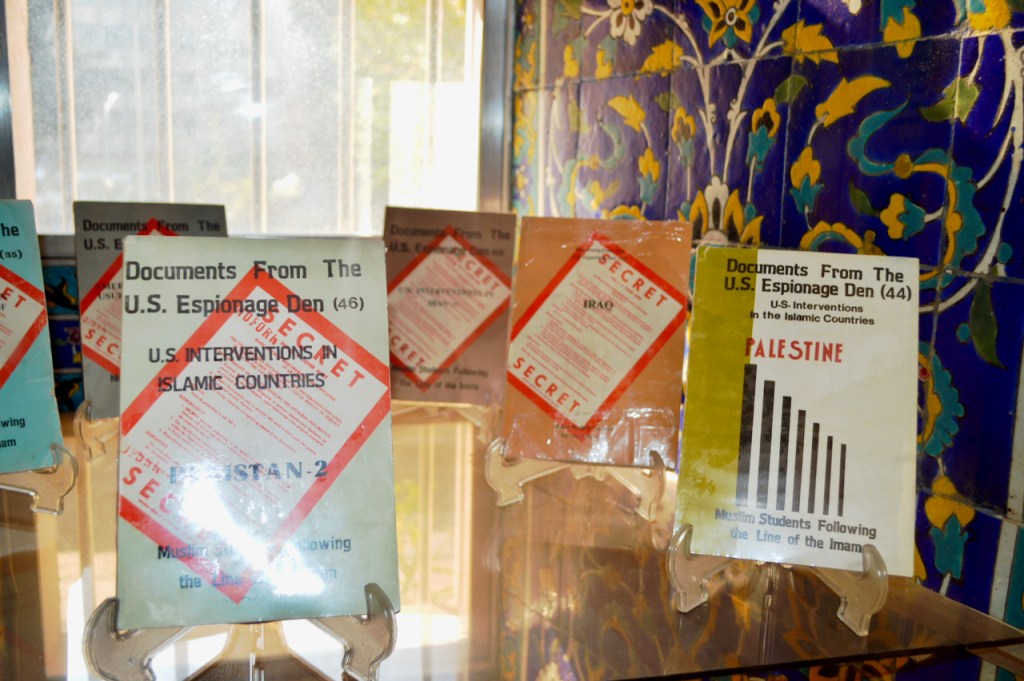
Books compiled from shredded documents and reassembled by Iranians. (Photo by Sheldon Ricketts)
For a complete change of pace, we next headed to the Golestan Palace, which was occupied by the last Shahs of the Qajar Dynasty (late 19th to early 20th centuries). As we were getting off our tour bus, we saw a large group of young girls in school uniforms. Recognizing that we were foreigners, they spontaneously called out to us Hello! How are you? Welcome to Iran! They made little heart shapes with their hands.
Just before we entered the palace grounds, Suzan saw a few other children holding bowls and begging for money. They were Afghani refugees. She was troubled to realize that children who had fled a war-torn country were seeking refuge in a nation whose resources are tightly stretched as a result of US sanctions. She wondered how many such children were in Iran, and whether they were receiving food, medical assistance, and educational opportunities. She gave them some charity and resolved to learn more and do more about the plight of these refugees.
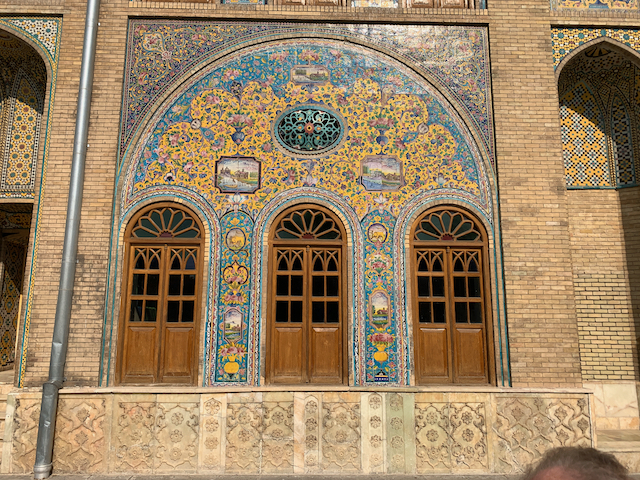
Outdoor tile work at Golestan Palace 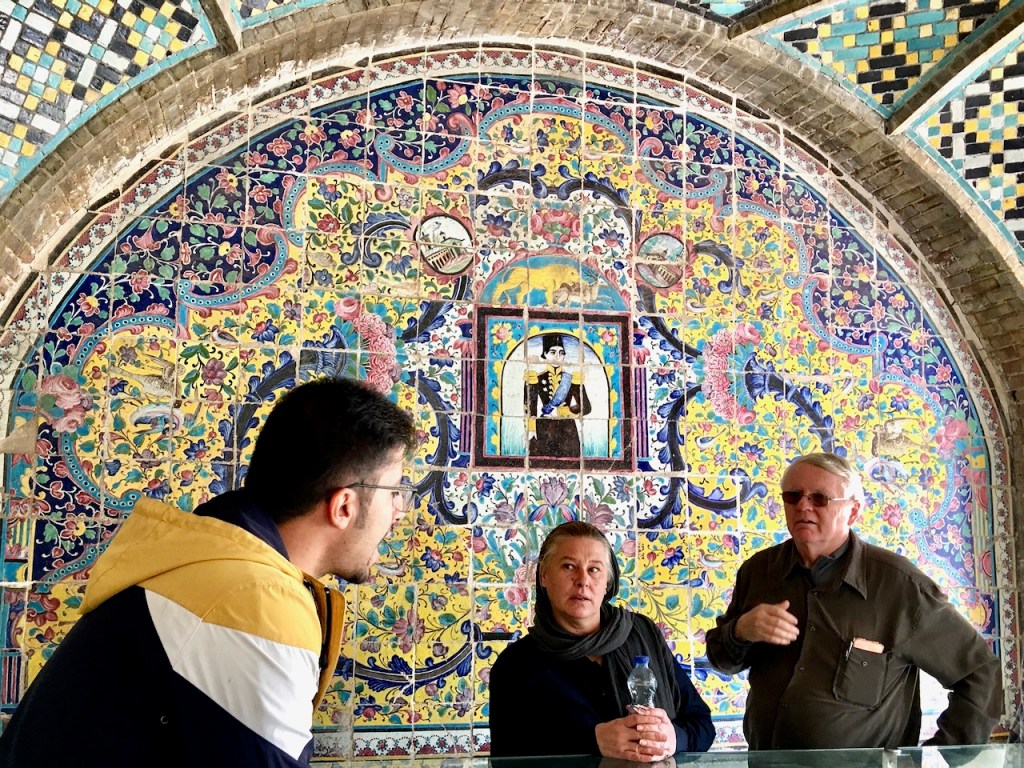
Vahid, Philippa, and Tim. And gorgeous tile work! 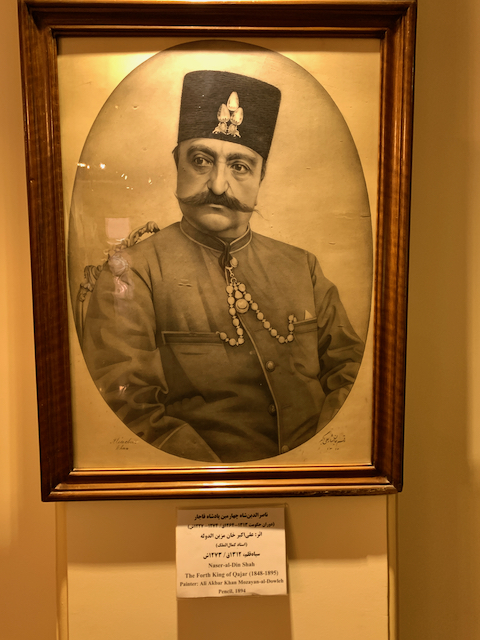
The museum includes this beautiful pencil drawing of Naser al-Din Shah (ruled 1848-1895), the fourth king of the Qajar Dynasty 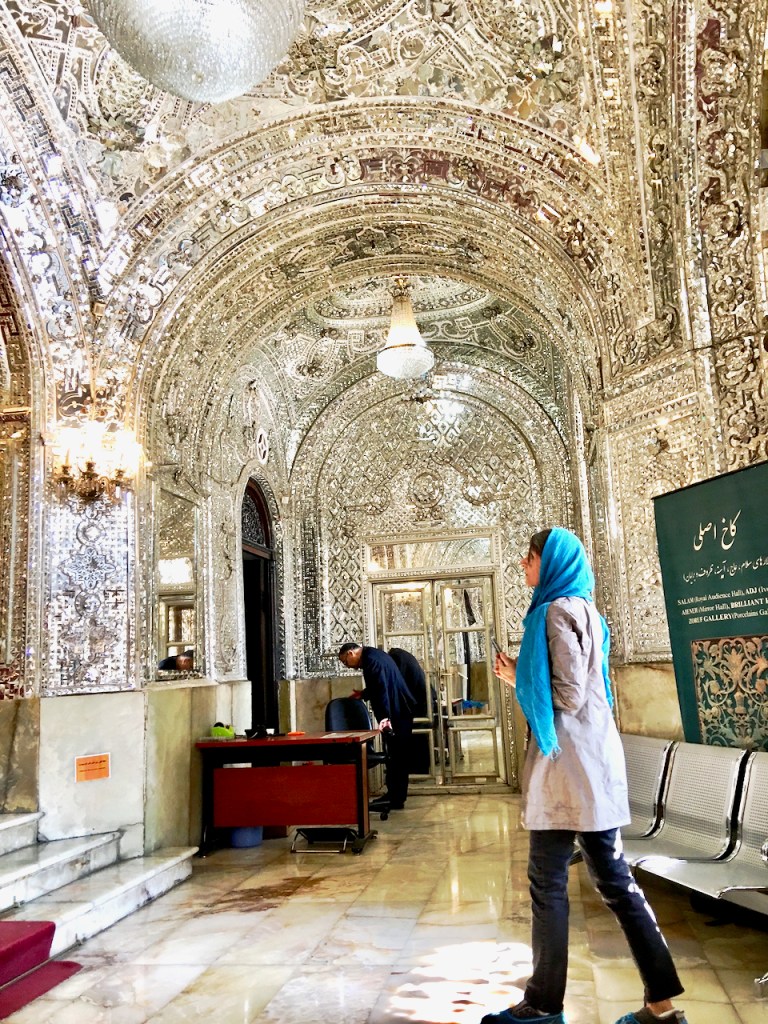
Glittery entryway to the reception room 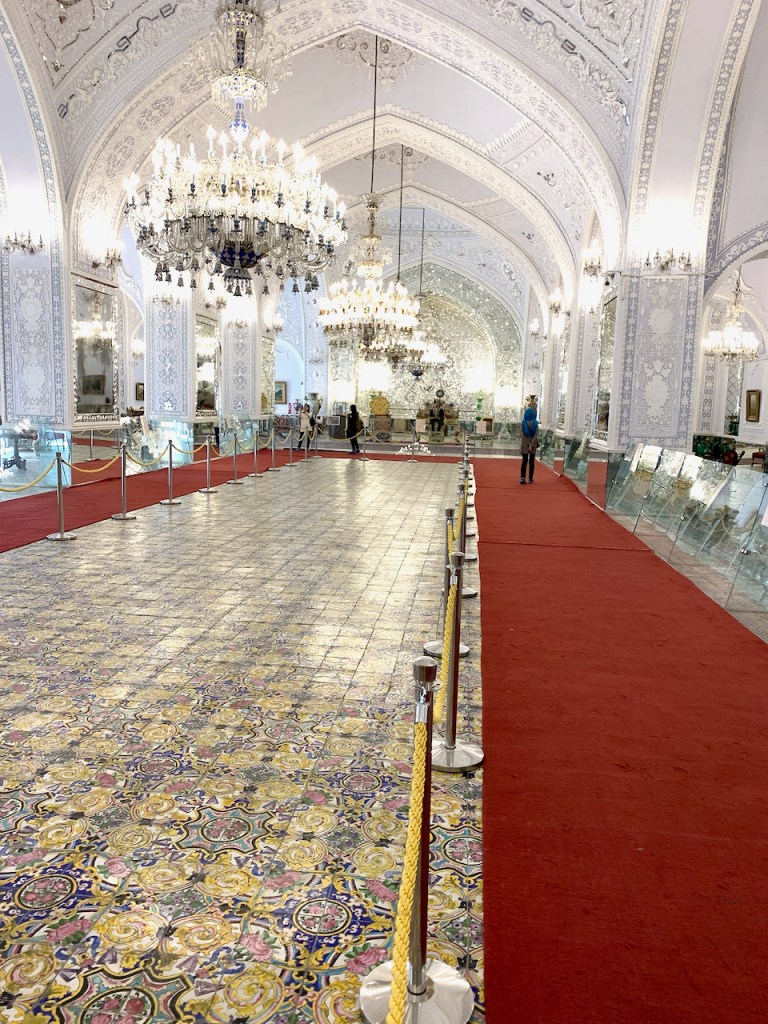
Reception Room with beautiful floor tiles 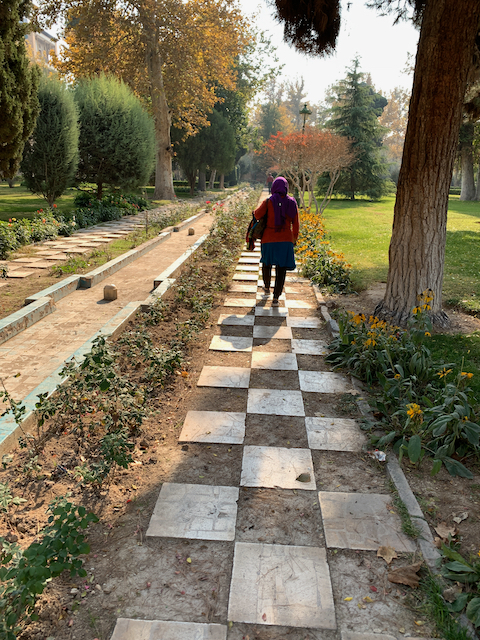
Suzan walking in the garden at Golestan Palace
The center of the palace complex is filled with beautiful and peaceful gardens, and the surrounding walls covered with gorgeous tile work. Inside one wing of the palace is a museum which begins with a portrait gallery of late Qajar dynasty family members and officials, as well as some of their more valuable possessions. From there steps lead up, through a hallway encrusted with glittering mirrors, to a spectacular reception/throne room, also covered with small reflective tiles. We were told that light has spiritual significance in Islam, and that the mirrors are kept small so as to make it impossible for a person to see their entire image. This is meant to humble a person before Allah. Several other rooms include other elegant possessions of rulers of the Qajar dynasty, especially many sets of elegant dinnerware. As he perused these collections, Tim was reminded of earlier visits to the Topkapi Palace in Istanbul and the Forbidden City in Beijing.
The group reassembled on the far side of the garden and made a short walk to the Grand Bazaar of Tehran. Nate said this bazaar dwarfs the Grand Bazaar in Istanbul, is roughly 4 miles by 2 miles in size, and has hundreds of thousands of shops.
Before entering the bazaar, we all went upstairs to the Moslem Restaurant, located at the edge of the bazaar. It is said to serve some 6,000 meals a day. It was really packed and once again, the portions were enormous. I seriously wonder if food wastage is a problem in Iran, at least in tourist venues.
Here’s a YouTube video that gives a sense of what it’s like to eat at the Moslem Restaurant.
After lunch we made a quick tour of one small corner of Tehran’s Grand Bazaar, including a stop at what is supposedly the world’s smallest tea shop. The shop is only large enough for one or two people at a time, but the owner, Haj Ali Darvish, came out to serve us tea and gave us each a souvenir coin. The whole bazaar is quite overwhelming. Nate said it’s primarily a wholesale bazaar, not really aimed at the tourist trade.
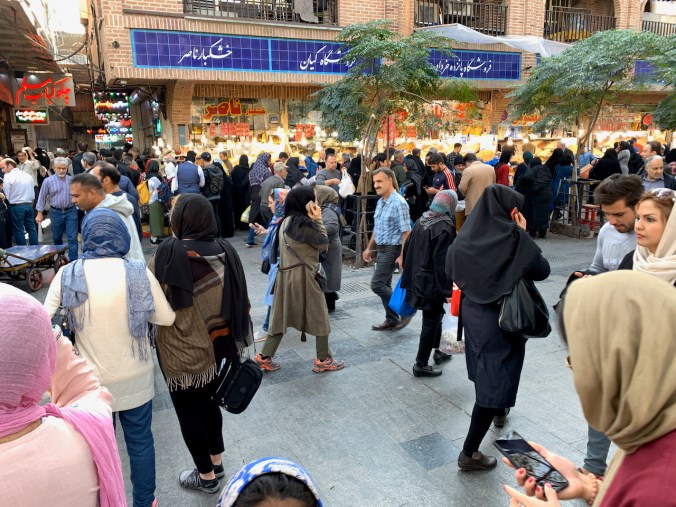
Just outside the Grand Bazaar 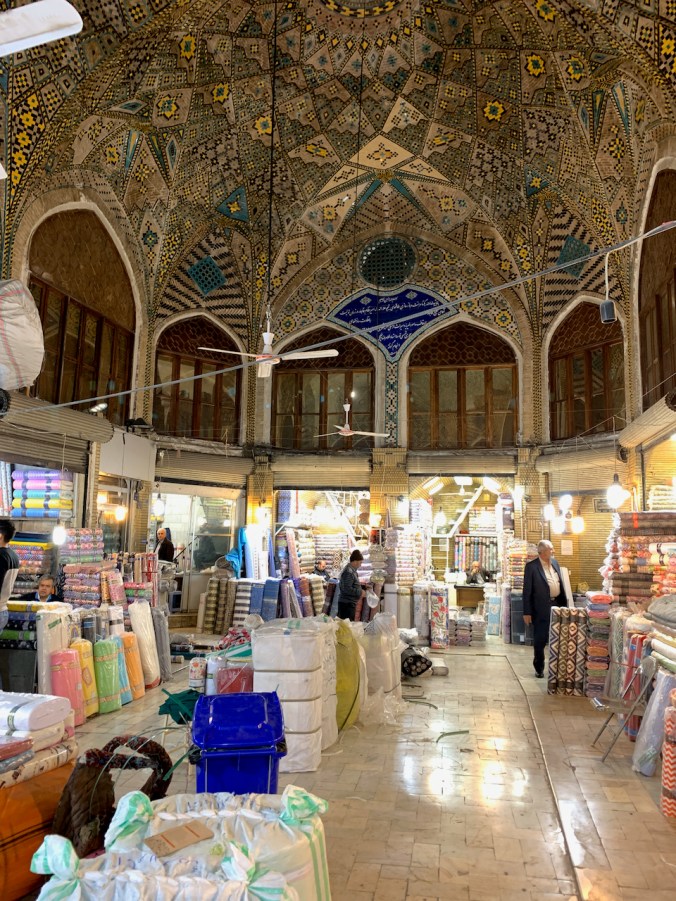
Inside the Grand Bazaar 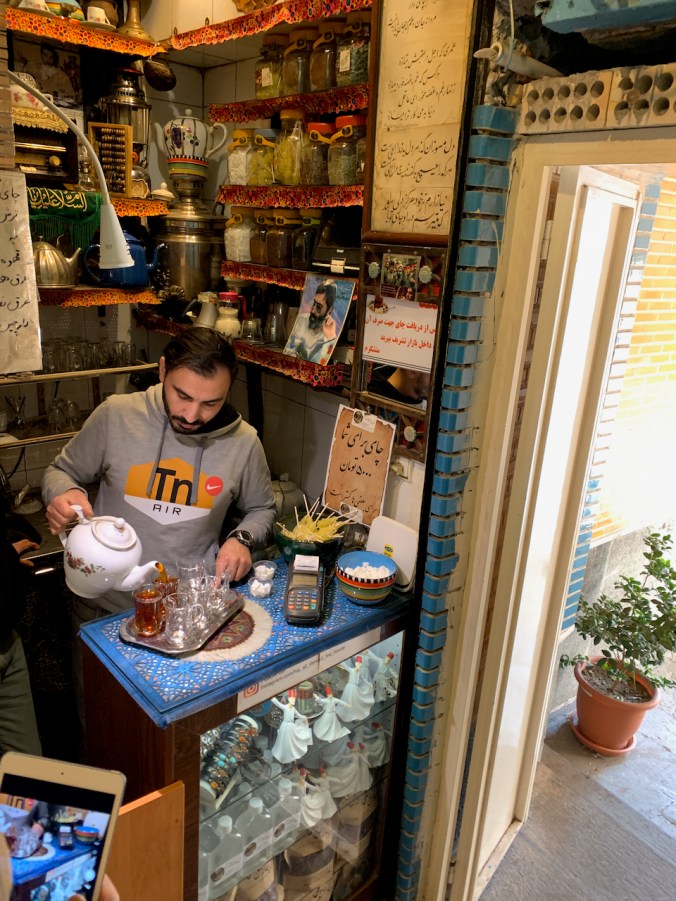
The tiny teahouse belonging to Haj Ali Darvish 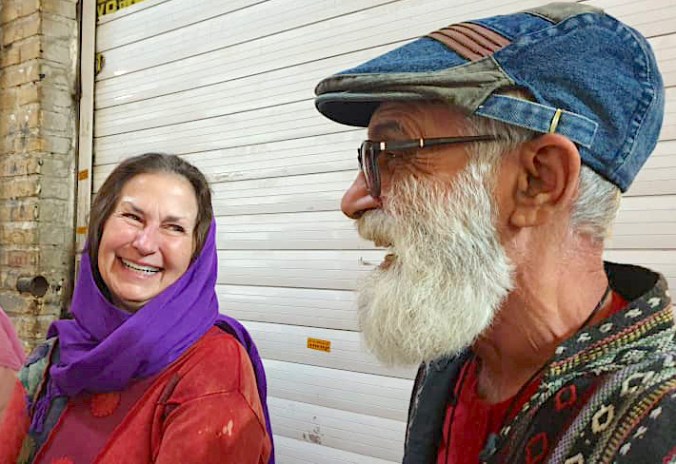
Suzan and Haj Ali Darvish
A short walk from the bazaar, we descended into the Tehran subway system, which we rode all the way (17 stops) to the north end in the Tajrish district of the city. En route we met a friendly young man who had worked as an engineer on the Tabiat Bridge which we’d seen the previous night. He showed us some pictures of his home, and we showed him some of where we live.
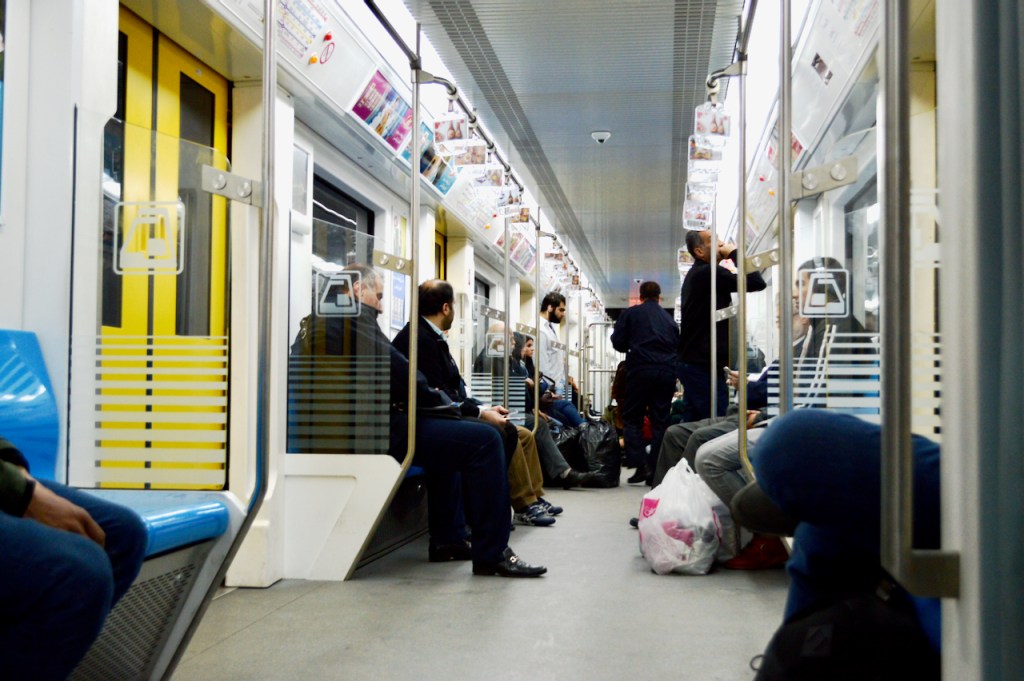
Riding the Tehran subway 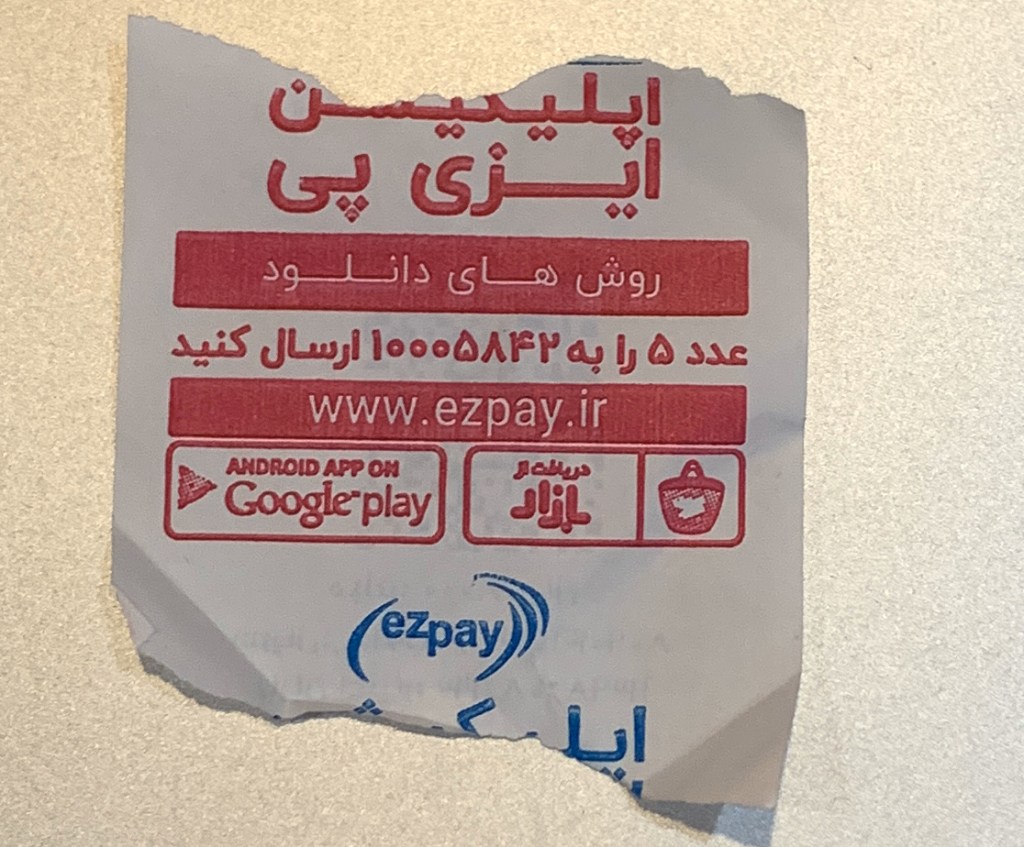
Subway ticket (note the ad for Google!)
In Tajrich we visited the ImamZadeh Saleh shrine, which contains the tombs of the imam and some of his relatives, as well as a number of nuclear scientists who had been assassinated by foreign agents. There are separate men’s and women’s sections, Each of the women in our group was provided with a chador and asked to remove their shoes as they were warmly welcomed by the worshipers.
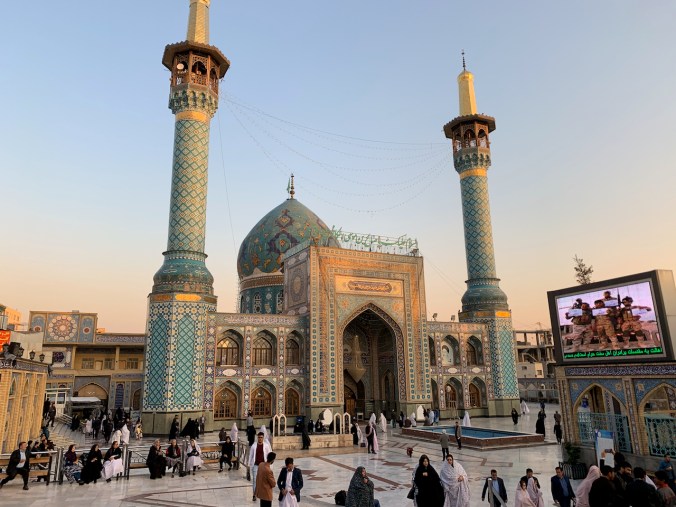
Courtyard of Imamzadeh Saleh Shrine. The graves of the murdered scientists are in the raised area of the courtyard to the left of the pool. 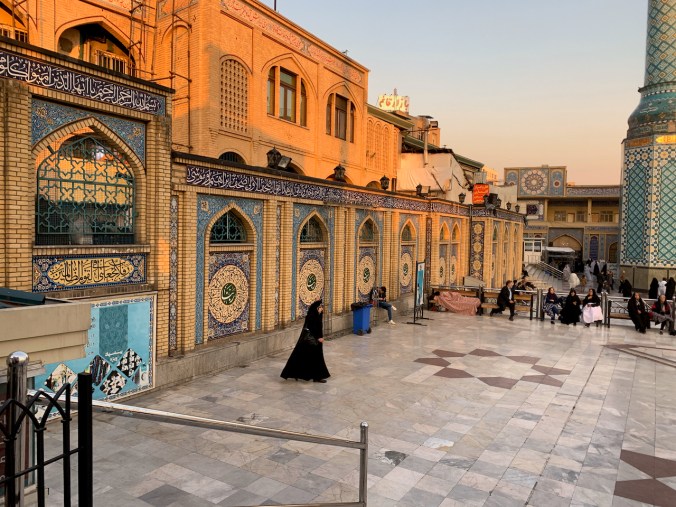
Courtyard of Imamzadeh Saleh Shrine. Shrines, unlike mosques, can include graves. 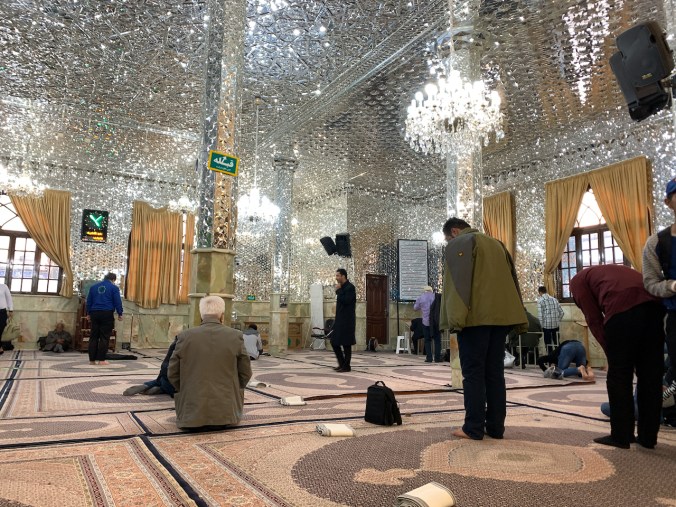
Inside the men’s wing of the shrine 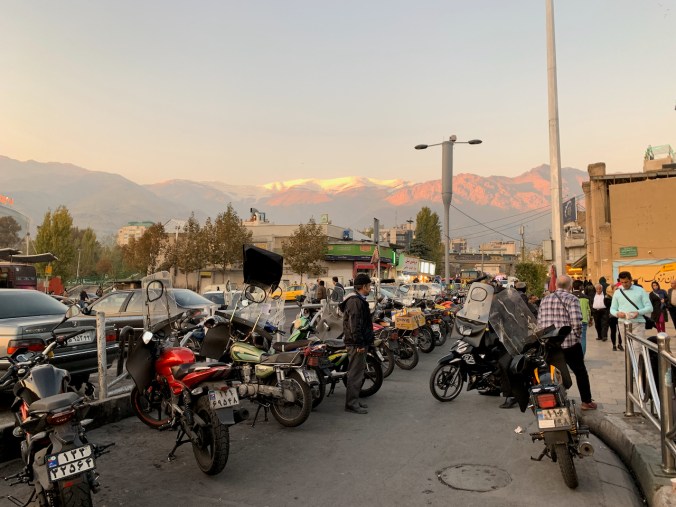
Snow on the Alborz Mountains; our restaurant (see below) was at the foot of those mountains 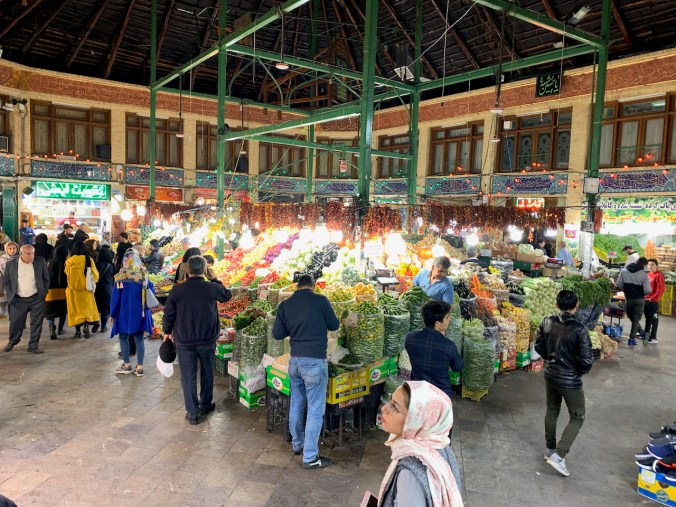
Tajrish Bazaar 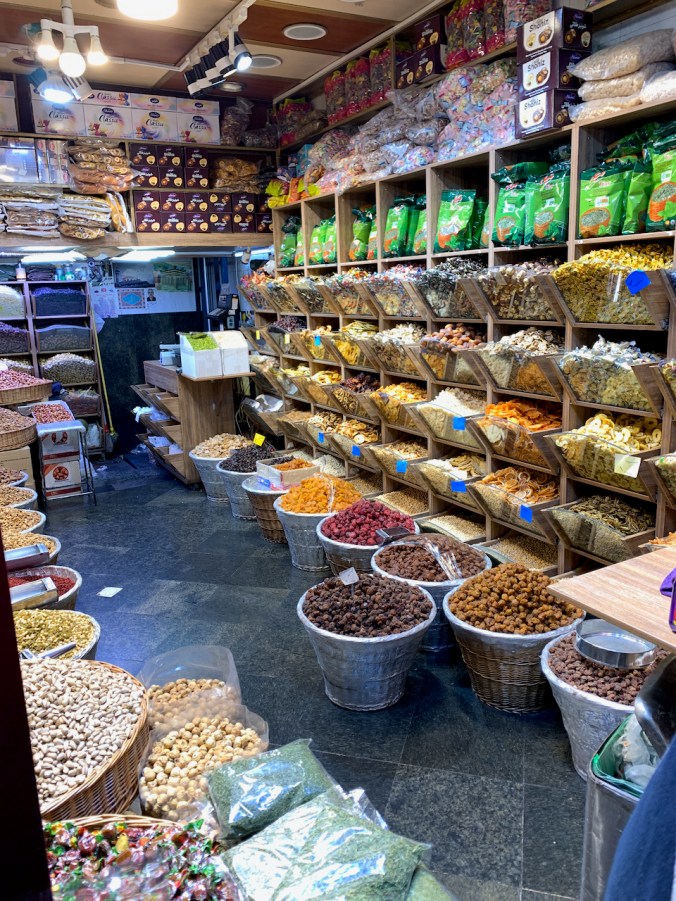
Tajrish Bazaar
After spending a few minutes wandering through the local bazaar—seeing mostly fresh produce—we got on the bus again and headed still farther north to a part of the city called Darband. Our destination was a really elegant restaurant called Koohpayeh, which was the most beautiful restaurant either of us had ever seen. Although the temperature was quite cool—there was snow on the mountains above the restaurant—we dined outside. Fortunately, there were heaters both above and underneath the tables, so we were all comfortable. The food and atmosphere were wonderful, and the service was excellent. A great way to end the day!
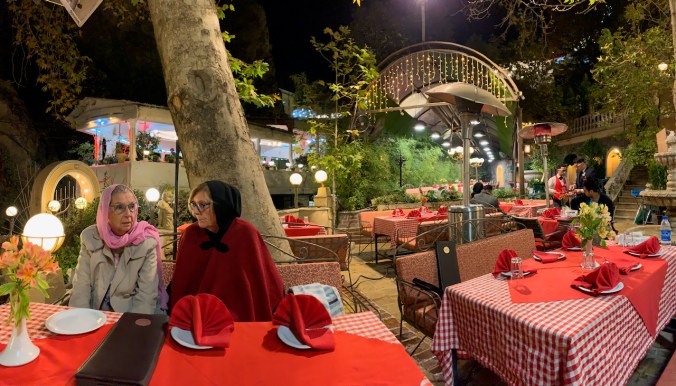
Outside dinner at the Koohpayeh Restaurant on a cool evening. Heaters at each table made the situation tolerable. 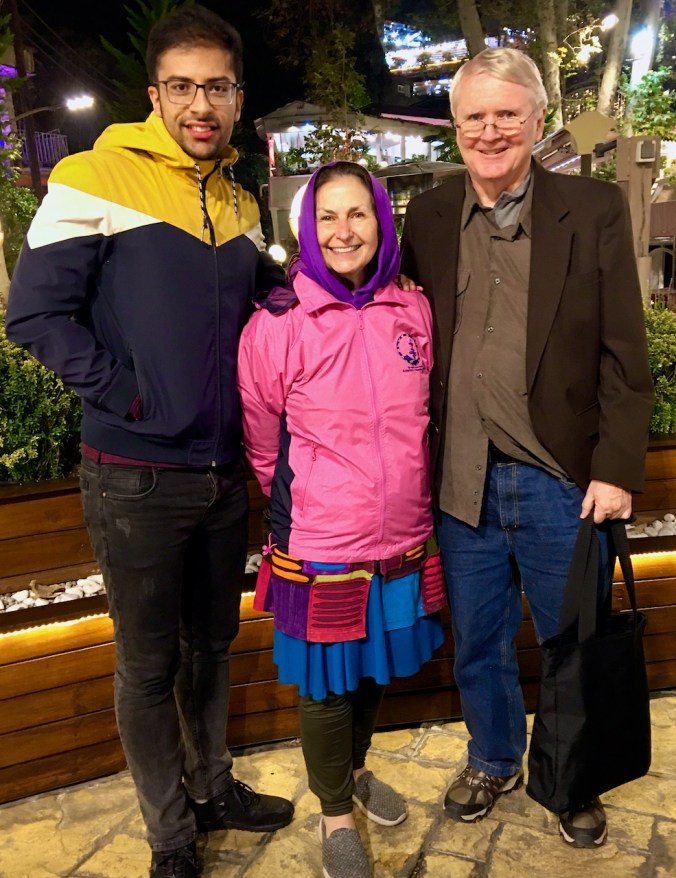
Vahid, Suzan, and Tim just outside the Koohpayeh restaurant 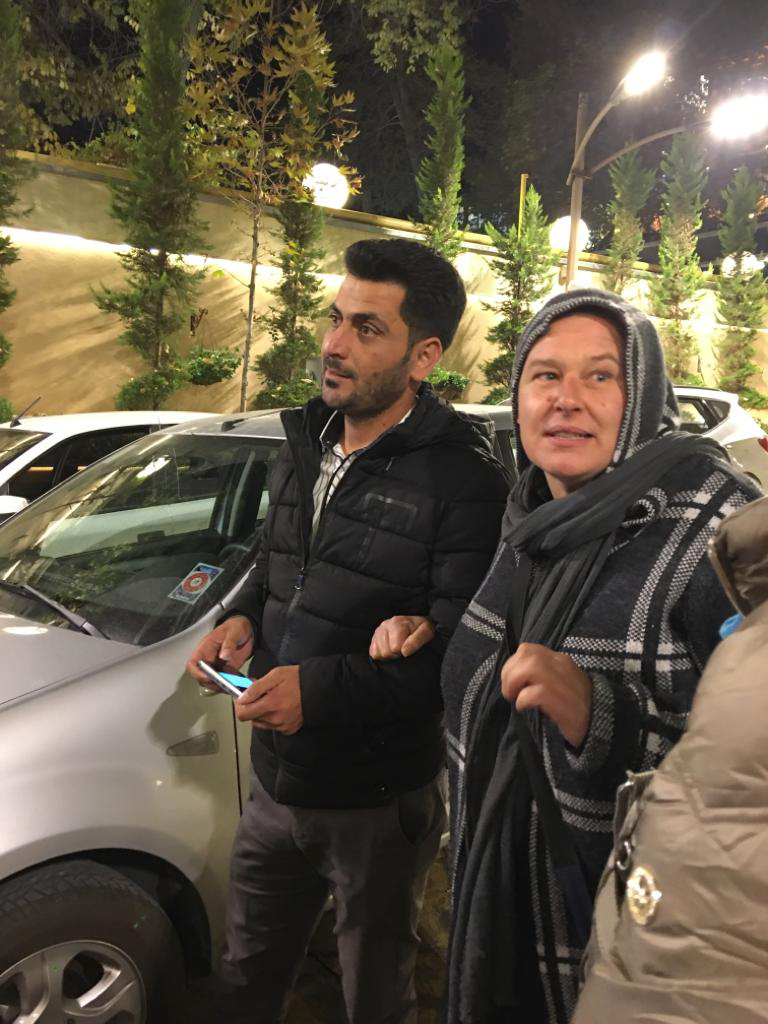
Mori and Philippa 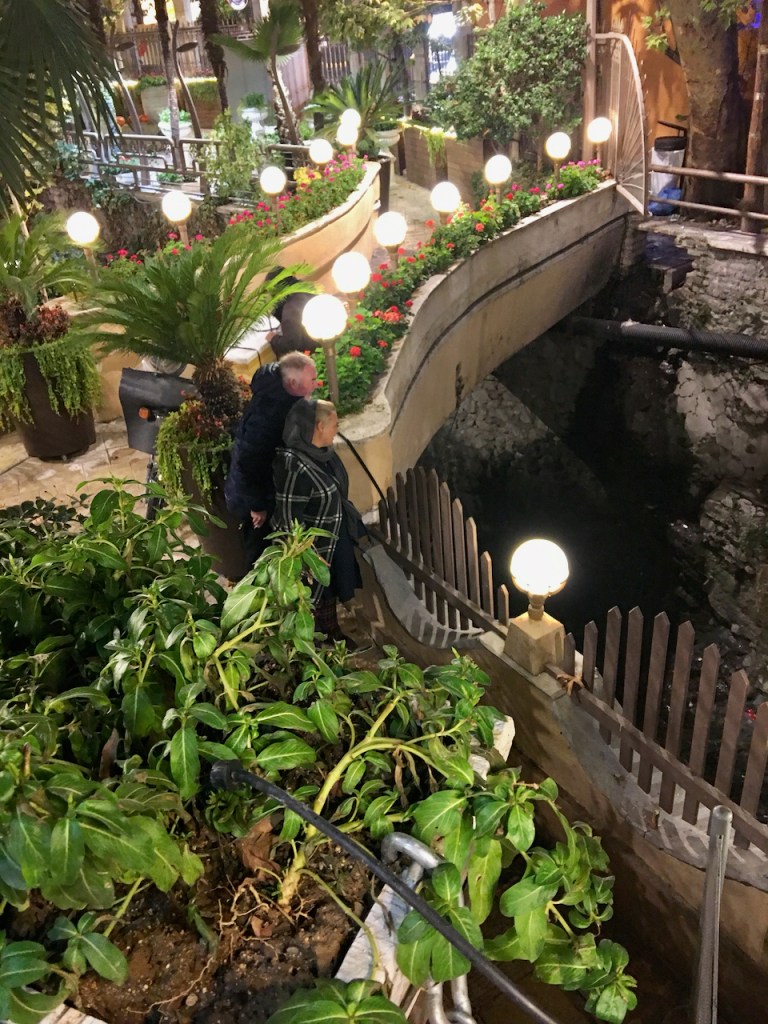
Nate and Philippa 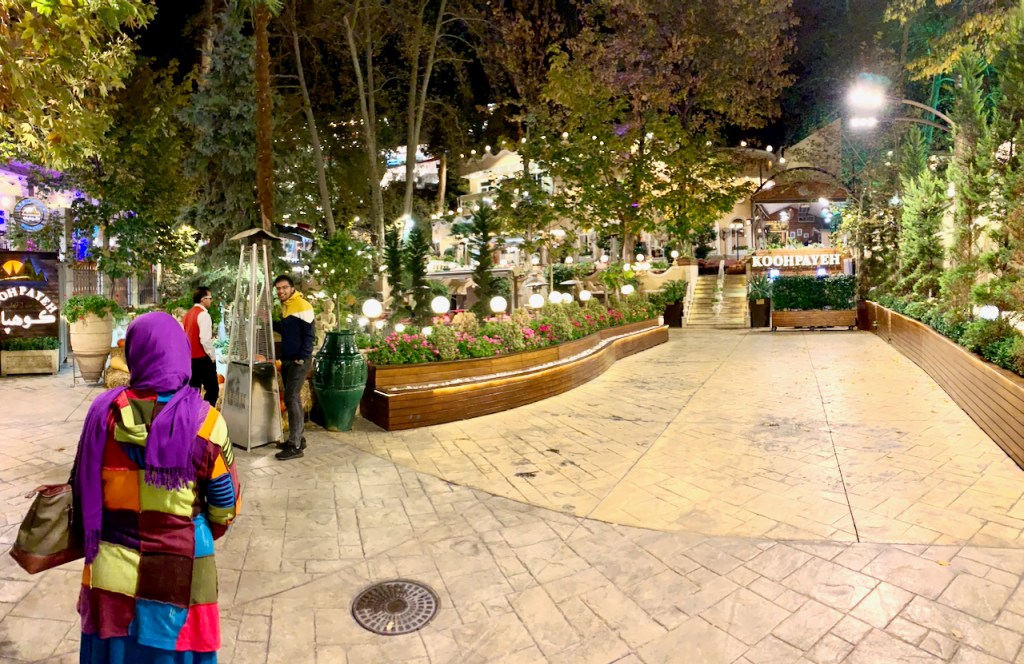
Entrance to the restaurant
Even at 9pm, the traffic was heavy coming back to the hotel, but we got there in time to shower, and pack our bags for the next day’s journey to Qom.
 Trip to Iran - November 2019