The Internet was still out.
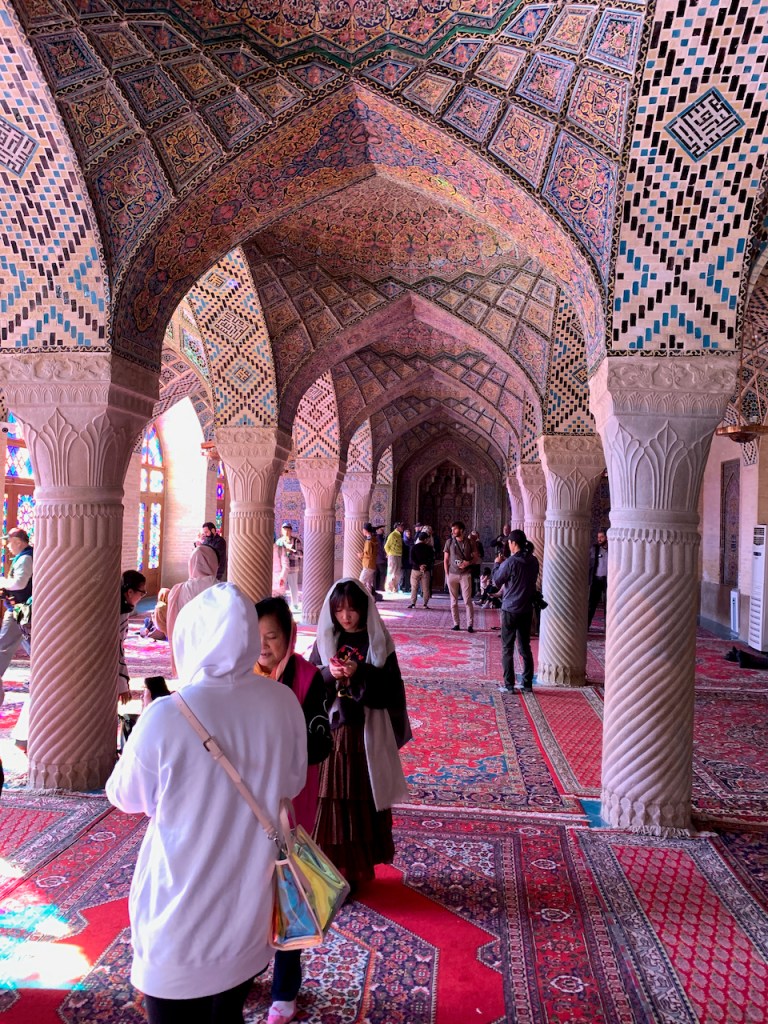
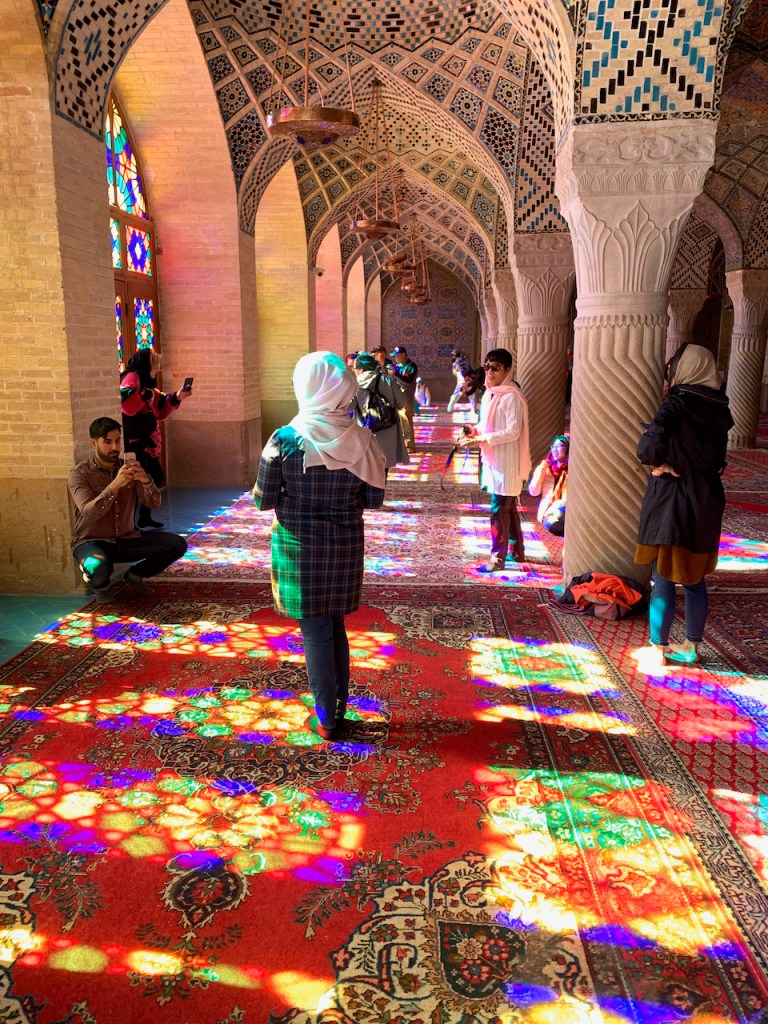
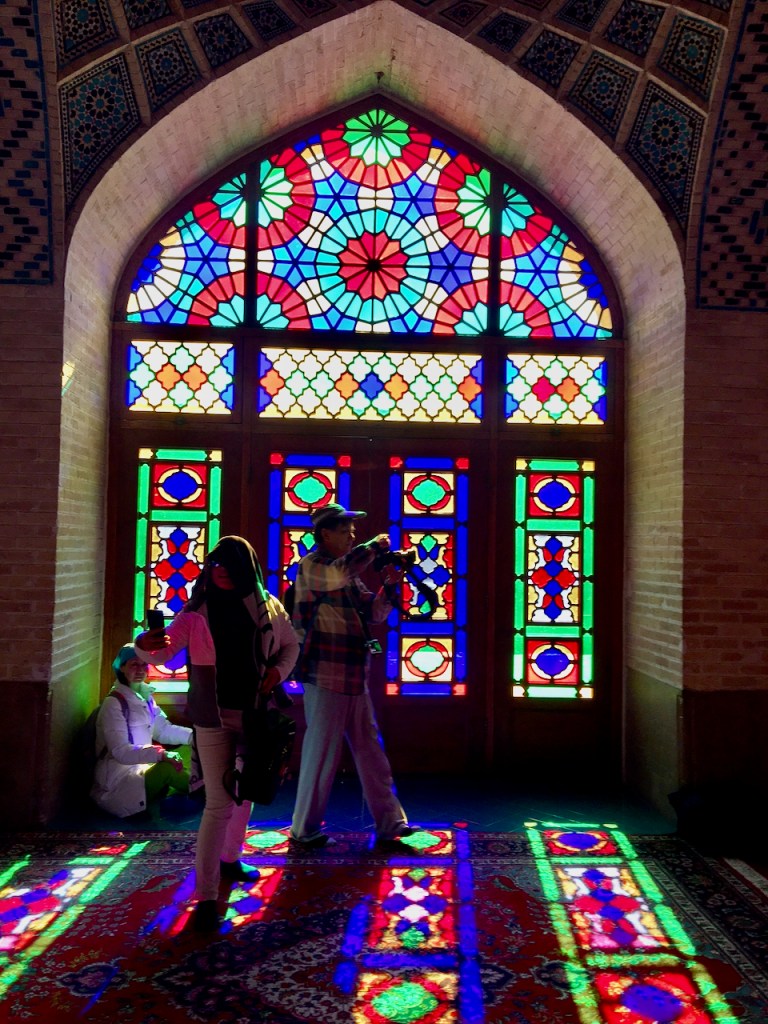
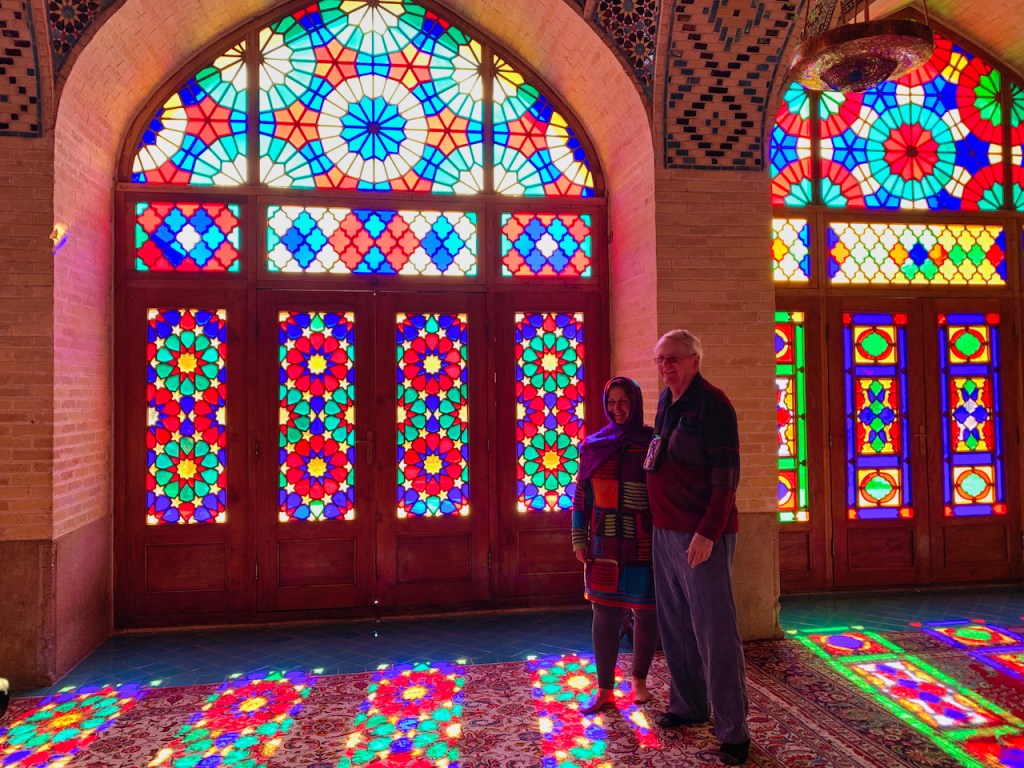
We began the day in the grandest way imaginable: a visit to the spectacular Nasir ol-Molk mosque, which has possibly the most stunning tile- and glasswork of any place we saw in Iran. Much of the tile work of the arcade on the western side has the color pink in it, and it’s for this reason that the building is sometimes known as the Pink Mosque.
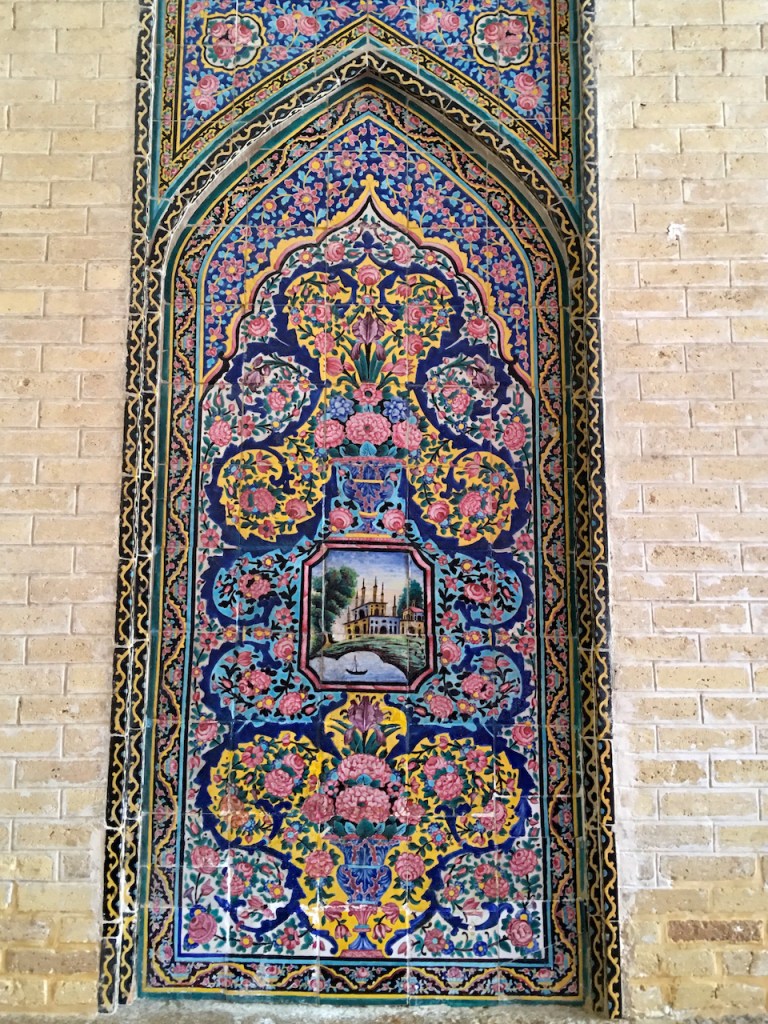
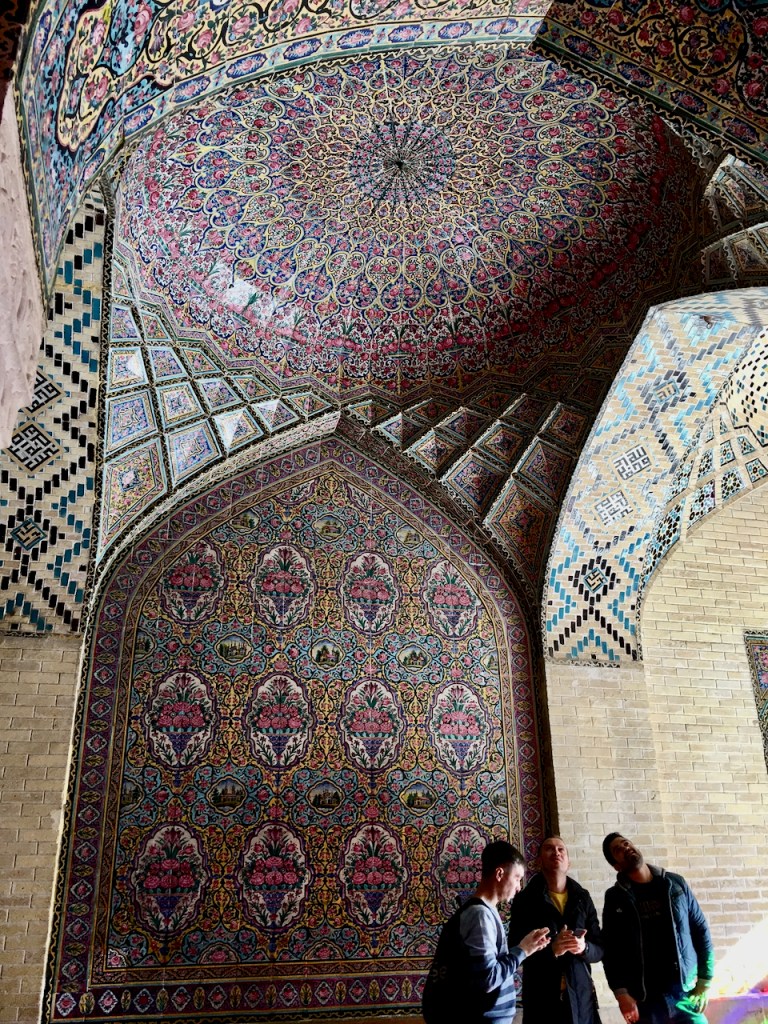
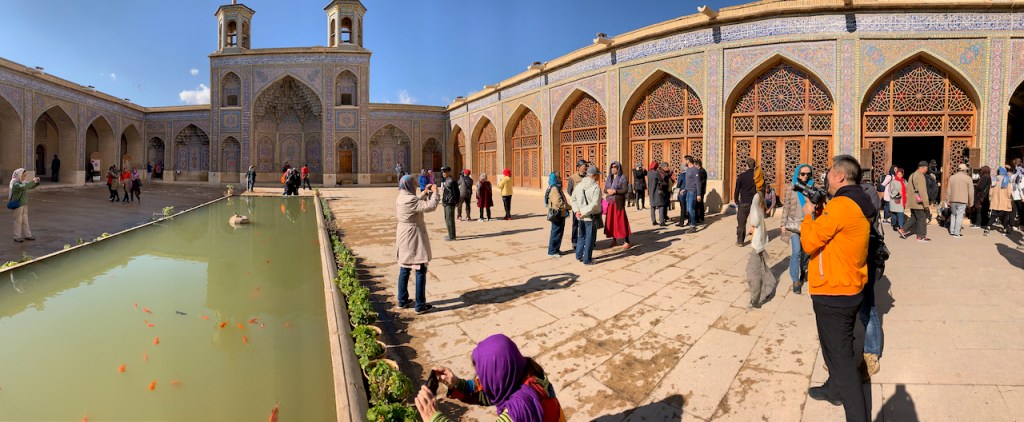
Goldfish pond – Arcade with stained glass in right background
Although no photos can really do justice to the reality of this building, the images at this site can begin to give a sense of its beauty. The sublime beauty of this and many other buildings we visited made us feel as if we were standing inside a giant kaleidoscope.
In the central courtyard there is a large pool containing numerous goldfish. Traditionally, at the end of Nowruz (the New Year’s celebration), people release goldfish into the pool.
We next visited the Maharlu Salt Lake (aka the Pink Lake), several miles outside of Shiraz. It is a seasonal salt lake rich in potassium and other minerals, which gets its color from a type of pink algae. A number of the group walked out fairly far to the lake’s edge. Next to where the bus was parked was a large mound of salt, which was being loaded into trucks.
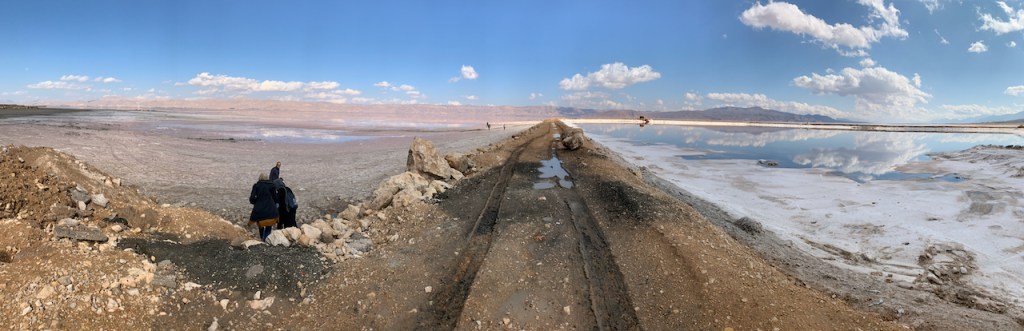
Maharlu Lake near Shiraz
Returning to the city, we went to one of Nate’s favorite falafel spots for lunch near a large park. After lunch, some members of the group revisited the Vakil Bazaar; we, however, went back to hotel to rest and pack for the next day’s departure.
At 5 pm we left hotel for our last stops on the whole trip. Our group was joined this evening by a young woman from Shiraz named Ava Izadpanah, who runs Persian culinary tours of Shiraz and teaches Persian cooking.
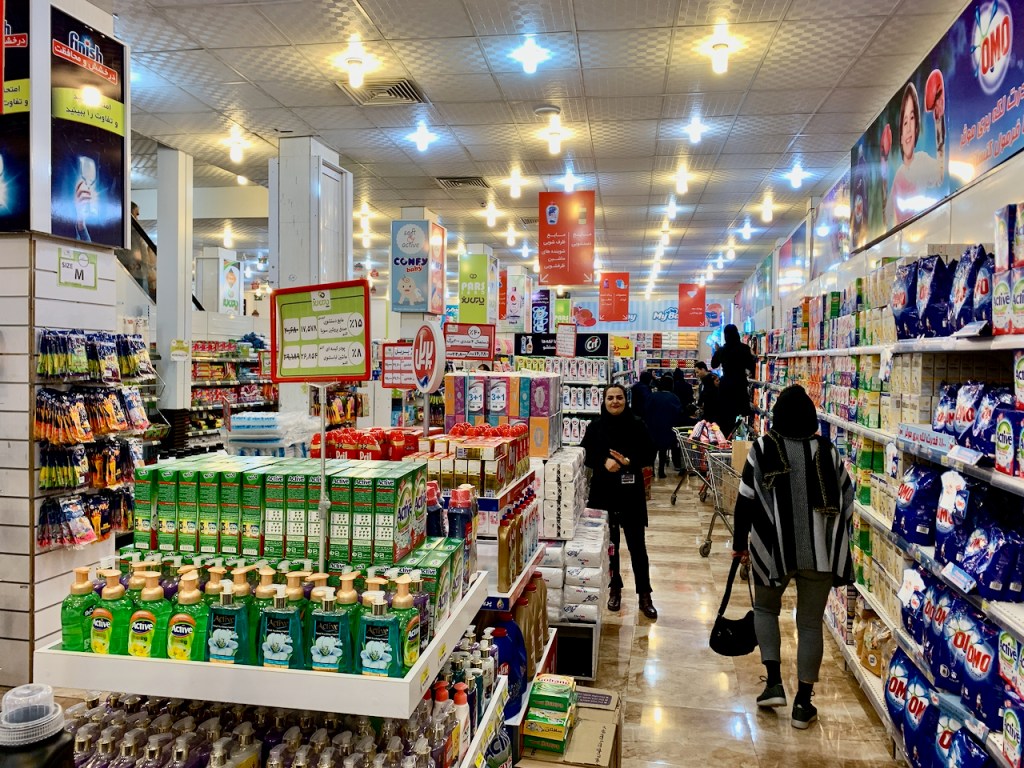
Parsland supermarket
The first stop was at a Parsland supermarket, which looked quite a bit like supermarkets in this country. Again, Suzan was approached by a little girl who wanted to speak English with her.
The finale before dinner was the Tomb of Hafez, where Vahid gave us a very impassioned talk about the poet, and recited some of his poems from memory. Hafez’s stature in Iranian literature is perhaps something like that of Shakespeare in English literature or Homer in ancient Greek literature. Nate had said there is a commonplace thought that if an Iranian home has only two books, they would be the Quran and the poems of Hafez. If it has only one book, it would either the Quran or Hafez’s poetry.
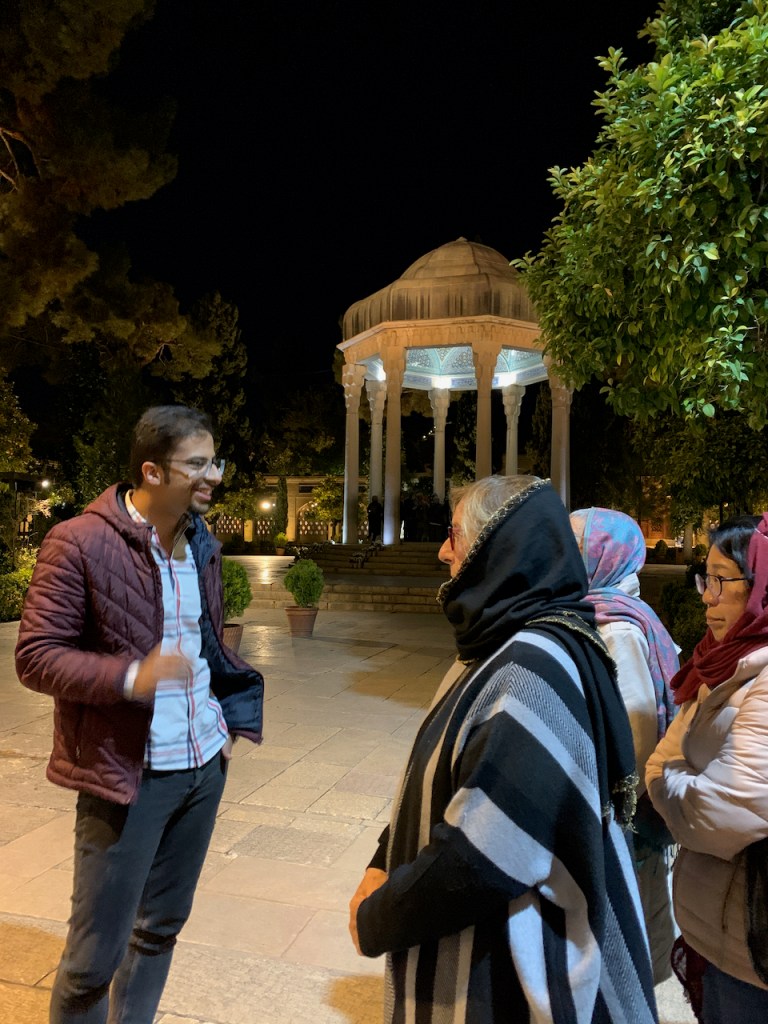
Vahid discussing Hafez 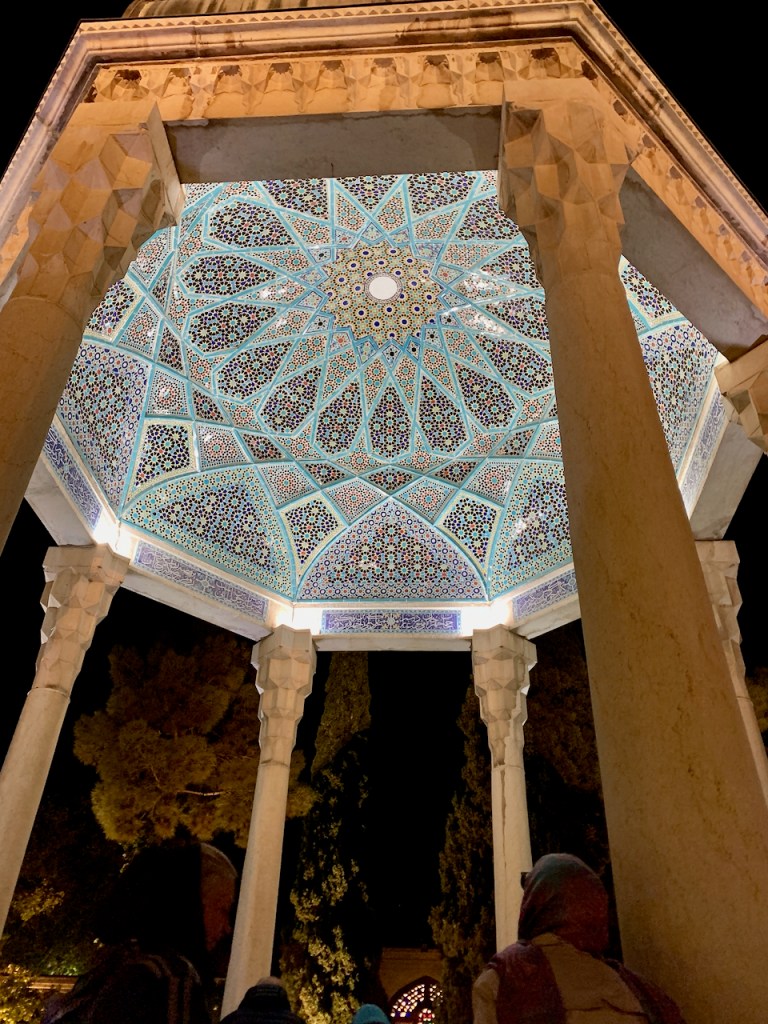
The canopy over Hafez’s grave marker 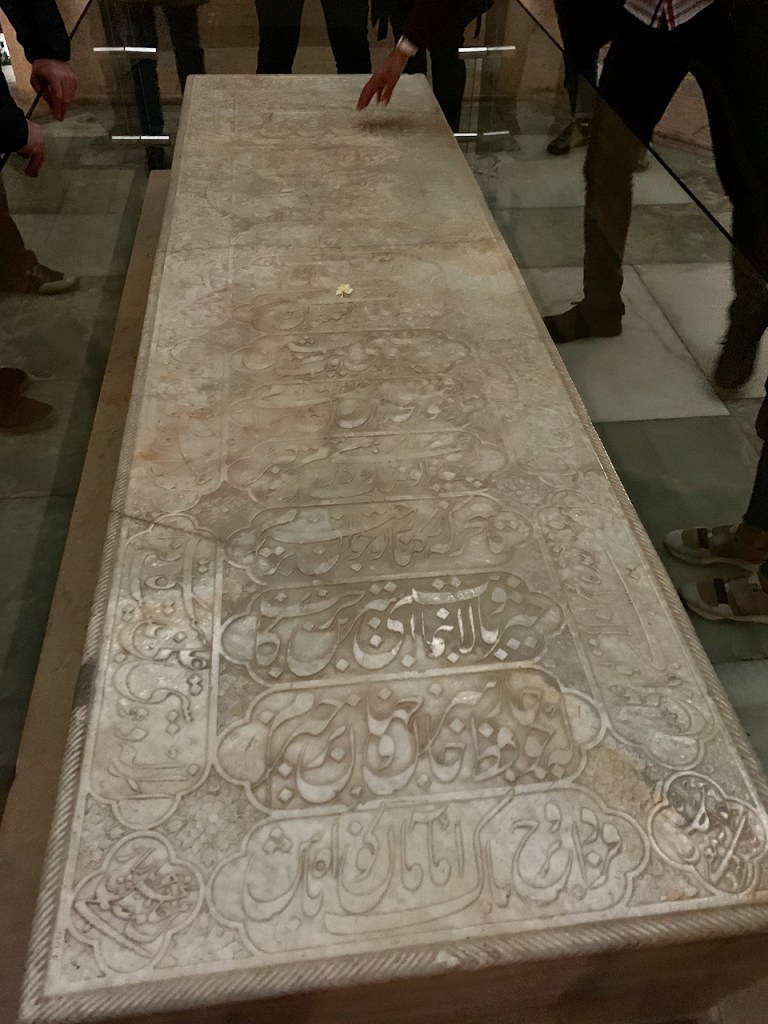
The grave marker 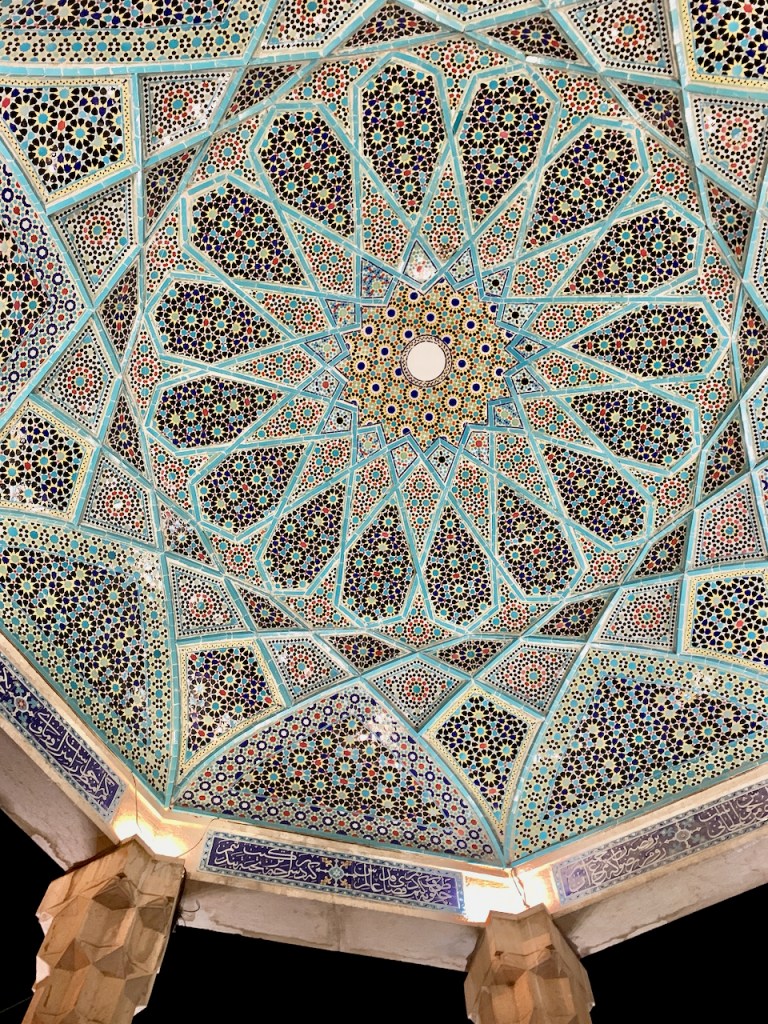
The entire area around his tomb is a lovely garden, and is a very popular spot for Shirazis to visit, especially in the evening. The stone sarcophagus is placed beneath a beautifully executed stone canopy. Legend has it that if a person touches the sarcophagus, he or she will come back. We both touched it, and hope Hafez keeps his promise.
In the bookshop we bought a luxuriously designed book of the poems of Hafez, in Farsi but with English translations of some of the poems. Our intention is to read them together one at a time in our cozy room downstairs. The book is beautifully bound and illustrated, and the pages hold a delightful fragrance.
Our last meal together was at the home of some young interior designers who also prepare private dinners for groups. The dining area was in the garden behind the house. One of our hostesses, named Neda, welcomed us to her establishment. She told us she was delighted to be able to share her birthday with foreign guests. We were all touched to know that she had chosen to spend her special day preparing our dinner. Had we known beforehand, we surely would have brought a gift. Suzan did have one of the small mementos which we had brought along as gifts. She gave it to Neda. We all sang Happy Birthday to her, and had pictures taken together.
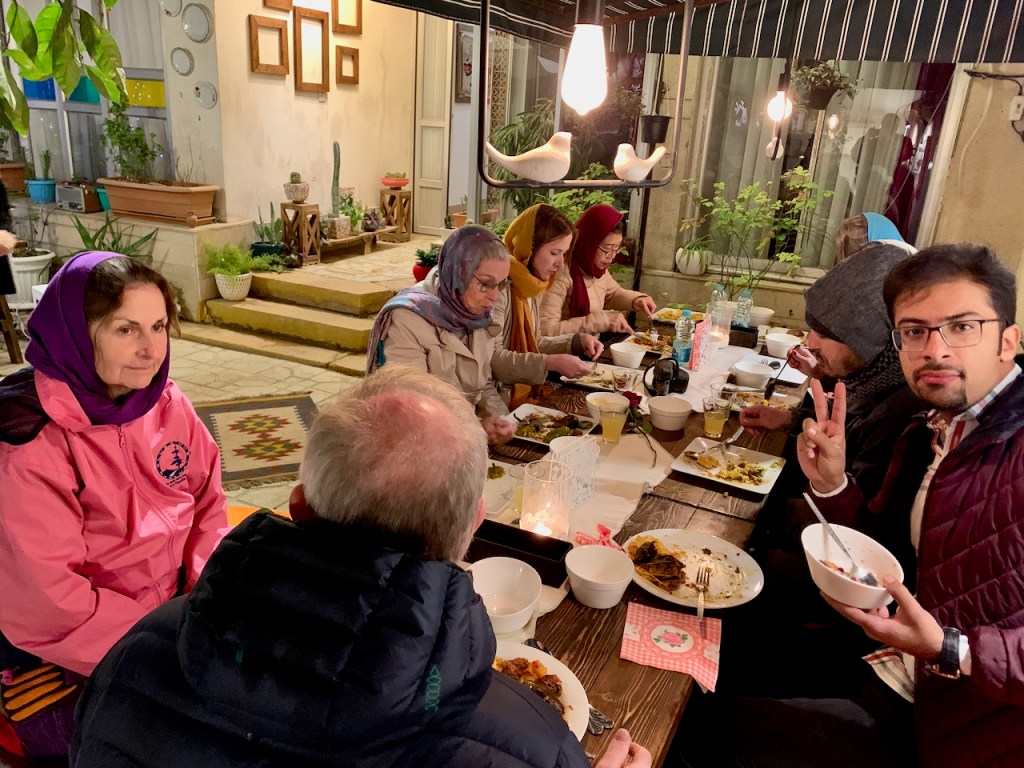
Our final dinner… 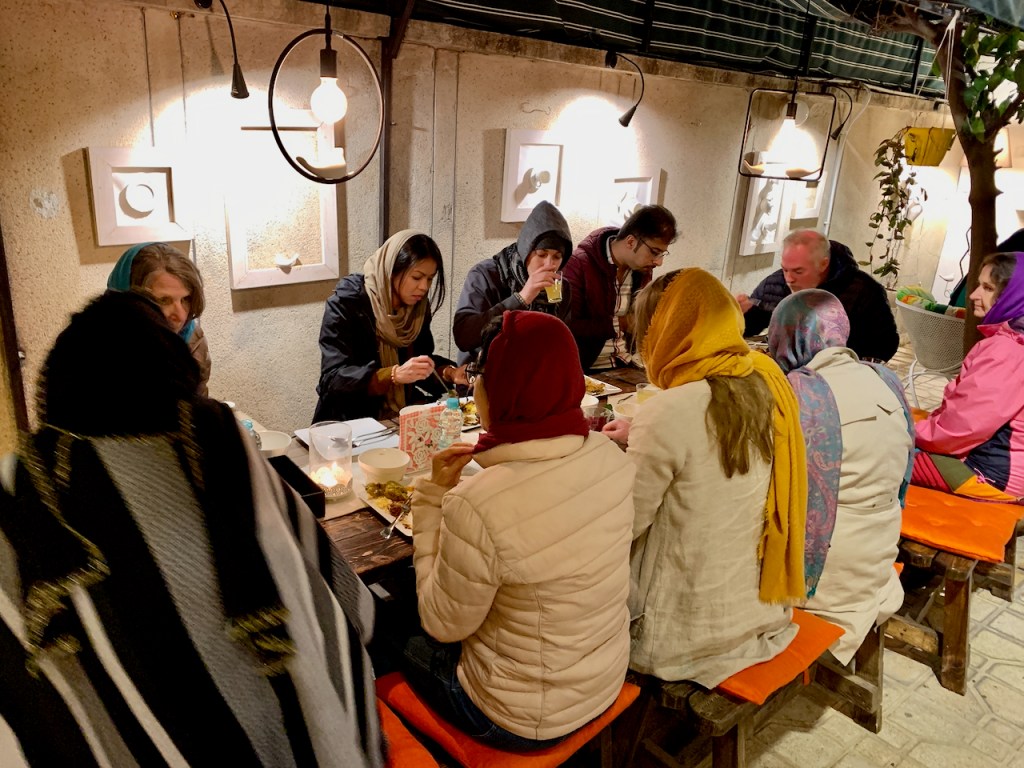
…and the end of a wonderful trip 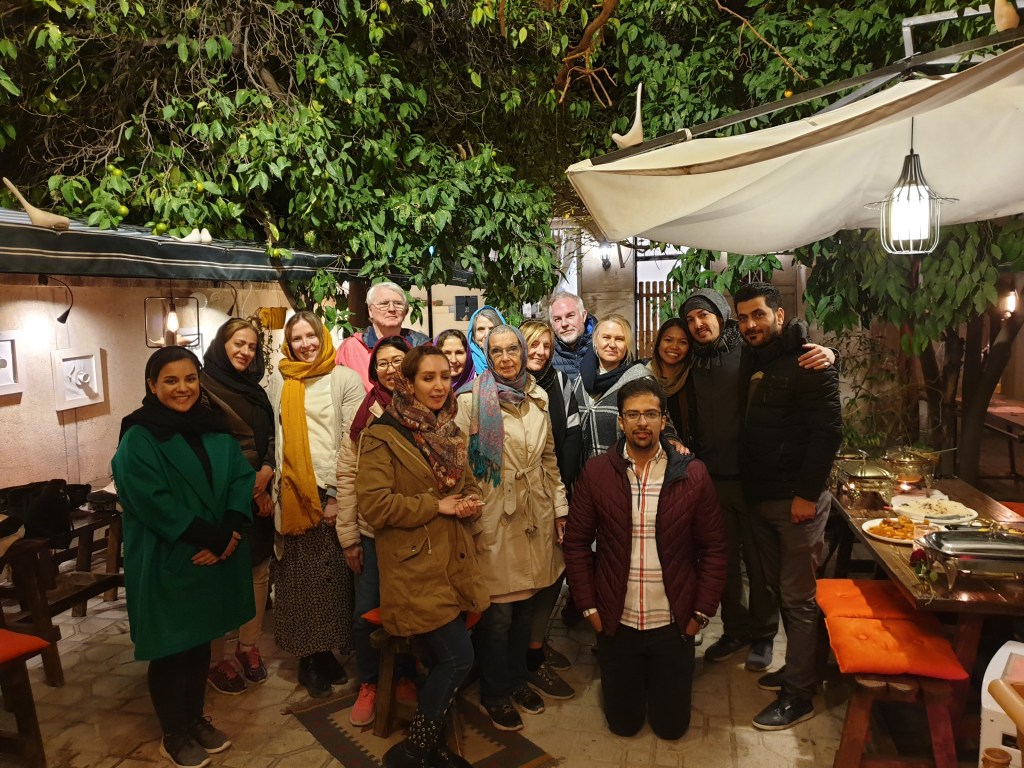
Our tour group with Ava and Neda (in center with brown jacket)
 Trip to Iran - November 2019