Both before our trip and even more so since our return, we tried to educate ourselves a bit about the country and what to expect as visitors there. Below are some of the sources we read and viewed.
Books
The links below go to goodreads.com, which provides summaries and reviews of almost any book you can think of. Although goodreads is an Amazon-owned website, the pages for each book do contains links to many other sources for buying books, both new and secondhand. We recommend Better World Books. There are also links to libraries that have each book.

All the Shah’s Men: An American Coup and the Roots of Middle East Terror, by Stephen Kinzer (2004). An essential book for anyone who wants to understand how US-Iranian relations have come to be the way they are. Contrary to most American public opinion, the problems did not start with the 1979 hostage crisis. The crucial event, well-chronicled by Kinzer, was the 1953 overthrow of Mohammed Mossadegh. the democratically elected Prime Minister of Iran, and the installation of Mohammad Reza Shah to the throne. This was the turning point in relations between the United States and Iran.
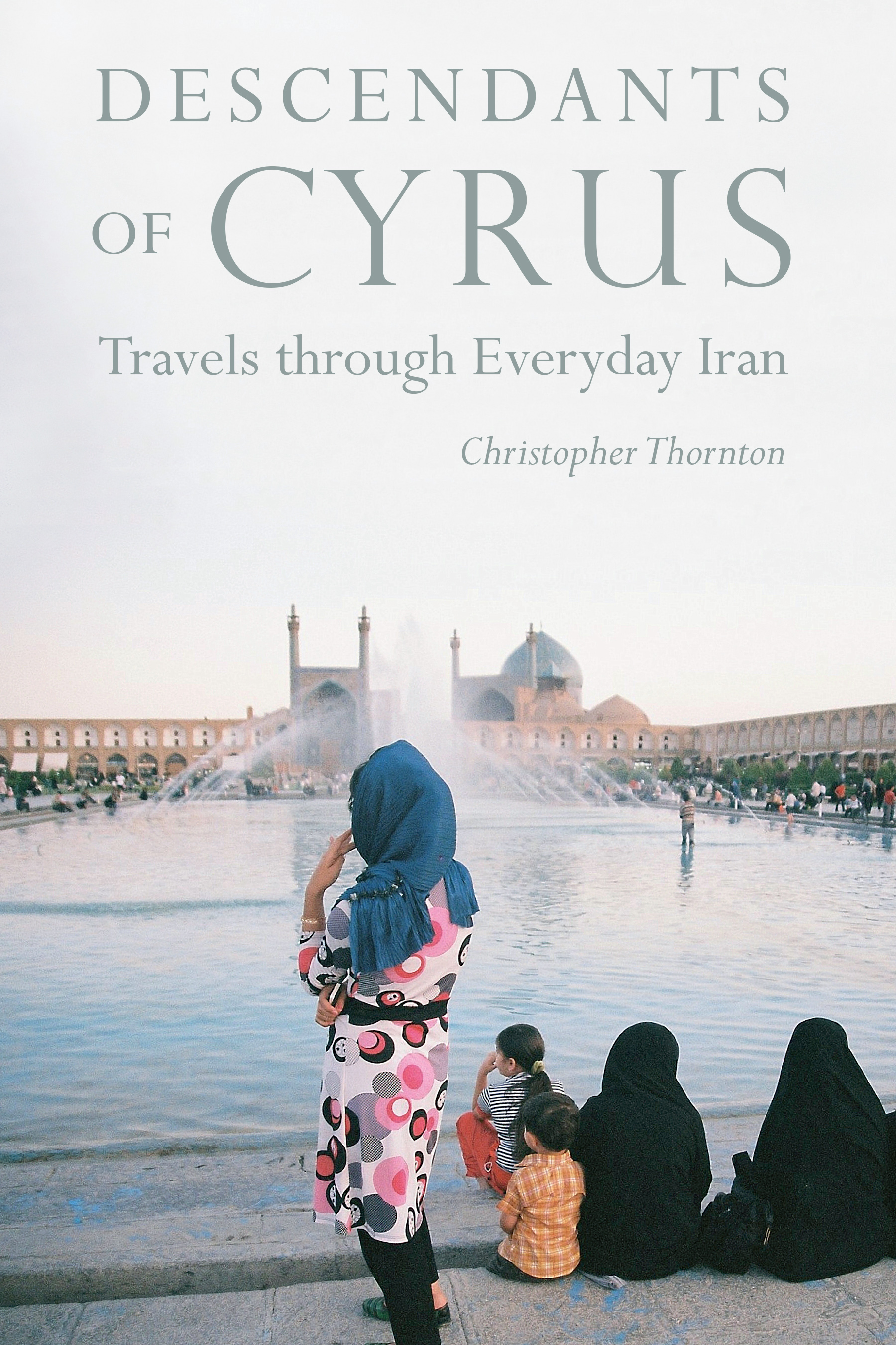
Descendants of Cyrus: Travels through Everyday Iran, by Christopher Thornton (2019). A blending of traveler’s tales from the author’s three trips to Iran in recent years. Tim read this after returning from Iran and enjoyed learning of the author’s experiences in many of the places he’d visited. Thornton includes many fascinating tidbits about Iran, and an index to them would have been much appreciated.

Empire of the Mind: A History of Iran, by Michael Axworthy (2008). A one-volume survey of Persian/Iranian history from prehistory to the turn of the 21st century. A serviceable introduction, which would have benefited from the inclusion of illustrations, more maps, and an outline of periods of Iranian history. Besides the traditional historical narrative, Axworthy does provide a nice introduction to Iranian poetry and aesthetics.

Persepolis and Persepolis 2, by Marjane Satrapi. A pair of award-winning autobiographical graphic novels depicting the life of a young girl growing up in Tehran before and after the 1979 Islamic Revolution. The first volume traces Satrapi’s childhood in Tehran from ages 6 to 14. In 1983 her well-to-do parents, worried that her rebellious teenage habits would cause her to run afoul of the Islamic authorities, arranged for her to study abroad in Vienna–the part of her life covered in the second volume. In 2007 an animated film of the stories from both volumes appeared and won several major awards.

The Silk Roads: A New History of the World, by Peter Frankopan. A fascinating survey of world history which departs from the usual Eurocentric orientation and instead focuses on Central Asia, China, and India. Iran, of course, plays a major part in this story. Here is a video (about 45 minutes long) of Frankopan speaking about the central thesis of his book: https://youtu.be/wMhjI_00hVk
Movies and Videos
In the months before our trip we watched a number of non-fiction videos about Iran as well as several feature films by Iranian directors. One of the videos that made the greatest impression on us was Rick Steves’ Iran. It reassured us that Iran was a wonderful place to visit and that we would be entirely safe in doing so.
Another important video was the TED Talk entitled Israel and Iran: A Love story? The speaker Ronny Edri also has a website: https://thepeacefactory.org/
We also watched Majid Majidi’s The Willow Tree, and several feature films by the Iranian director Asghar Farhadi, including A Separation (which won the Academy Award for Best Foreign Language Film of 2011), The Salesman, About Elly, and Fireworks Wednesday. The most important thing we took away from those films is that the Iranian people are pretty much like us: the same problems, hope, fears. Once we got to Iran and met some Iranians, we felt this even more strongly.
Shortly after our return, we watched Argo, the Academy Award-winning 2012 movie about the 1980 Canadian rescue of six of the hostages at the American Embassy. The movie had quite an impact on us, since we’d visited the former embassy just a few weeks earlier.
Websites

The Encyclopedia Iranica is a massive, free online encyclopedia on “…all aspects of Iranian history and culture, as well as all Iranian languages and literatures…” One weakness, however, is that it does not seem to cover current people and events. For example, there is no entry for Hassan Rouhani who has been President of Iran since 2013. Nonetheless, it is an unsurpassed source for delving into any sort of historical topic.
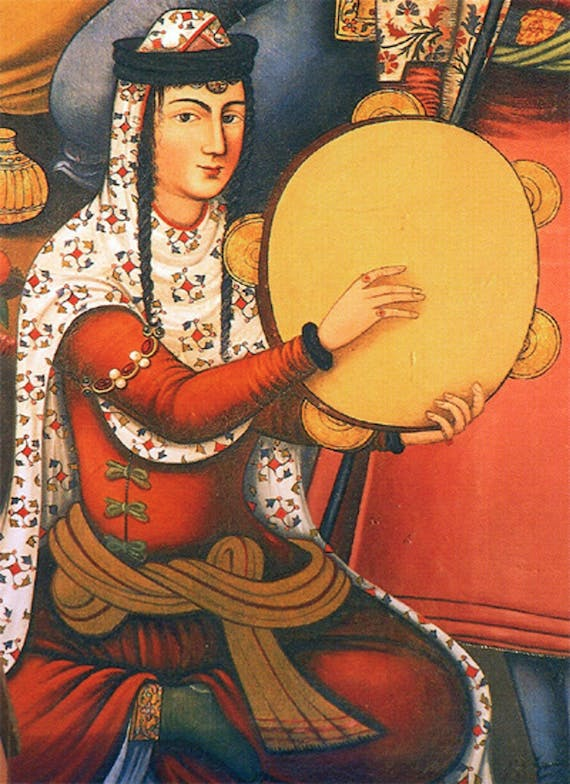
Forget Politics: The Joys of Iran’s Traditional Music, by Darius Sepheri. A brief introduction to Persian music, musical instruments, and the relation of music to poetry. The author aptly states that, “It constitutes a world of beauty and wisdom that is a rich gift to the whole world, standing alongside Irano-Islamic architecture and Iranian garden design.”

Non-commercial site whose aim is to “provide information on all aspects of Iranian/Persian history, art and culture.” URL: http://www.iranchamber.com/

Persian Literature in Translation is a vast project of the Packard Humanities Institute. The translations are not dated nor are the translators’ names given, but the site does provide a convenient place to a LOT of English translations of Persian literature–including all 60,000 some lines of Ferdowsi’s Shahnameh!
A very attractive site with articles on many topics relating to Iranian life such as history, culture, social life, and many more. URL: https://www.persiansarenotarabs.com/
 Trip to Iran - November 2019