The day began with bad news on two fronts: Iraq beat Iran 2-1 in the previous night’s closely-followed football match. Much more ominously, however, overnight the government announced, with no prior warning, an immediate tripling of gasoline prices along with a gasoline rationing scheme. This was the spark that set off the widespread series of protests throughout the country that filled news headlines around the world for the next several weeks. At the moment, though, none of us seemed too concerned about what was happening.
As we were leaving Esfahan, we stopped briefly at the Mardavij Pigeon Tower. It is a circular building, perhaps thirty or forty feet high and smooth on the outside, designed to discourage snakes from entering. The inside is honeycombed with niches, like dovecotes, where pigeons used to live by the thousands. We saw a few still living there. In past times the residents of Esfahan encouraged pigeons to live in towers like this one, so that they could use their feces as fertilizer. Around the base of the tower, workmen were putting up banners as part of the celebration of Mohammed’s birthday.
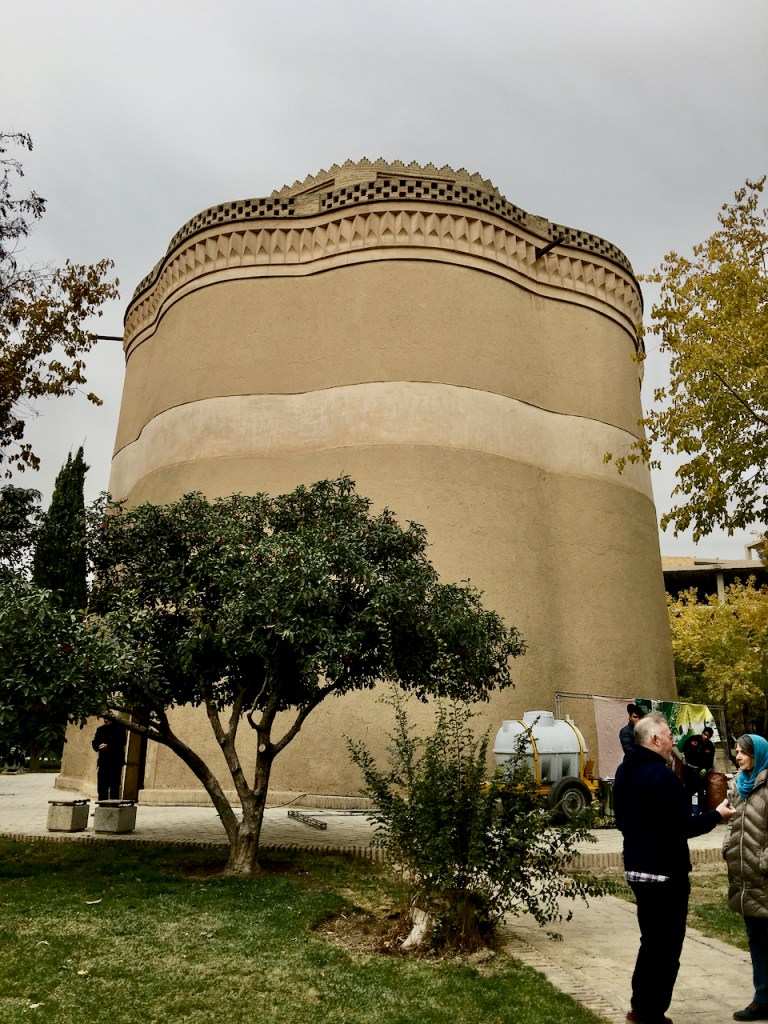
Pigeon tower on the outskirts of Esfahan 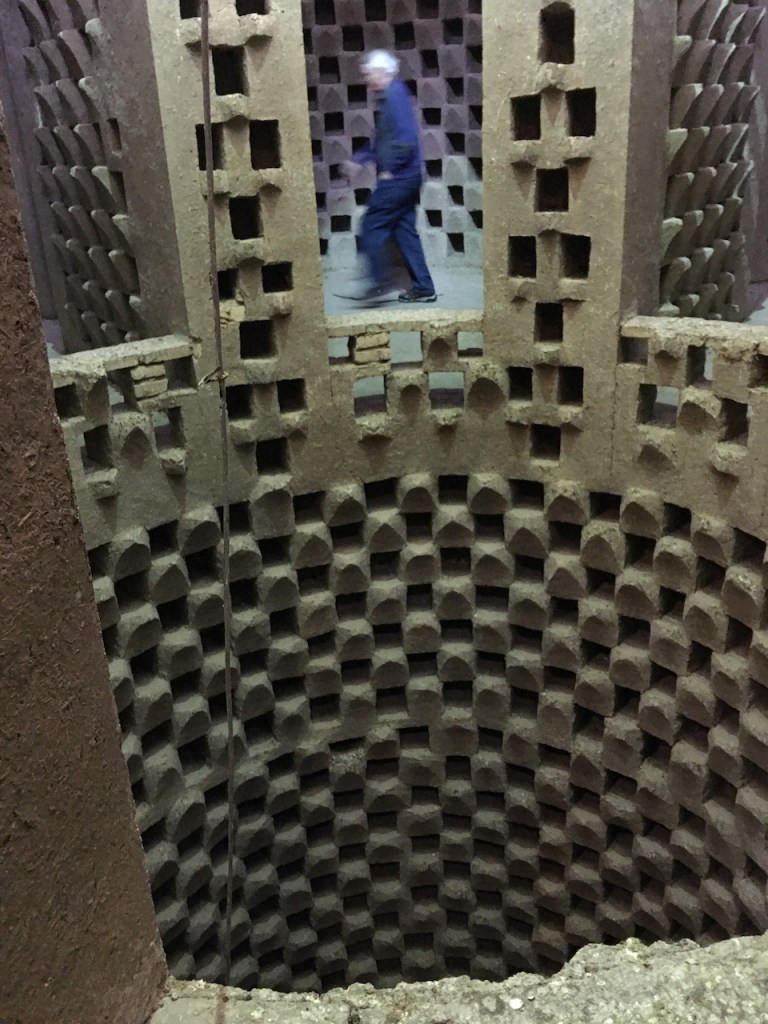
Looking across the interior of the tower 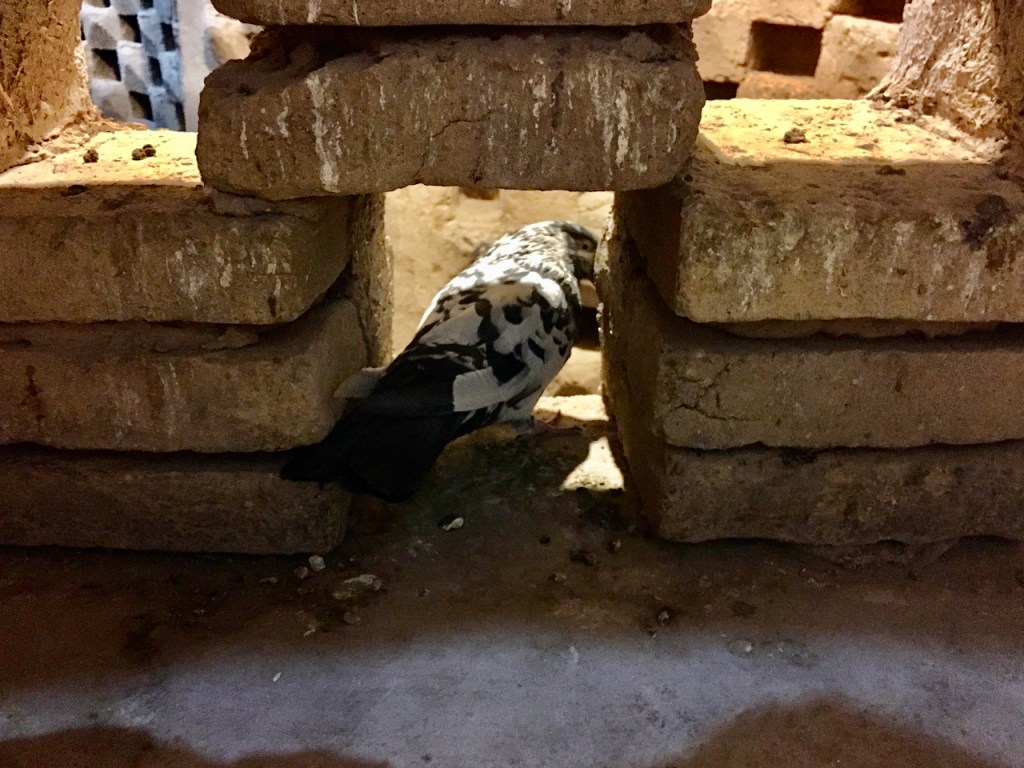
One of the residents… 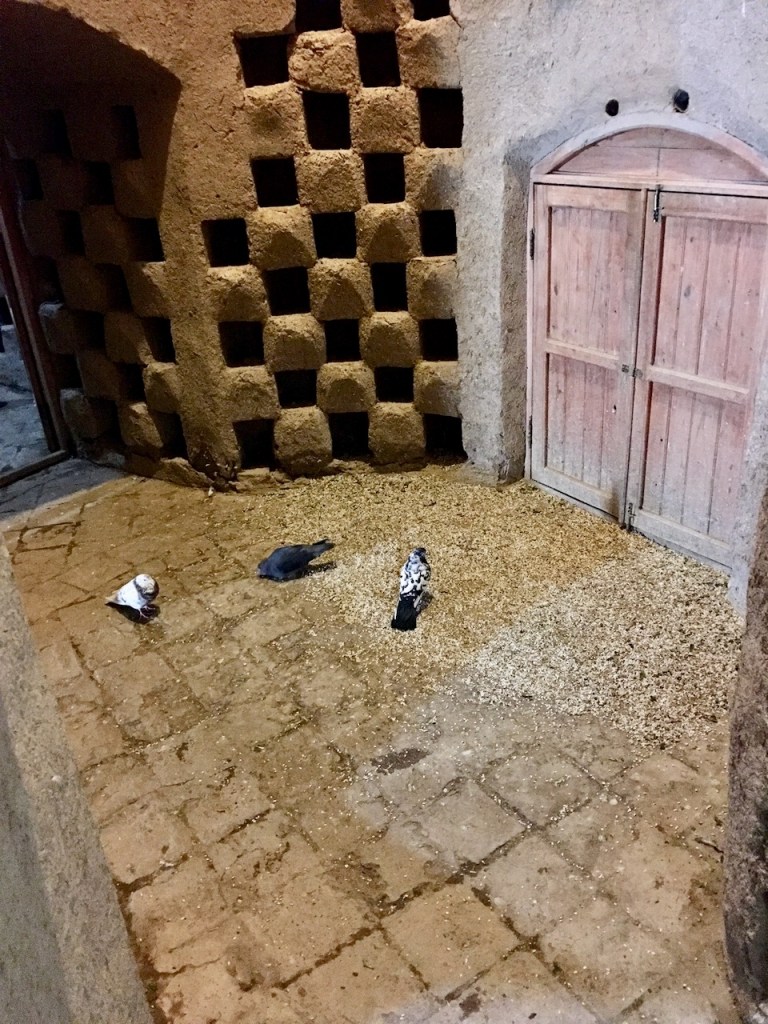
…and a few more 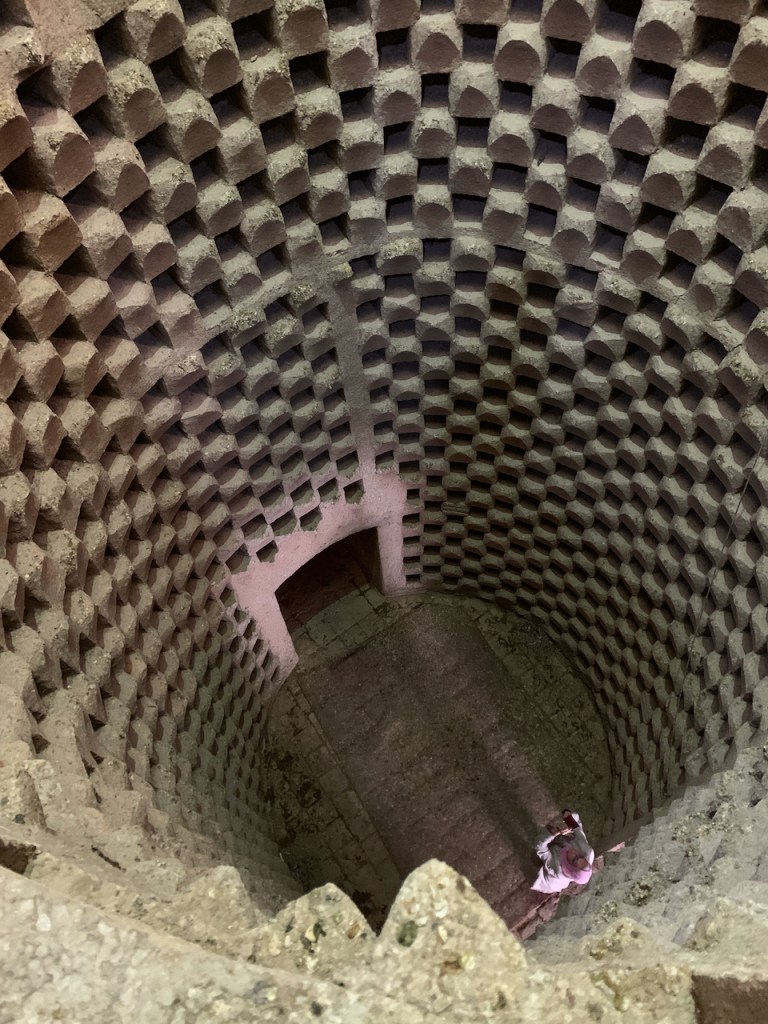
Looking down…way down
After that came miles and miles of desert as we headed towards Yazd. Along the road at one point, Vahid spotted a man holding a sign that said something about free snacks. Mori backed the bus up a bit and the man got on board and handed out small dishes of delicious rice pudding. He was doing this in honor of Mohammed’s birthday. Nate said this was a common occurrence in Iran, that people would just give away free tea or free food. There is apparently a village of some 2,000 inhabitants in northern Iran where once a year everyone opens their houses to everyone else to come in to share a meal and sociability.
We made a lunch stop in the historic city of Meybod. Lunch itself was in a restaurant which occupied all of one inside passage of what had once been a caravanserai. Outside in the central courtyard we witnessed part of a pomegranate festival. Suzan bought a small jar of pomegranate cream from one of the vendors in the square; this was a perfect remedy for skin dried out by the dry climate. In the middle of the square there was a well where camels would once have been able to quench their thirst and people could replenish their own water supply for the next part of their journey.
While we were perusing the booths at the festival, an Iranian man greeted Tim with the customary Hello!, How are you? Where are you from? How do you like Iran? greeting we’d come to expect. As was the usual reaction, when Tim said he was from the United States, the man’s face lit up with delight and effusive words of welcome to Iran. He said he thought both the US government and his own government were bad, but while interlocking his two index fingers in a gesture of solidarity, he said that the American and Iranian people were friends. We couldn’t have agreed more!
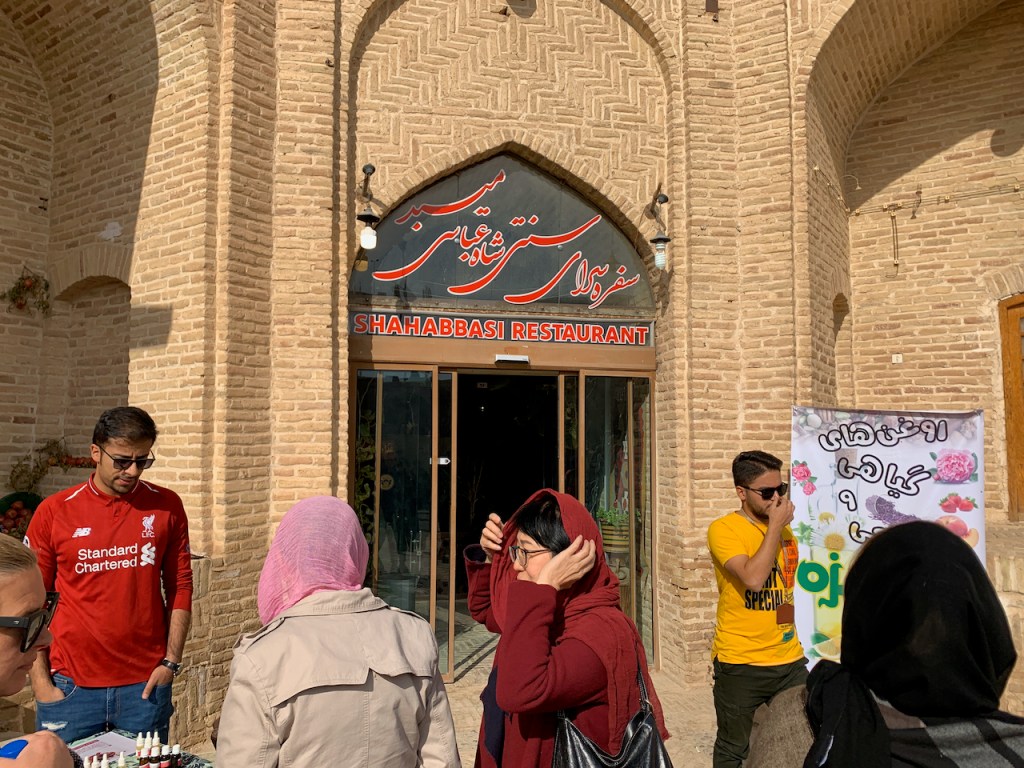
Entryway to Shahabbasi Restaurant 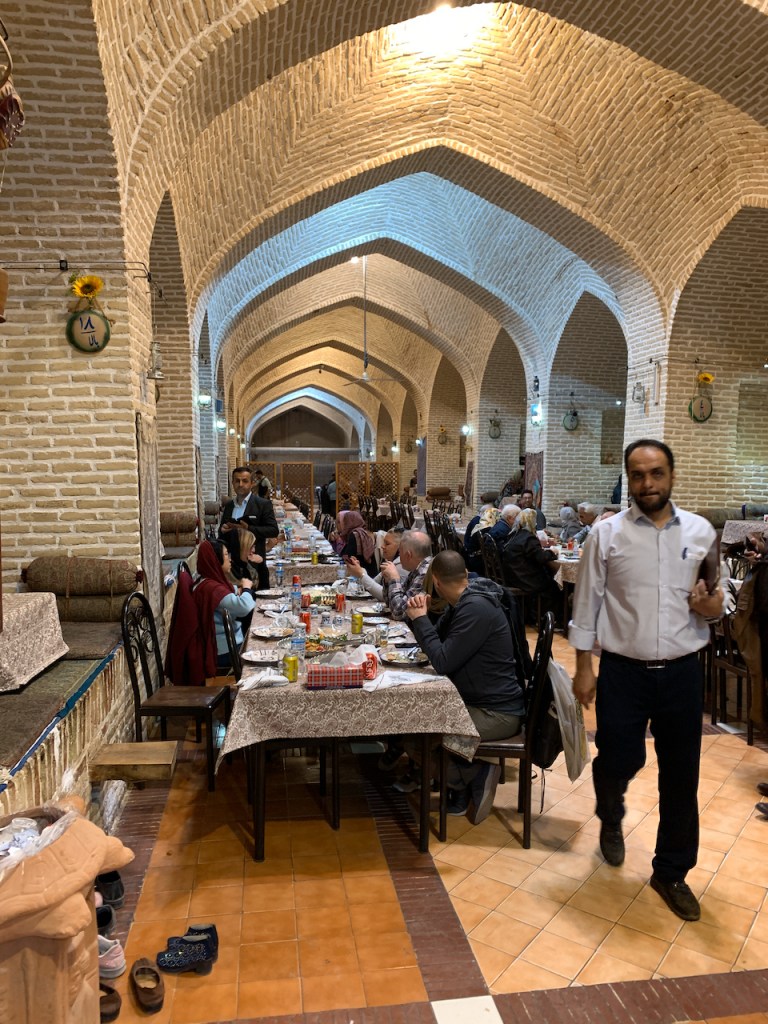
Main dining area 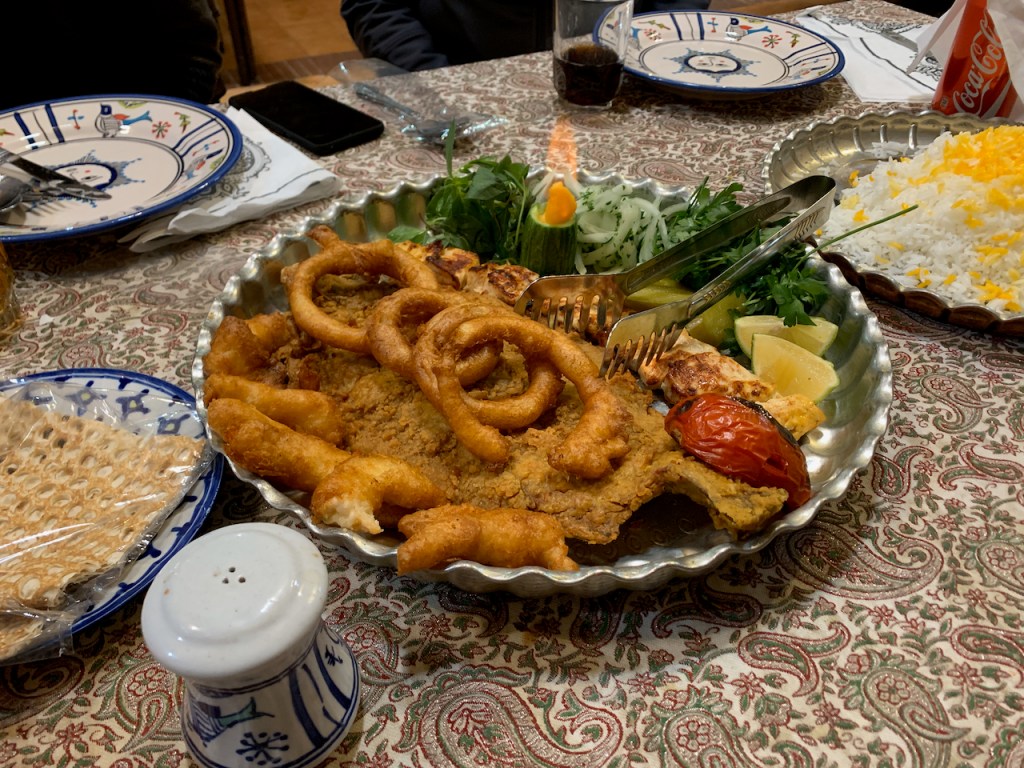
Delicious food 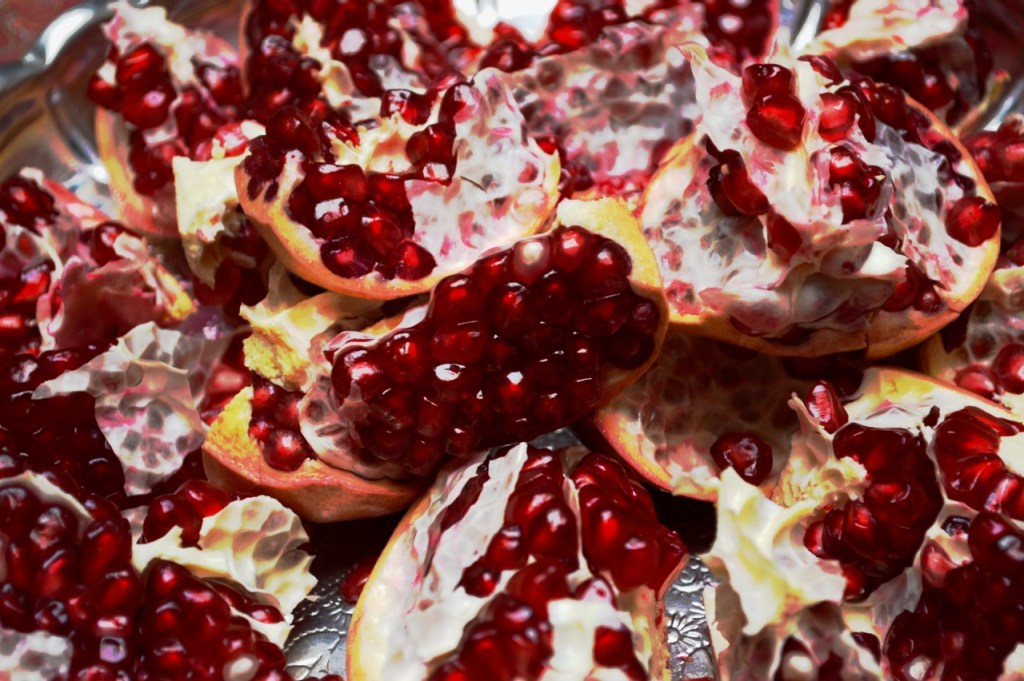
Pomegranates! (Photo by Sheldon Ricketts) 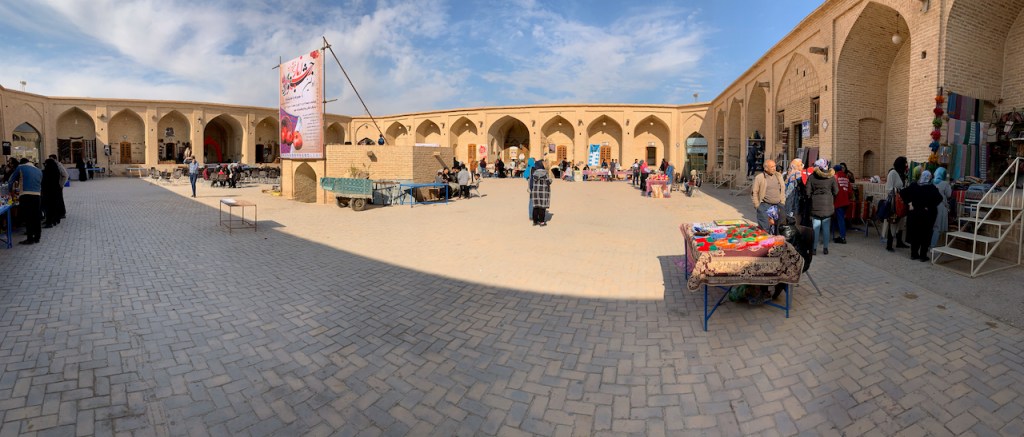
Center of the caravanserai. The pomegranate festival was winding down by the time we finished lunch.
Across the street from the restaurant we entered a former icehouse. There were two shallow, rectangular pools (no water in them now) in front of the icehouse. In the days when the icehouse was in use, during the colder parts of the year attendants would fill these pools with water and let it freeze overnight. In the morning they’d transfer the ice to the large building adjacent to it, which consisted of a large cone-shaped depression into which the ice would be dumped. The thick walls and dome above the ice repository preserved the ice for much of the year.
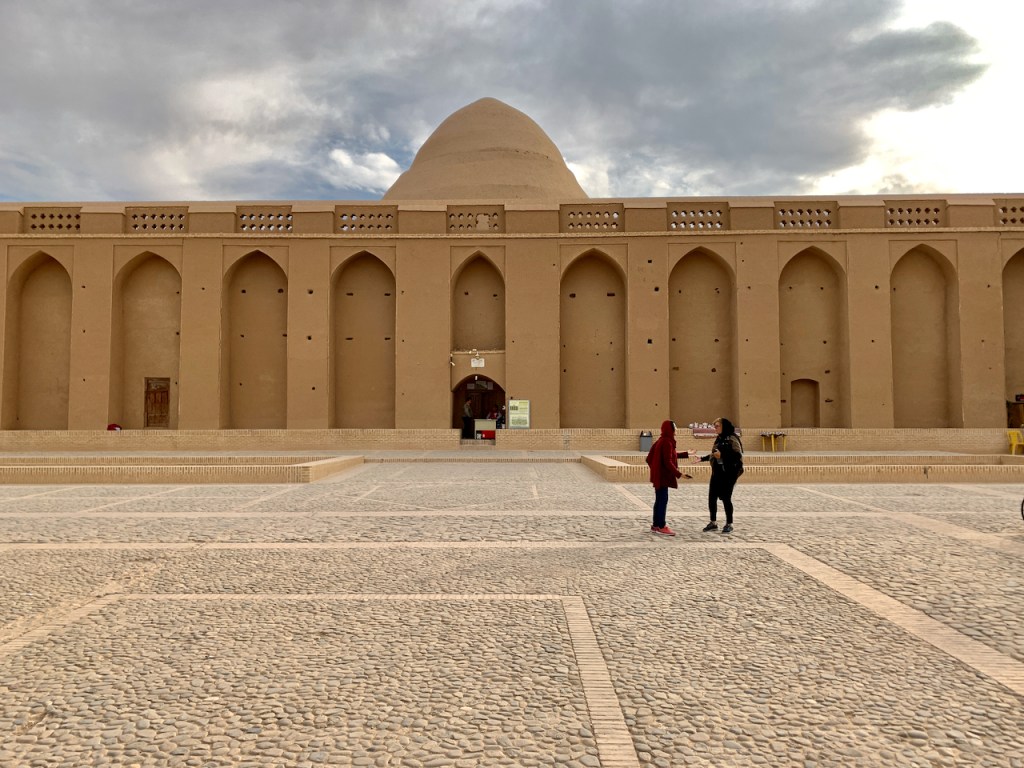
Meybod icehouse – exterior 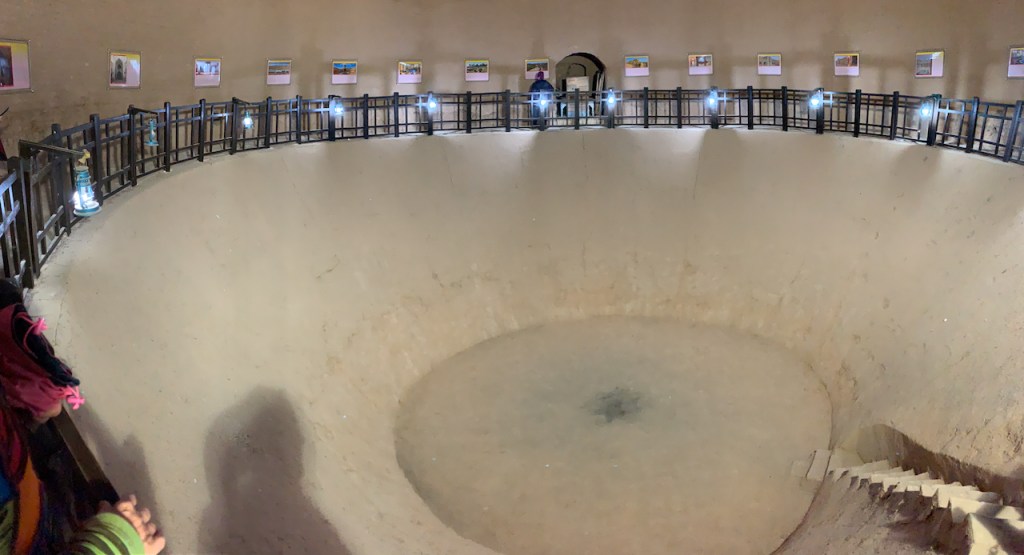
Meybod icehouse – interior
Our last stop in Meybod was Narin Castle, an ancient fort made of mud-brick. It had a high tower from which watchmen would have been able to see enemies approaching a long distance away. Below the fort, where there once was a moat, are orchards with grapevines, pomegranates and other fruit trees. The site of the fort is perhaps 2,000 years old (though the sign at the entrance claims 4,000 years).
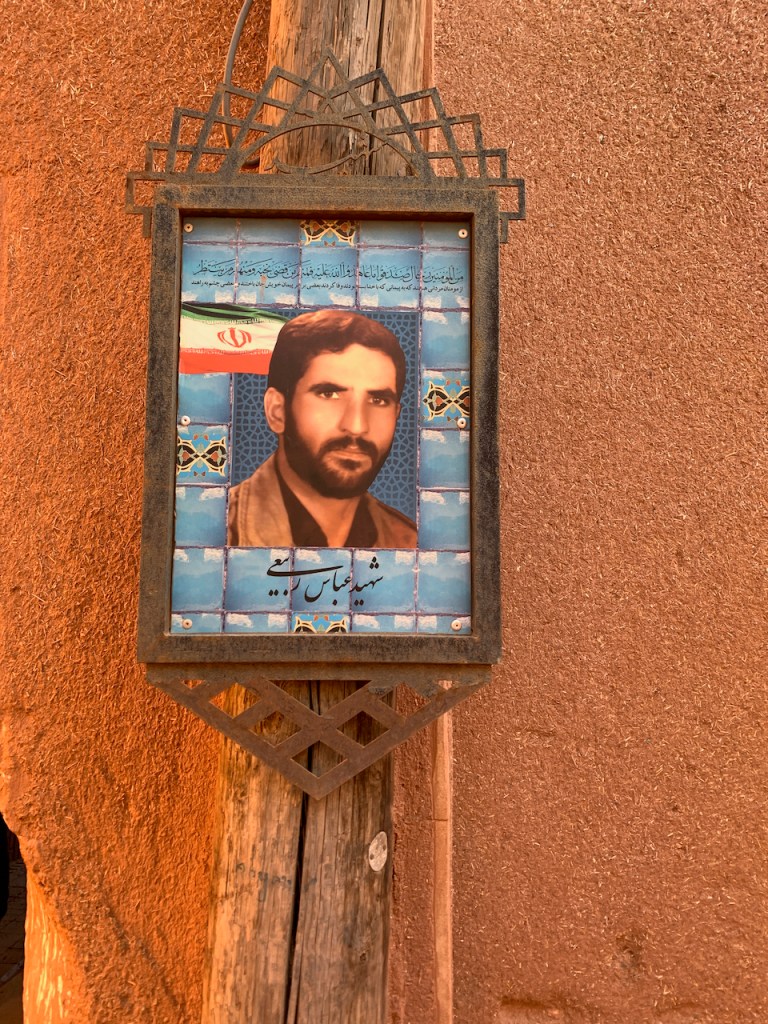
In Meybod, as in many cities that we drove through, the median strips in the highway were lined with poles supporting photographs of local men who had died in the Iran-Iraq War of the 1980s. Many private businesses also displayed posters of the men who had worked there and had been killed in the war. In the United States one may need to visit a military cemetery to appreciate the human cost of war. In Iran seeing the memorials is a daily experience. This war was a tremendously devastating event for the people of Iran, who lost a large part of a generation of young men. Our bus was moving too fast to capture good images. The photo above, on a house wall in Abyaneh, is a good example of this type of memorial.
We continued on into Yazd and checked into the Dad Hotel. Internet service was spotty, at best. Suzan rested in the hotel room while Tim went out with some of the others in the group to a nearby restaurant, where he had a camel burger(!) with fries for dinner. The group walked back to the hotel through part of the bazaar; most of the shops were closed because of the lateness of the hour.
 Trip to Iran - November 2019