Suzan had a head cold and was not feeling up to going out in the chilly air, so Tim went out with the rest of the for the day’s sightseeing, which turned out to be a good thing. The plan was that it would be relatively light day and easy in terms of places to visit. Alas, we all know what happens to the best-laid plans…
The first stop was at two Zoroastrian Towers of Silence on the edge of the city near Highway 71, the road that connects Tehran to the Persian Gulf. These towers are the places where Zoroastrians would bring deceased family members for final rites. The compound below the towers is comprised of several of small buildings in which family members of the deceased could stay during the ceremony. Because a cold wind was blowing, our group took shelter in one of these to listen to a brief lecture by Vahid on Zoroastrianism.
When the towers were in use, the corpses would be carried to the tops of the towers, where there were three concentric circles inside a stone enclosure. Children’s corpses were placed in the innermost circle, then women, and finally men. Their bodies would be left open to the elements, and vultures would come and pick the bones clean, after which the bones would be deposited in the center of the circle. Eventually the bones would decompose into dust.
The compound also included a house for the “undertaker” who prepared the bodies for the ceremony. Because many of the dead had died of infectious diseases, the undertaker was not allow to live in the village lest he spread contagion.
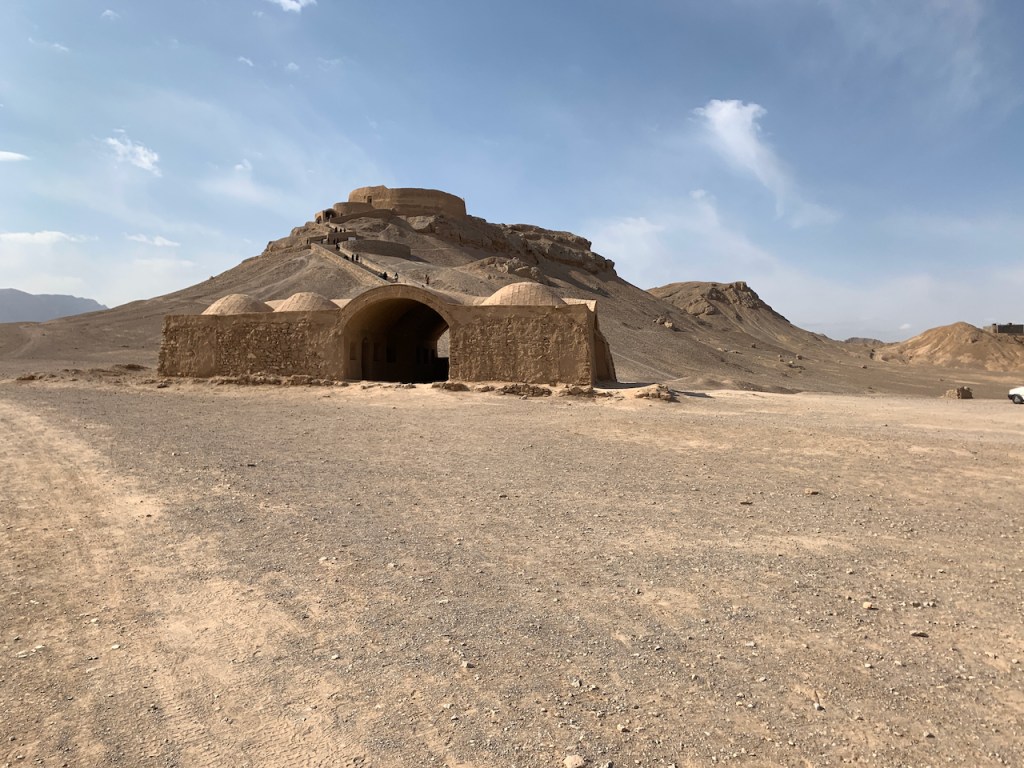
The older of the two towers 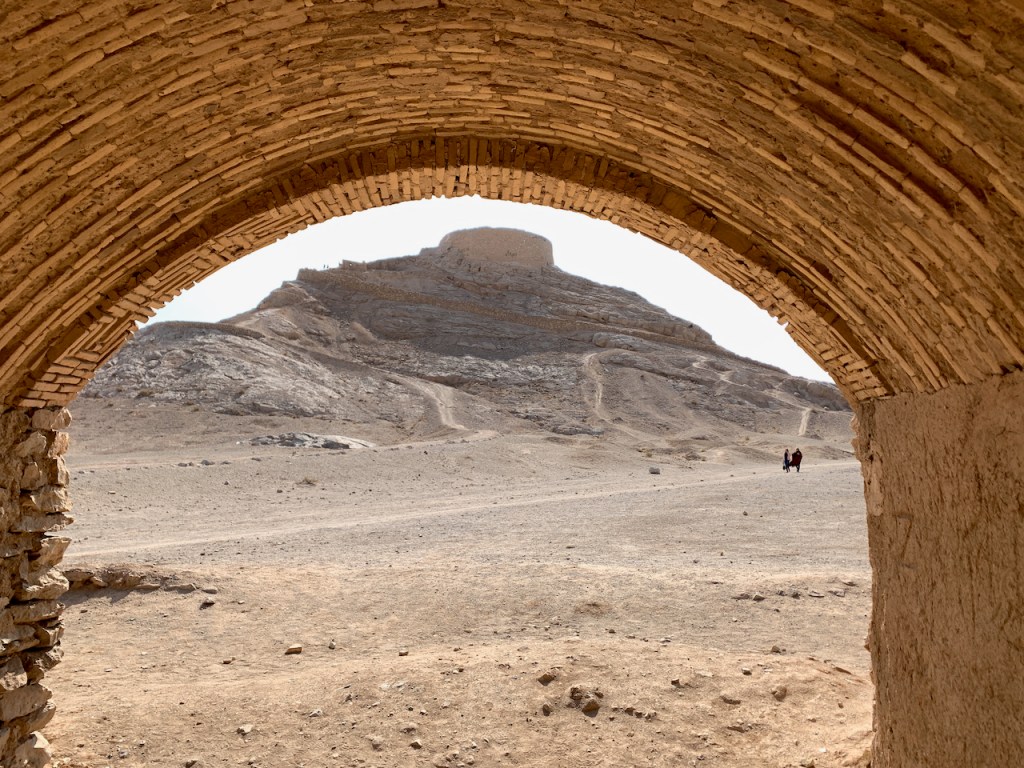
The same from one of the buildings in the compound 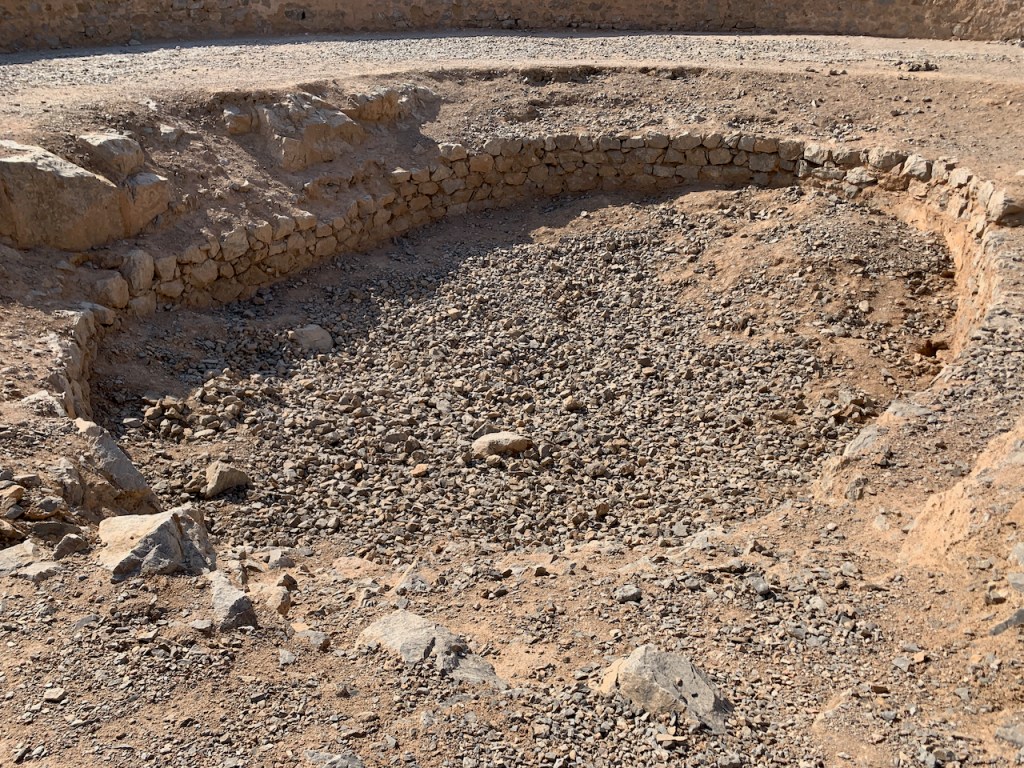
Current state of the ruins at the top of the older tower 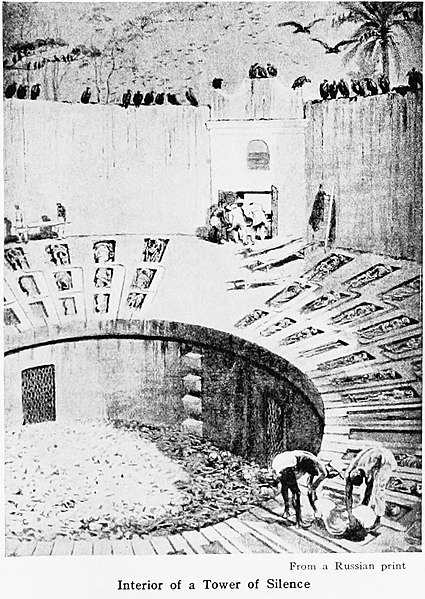
An imagined view of a Tower of Silence when it was in use. Source: Wikipedia, https://www.wikiwand.com/en/Tower_of_Silence
Leaving these Towers of Silence, our destination was another Persian garden. We didn’t make it. Instead, we ran into a massive traffic jam caused by many people intentionally stopping their vehicles at the major roundabout as a protest against the recent increases in the prices of gasoline, as well as the imposition of rationing.
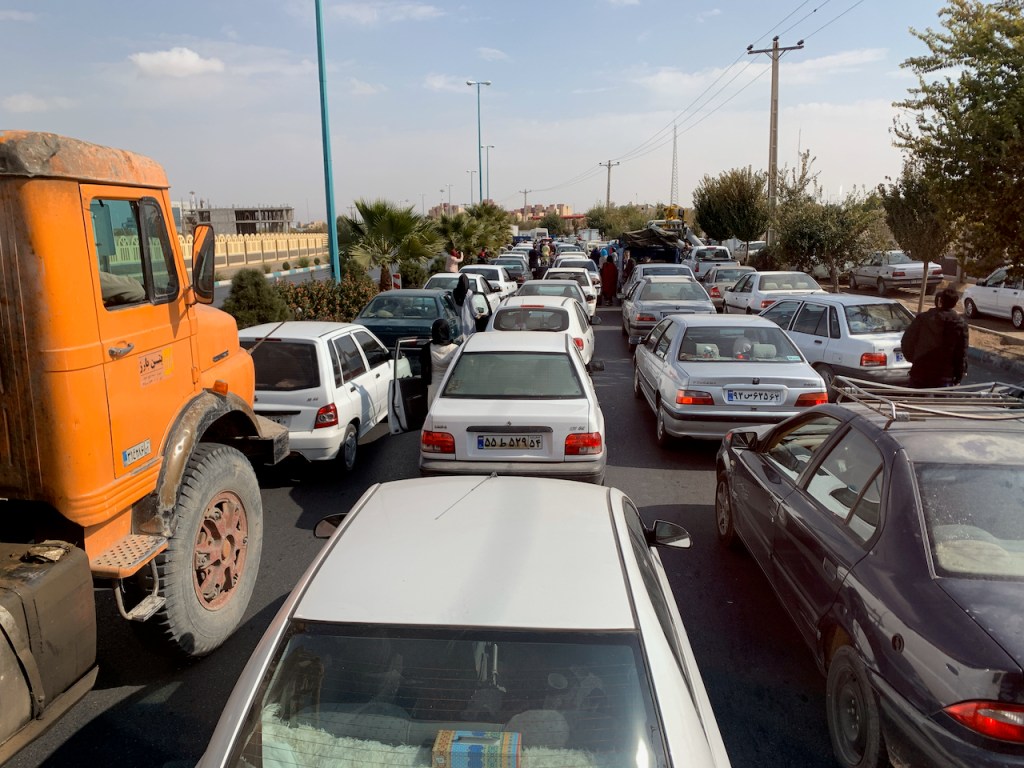
The traffic jam that was the start of… 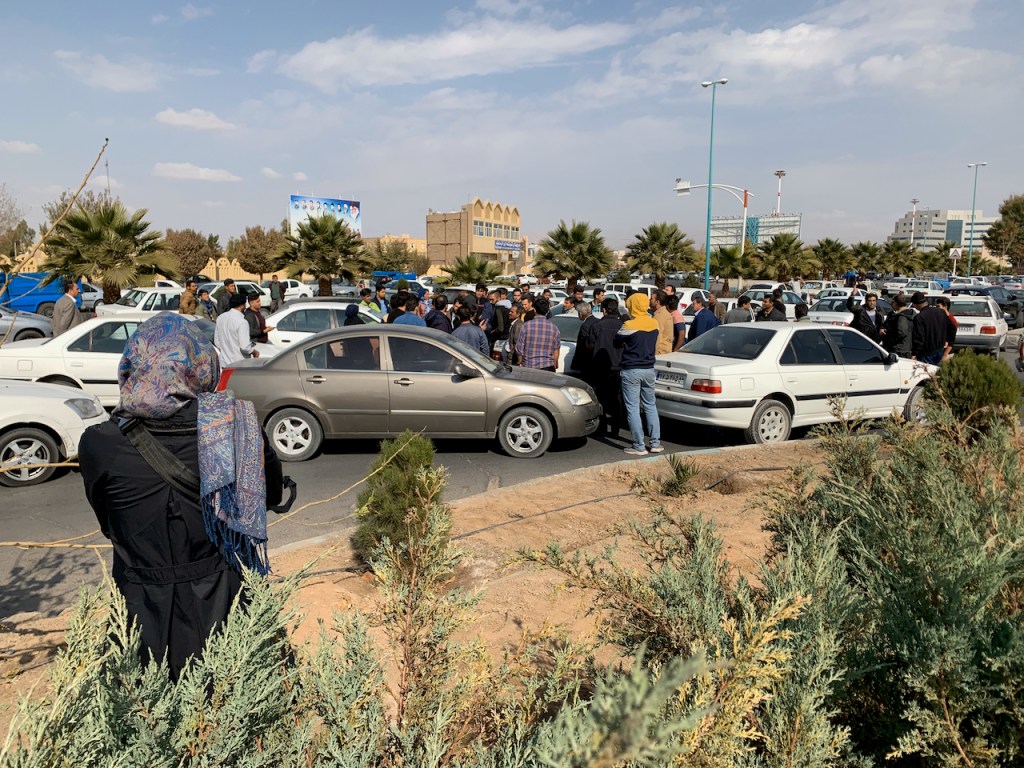
…the protest in Yazd
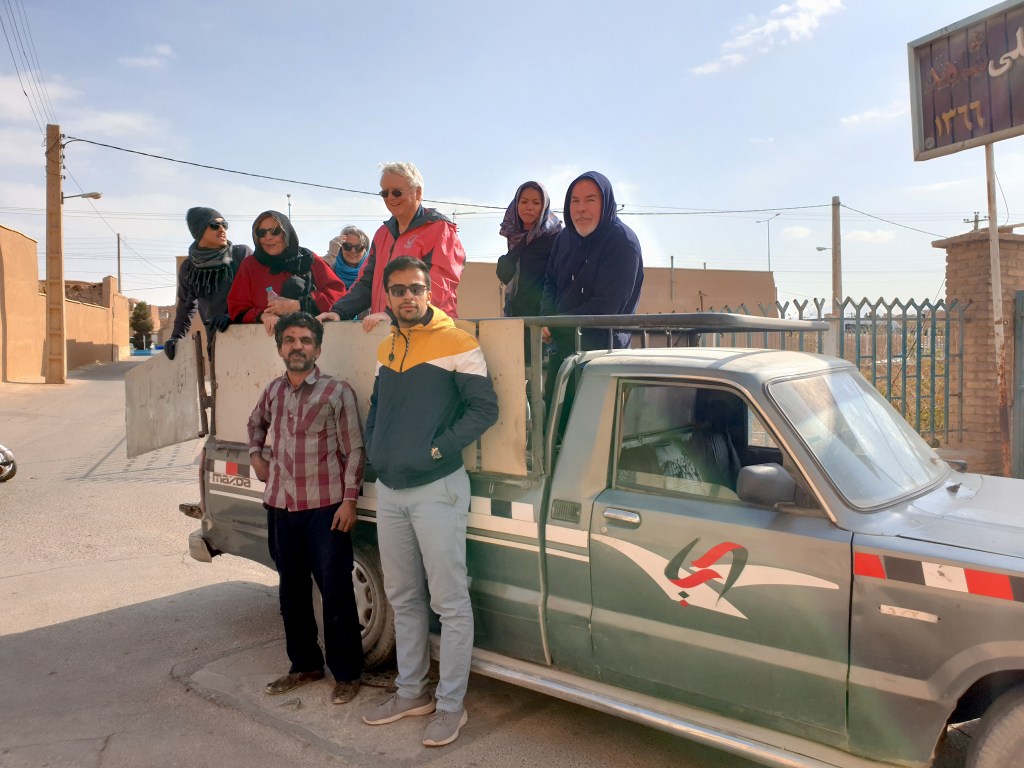
Hitching a ride in Yazd
We decided the best thing to do was just to get out and walk. While our bus driver Mori stayed behind with the bus, we got to the intersection where the blockage started and turned left to walk down another major road. After we’d walked some distance, Vahid managed to flag down a private car and a pickup truck, whose drivers gave us all rides to the restaurant where we’d arranged to have lunch. This was surely way out of the way for both drivers. Incredible kindness on the parts of the Iranians! Neither driver would accept money for their troubles.
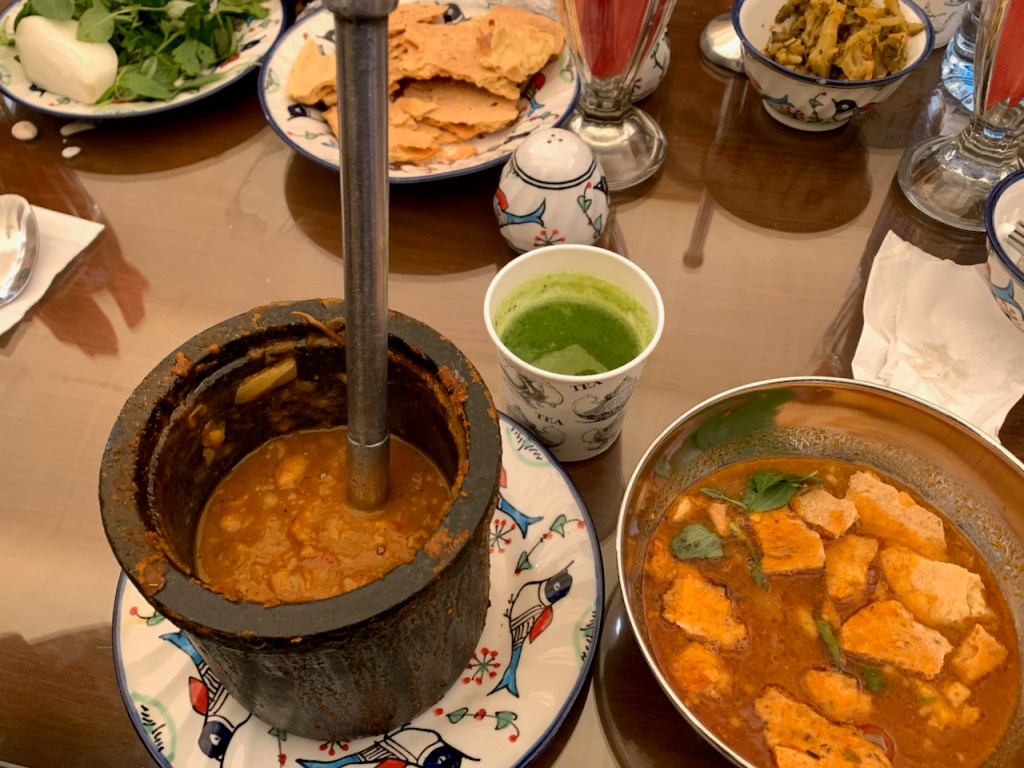
A dish called dizi
Our lunch destination was the Tahmoures Historical Restaurant where Vahid had arranged a meal of an Iranian dish called dizi, which is a combination soup and stew and which apparently means “meat” in Farsi. The waiters brought it to the table in very hot stone pots that they had to handle with tongs. They strained off much of the liquid into soup bowls that we’d been instructed to put bits of crumbled cracker into. This left a very thick stew in the stone pots, which we proceeded to mash with heavy metal mashers that were part of the table settings. The ingredients were lamb, potatoes, chickpeas, tomatoes, and some spices—and the results were delicious.
Since the bus had net yet gotten out of traffic, we walked back to the hotel, passing some ancient mud-brick ruins in an older part of the city. Some of them are being restored.
It turned out that the Iranian government, in an attempt to cripple communication between the protesters, had either turned off the internet entirely or slowed it to a crawl. In any event, we were totally out of touch with the rest of the world. It turned out, also, that the sim cards in our phones would not work in Iran, so we were quite incommunicado. We were concerned that our families and friends back home would see the news reports and be even more concerned about our safety.
When Tim got back to the hotel, he was greatly relieved to find that Suzan was feeling much better, good enough to be able to go out for the evening’s adventures. Fortunately, by this time Mori and the bus were back. We set out around 5pm for a demonstration of traditional Iranian martial arts. The location was near another roundabout where protests were occurring, this time a bonfire in the middle of another busy intersection.
The exhibition itself was in the Saheb Al-Zaman Zurkhaneh, a dome-shaped enclosure down a short alley near the main road. Quoting from the web page linked above, “Zurkhaneh ritual combines martial arts, calisthenics, strength training and music, aiming to promote chivalry, kindness and humility through nurturing the bodily strength.” This facility in Yazd is a kind of exercise club whose members take part in competitions and they are very good at it.
The whole event is orchestrated by a singer who also plays percussive instruments, and consists of a combination of exercise routines and dancing. Some of the routines involve the rhythmic swinging of weights that look something like oversized bowling pins. At the end, one man also performed using very heavy chains. Both Vahid and Sheldon participated in the performance; all the men wore special pants with a paisley design on them. One little boy took part also.
When the performance was over, Philippa bought a box of the Iranian version of cotton candy to share with everyone at a shop near the roadway roundabout. There we saw a continuation of the earlier protests, this time in the form of a large bonfire in the middle of the intersection. Even though we didn’t witness them, the protests in days to come became much more serious. Reports are that at least several hundred people were killed.
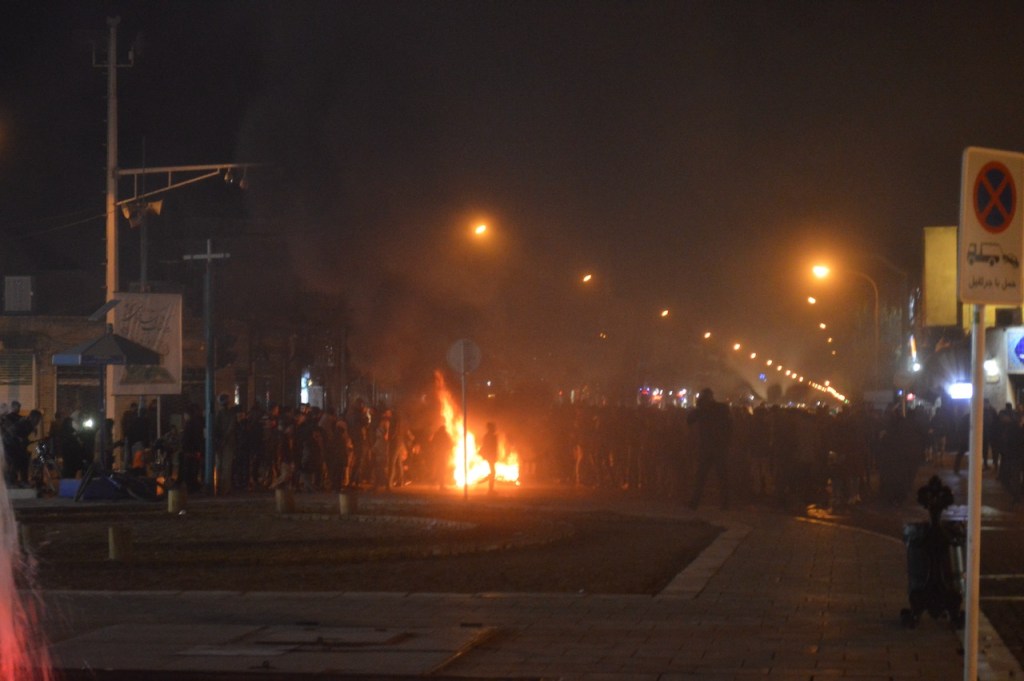
Bonfire protest (Photo by Sheldon Ricketts)
We went to dinner at a nearby rooftop restaurant called the Orient Hotel. Both Suzan and Tim ate several vegetarian dishes, which tasted great!
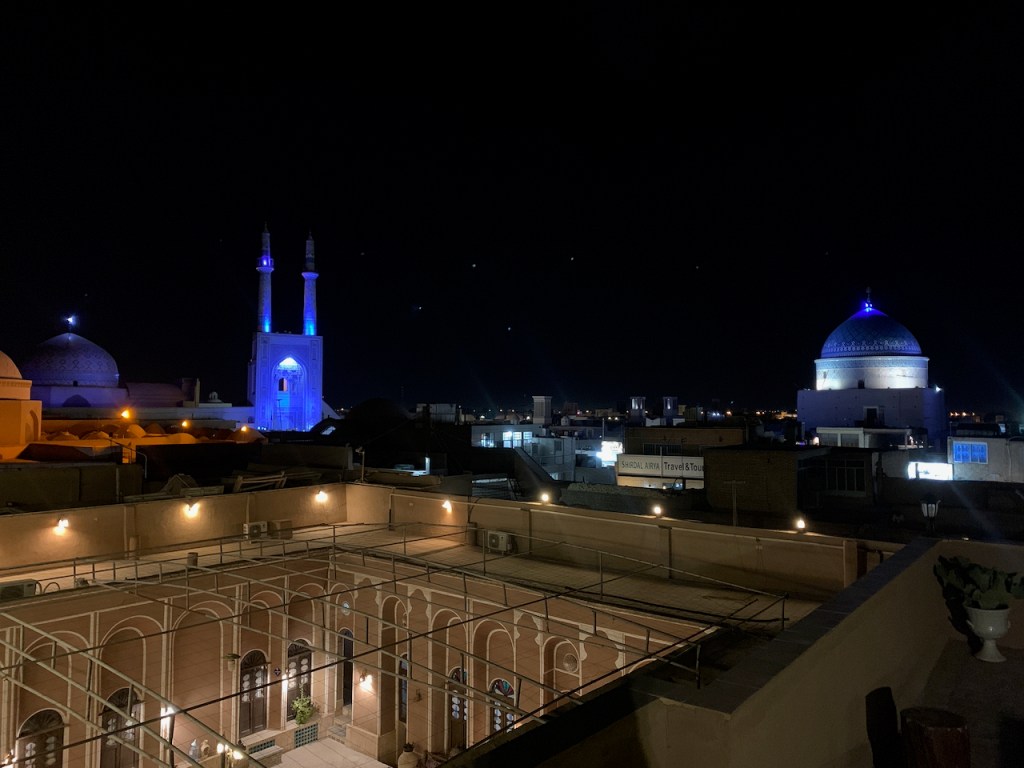
View from the restaurant at the Orient Hotel in Yazd
 Trip to Iran - November 2019