The internet was totally blocked, both wifi and cellular, so we were still out of touch with the rest of the world. Yet we felt totally safe and secure, having great confidence in our guides’ ability to deal with whatever might come up. None of us really knew what was going on.
We took it easy in the morning. We had breakfast at the hotel and made a late departure from Yazd, Our first stop was supposed to be the Yazd Water Museum, but it was closed, probably because of the protests; the bonfire we’d seen the previous night was right at the intersection where the museum is located.
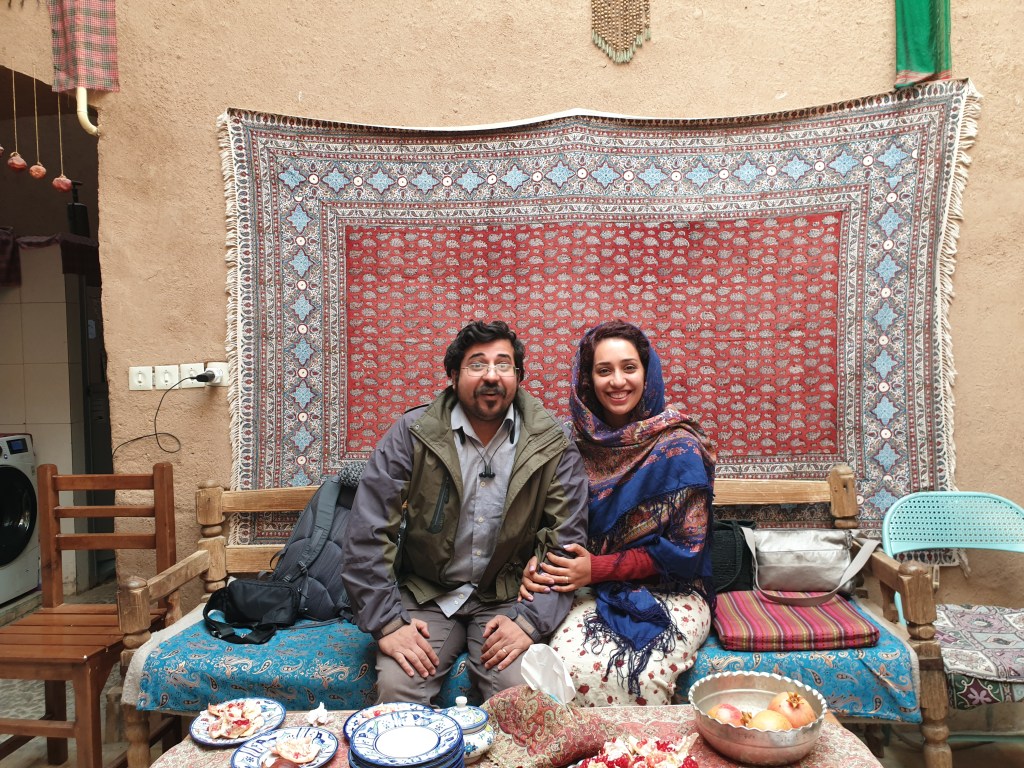
Ramtin and Tina of the Nartitee House in Yazd
From Yazd we drove to the small city of Taft. We visited the Nartitee House, owed by Ramtin and Tina, who are Zoroastrians. We all gathered in the brightly decorated central room of their guesthouse where Ramtin gave an excellent talk on the history and main tenets of Zoroastrianism.
He told us that there are only about 120,000 Zoroastrians in the world, the majority in India, with some 20,000 in Iran. The religion, generally considered the world’s first monotheistic religion, originated in Persia some time in the second millennium BCE. It was the main religion of the Persian empire until the Arab Conquest in the 7th century CE, when Islam was imposed on much of Persia. Many of the remaining Zoroastrians were forced to flee to India in the 16th century CE.
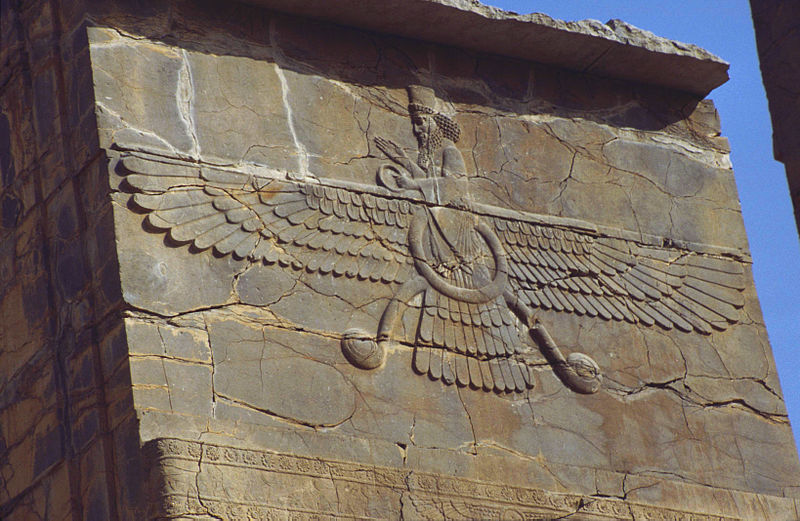
Relief scultpure of Ahura Mazda from Persepolis. Source: https://commons.wikimedia.org/wiki/File:AhuraMazda-Relief.jpg
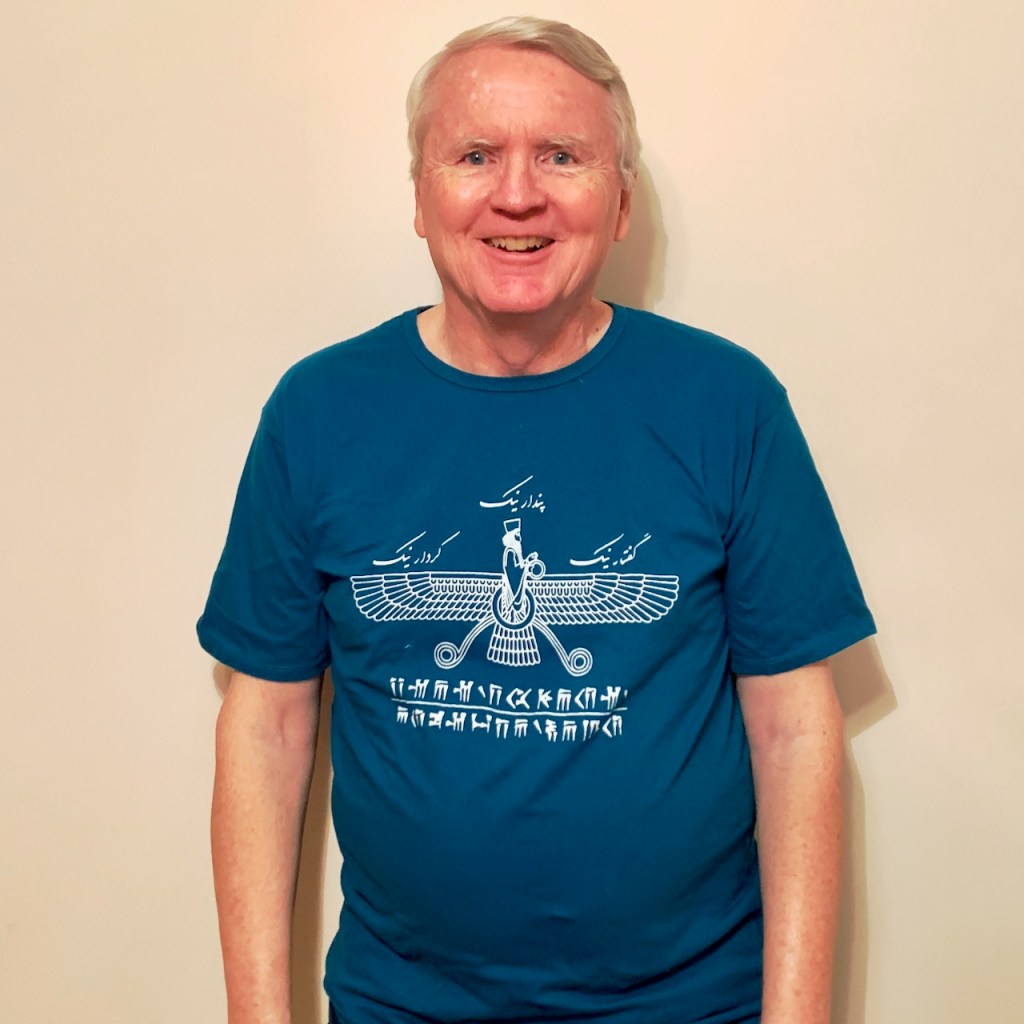
Tim has no idea what the cuneiform words mean!
The name of God in Zoroastrianism is Ahuramazda. Tim was wearing the Zoroastrian t-shirt he’d bought in Esfahan as an undershirt. He displayed it to everyone, which made for a good laugh. Our host explained that this symbol was originally the symbol of the Achaemenian Empire (ancient Persia) and had been adopted by Zoroastrians several hundred years ago.
After the presentation we had a delicious lunch in the dining hall of the guesthouse. The main course was rice with lentils, over which one could pour either a thick vegetarian sauce or ground meat. After lunch Nate, Vahid, and Mori became engaged in the brief but spirited foosball match. Suzan and Tim had a quick look at the pomegranate orchard behind the house.
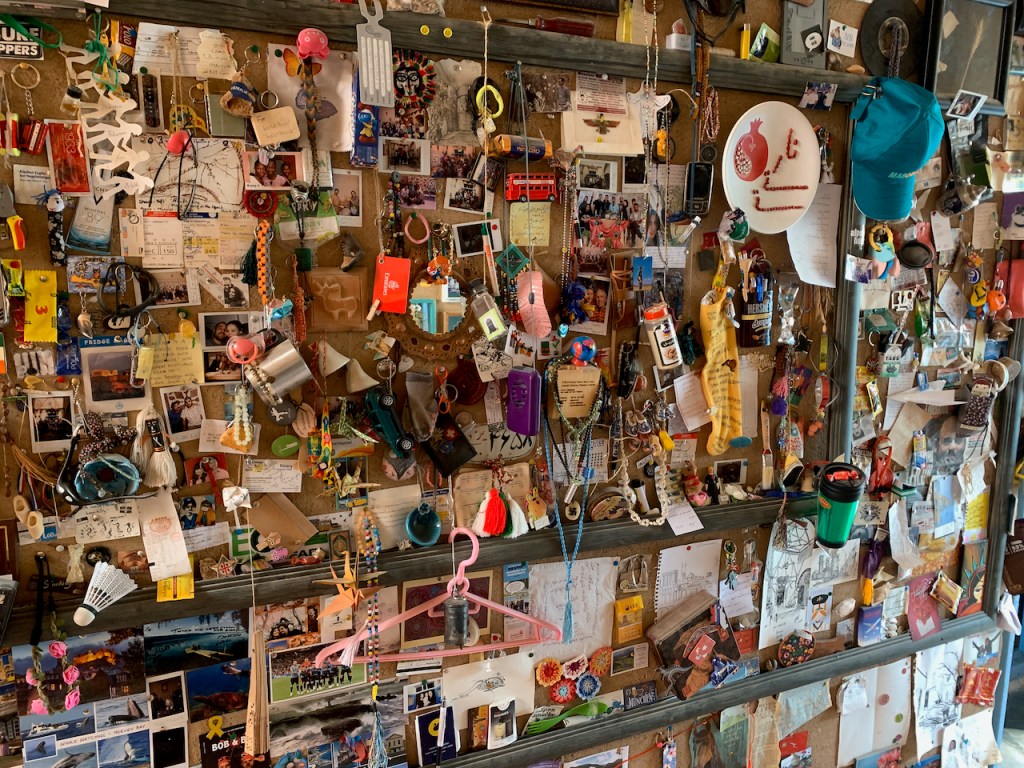
The wall of mementos
Ramtin and Tina have accumulated many hundreds, if not thousands, of mementos given by visitors over the past several years. We had brought with us a keyring with several charms relating to the state of Virginia, where we live. We happily added this trinket to Ramtin and Tina’s collection. It was one of several items we had brought with us to give to people we would meet.
Leaving Taft, we backtracked towards Yazd and then headed east. Our destination was the Sar Yazd Fortress, which was built during the Sassanian Dynasty (3rd-7th centuries A.D.) Its purpose was to serve as a safe treasury house where people could store gold and other valuables in times of danger. The narrow, labyrinthine passageways would surely have made it a challenge to any attackers.
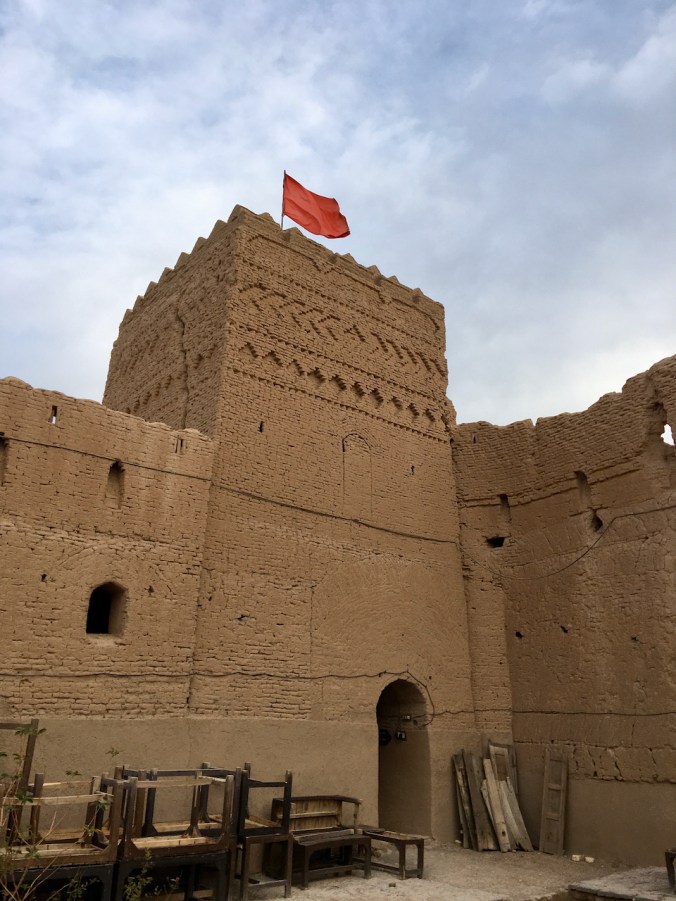
Tower at Sar Yazd Fortress 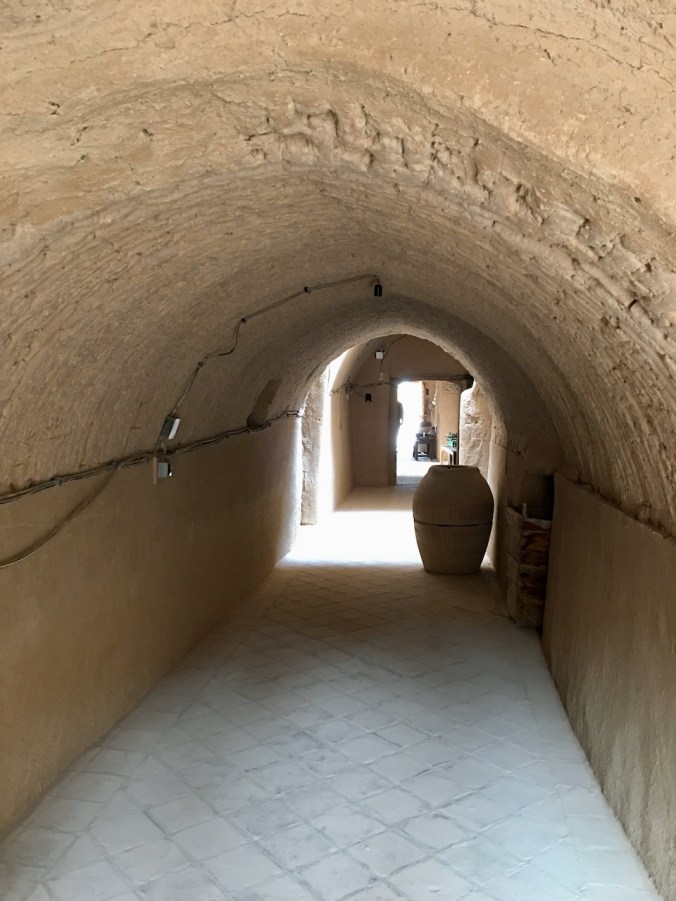
One of many narrow passageways 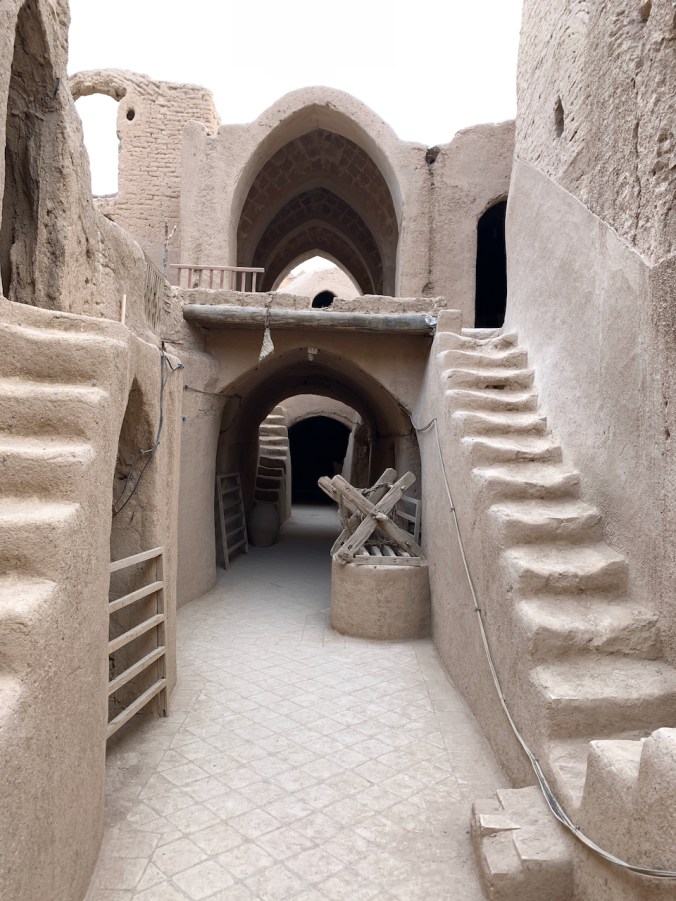
Steps up to the top 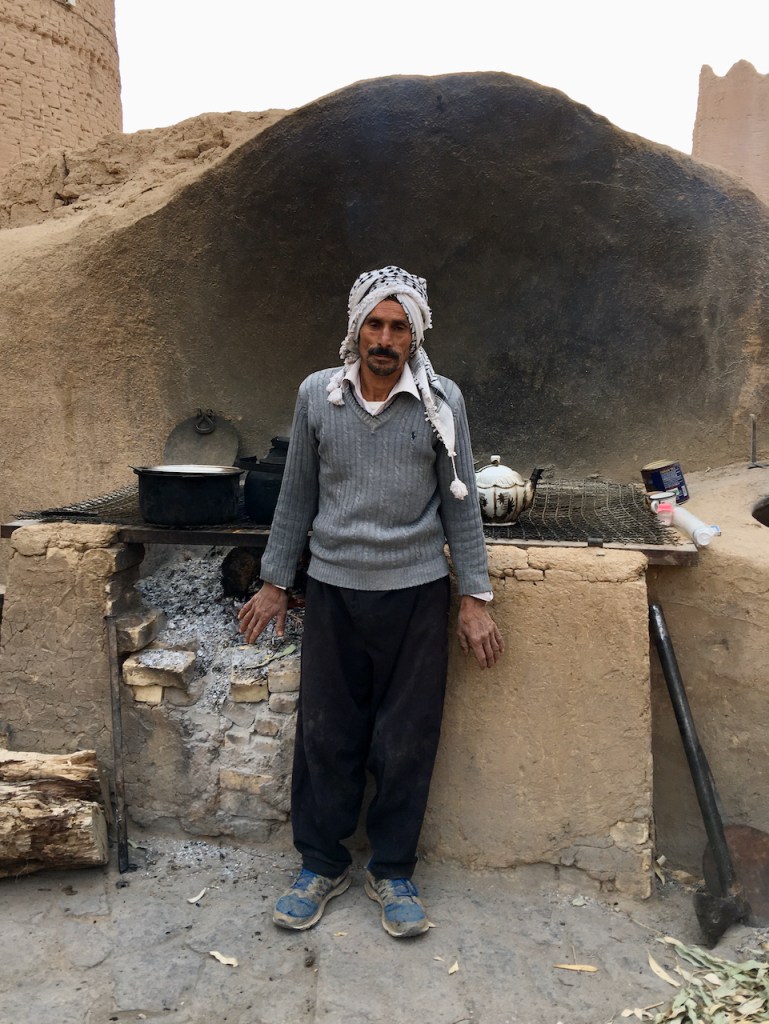
The caretaker at the fortress made tea for us travelers
Although our bus was having some sort of mechanical problems and was unable to go at normal speed, we did arrive at the Zeinodin Caravanserai, our accommodations for the night. It is truly in the middle of nowhere in the desert, and is a genuine caravanserai, possibly as much as 500 years old. But nicely fitted with modern conveniences inside. Nate told us that it is the oldest continually operated caravanserai in Iran.
When we first arrived, there was some loud music being played in one of the rooms on the far side of the courtyard. Two men, dressed in white, were performing some kind of martial arts exercise, though of a different kind from what we had seen in Yazd. Because the air was quite cold, the hot tea served to us in the main room tasted very good.
Our group occupied rooms in one wing of the caravanserai. Each room was simply a curtained-off section of a platform along the outer wall of the building. The beds were simply futon-like mattresses on the floor. The room had plenty of clean linen and, even though the weather outside was quite cold, we were very comfortable.
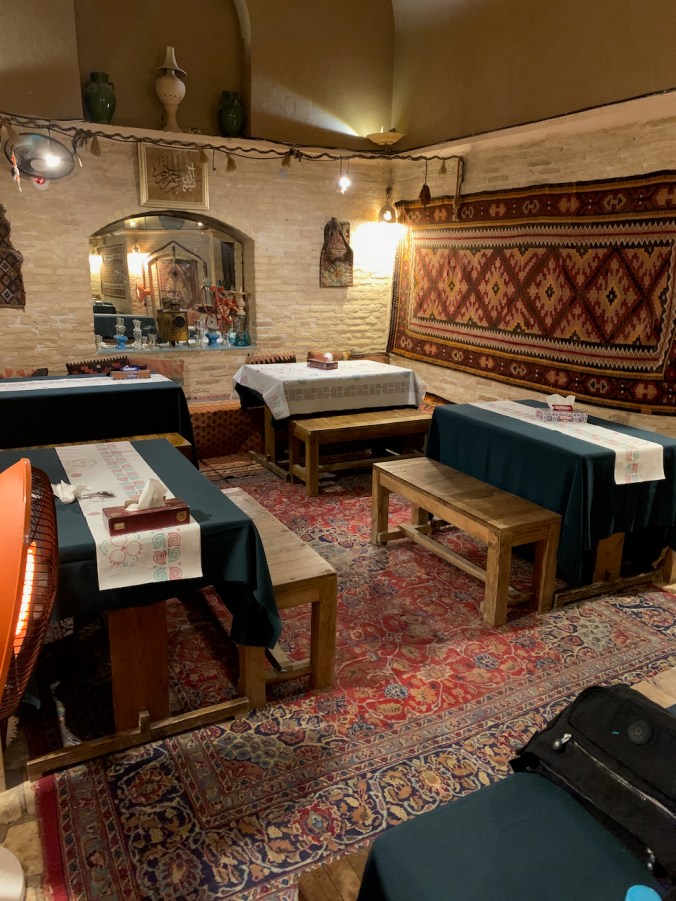
Dining area at Zeinodin 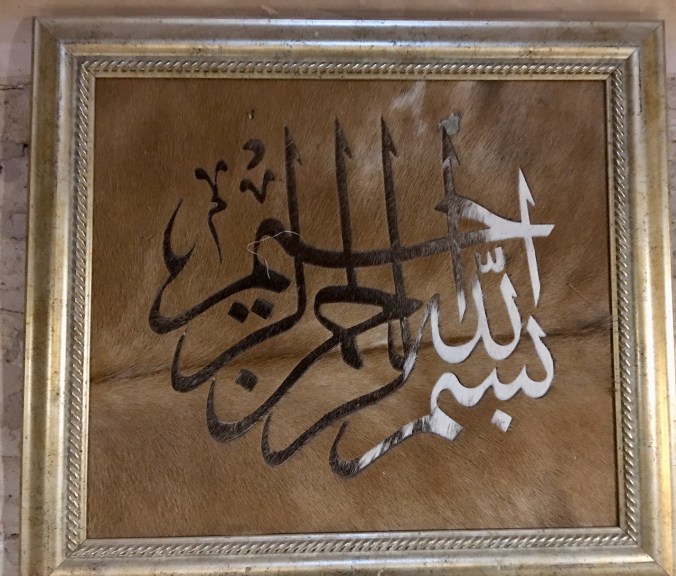
Camel hair embroidery on wall 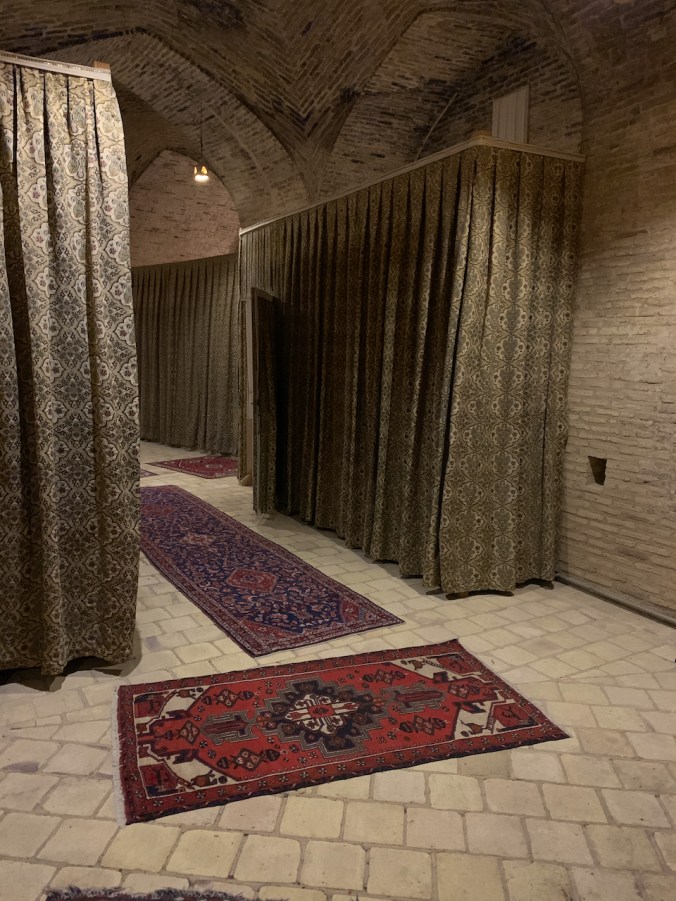
Curtained-off sleeping area 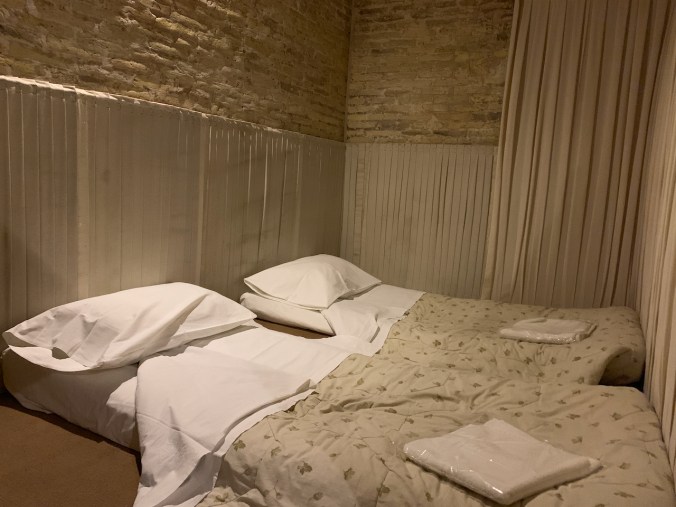
Bedroom
 Trip to Iran - November 2019