The internet was still out.
Rain was still coming down in the morning, but we braved the elements and walked from the hotel to the vast and impressive ruins of Persepolis. One of the chief virtues of the Apadana Hotel is its proximity to the archaeological site, so it took only a few minutes walk to arrive. On our way there, we saw the tree-lined avenue that the notorious Shah Mohammed Reza Pahlevi had constructed for a grand celebration of the 2500th anniversary of the Persian Empire in 1972. He had planted 2500 trees to commemorate the occasion. Nate had told us that he may have spent as much as a billion dollars on the festivities, which were perhaps the beginning of the end for him since popular opinion was not supportive of the expensive celebration.
The builders of Persepolis–which was more a ceremonial capital of the Persian Empire than an administrative one–were the Great Kings of Persia who belonged to the Achaemenid Dynasty. The most famous of these were Darius the Great and his son Xerxes I who launched two massive yet unsuccessful wars against various Greek city-states (most notably Athens) during the first two decades of the fifth century BCE.
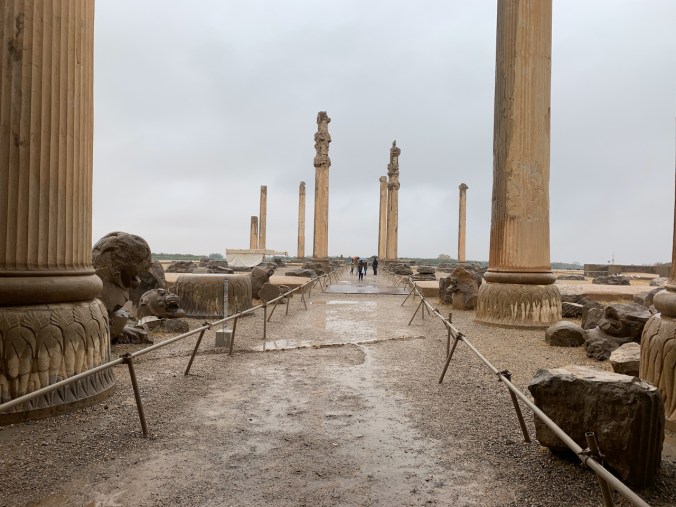
Below are some views of the ruins of Persepolis. They remind Tim of Shelley’s Ozymandias:
I met a traveller from an antique land,
Who said—“Two vast and trunkless legs of stone
Stand in the desert. . . . Near them, on the sand,
Half sunk a shattered visage lies, whose frown,
And wrinkled lip, and sneer of cold command,
Tell that its sculptor well those passions read
Which yet survive, stamped on these lifeless things,
The hand that mocked them, and the heart that fed;
And on the pedestal, these words appear:
My name is Ozymandias, King of Kings;
Look on my Works, ye Mighty, and despair!
Nothing beside remains. Round the decay
Of that colossal Wreck, boundless and bare
The lone and level sands stretch far away.”
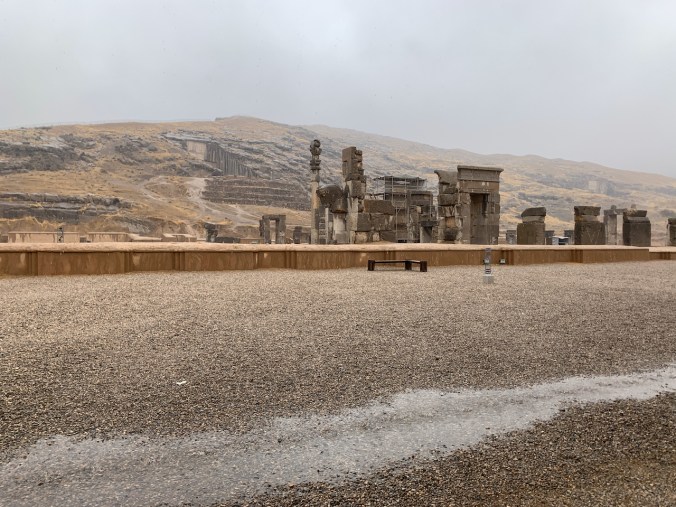
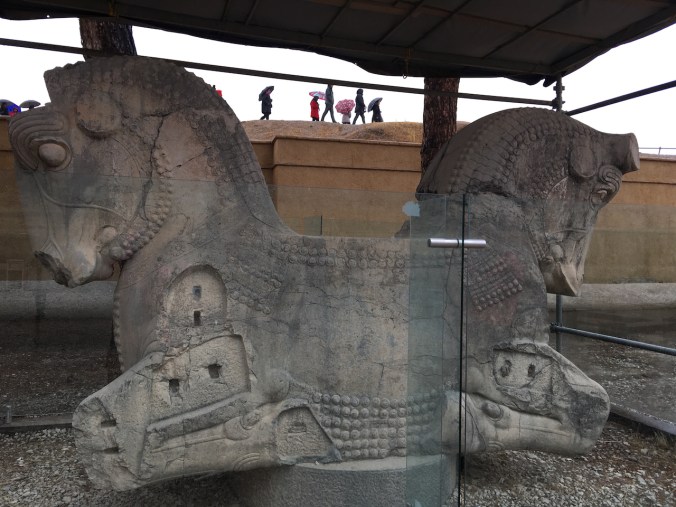
Column capitals, not at the museum 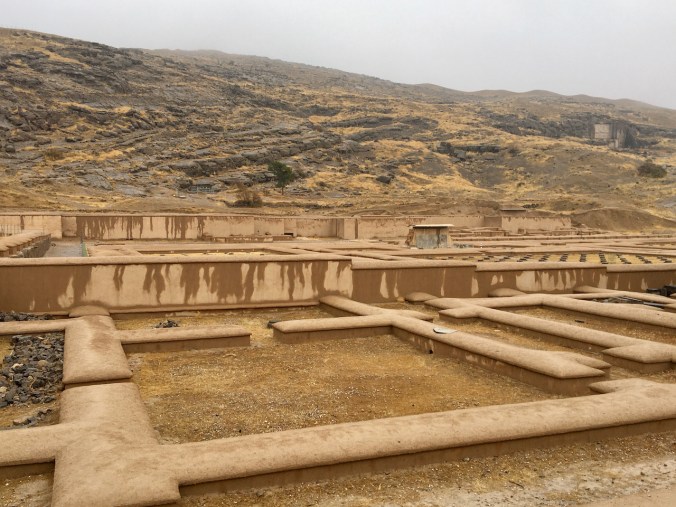
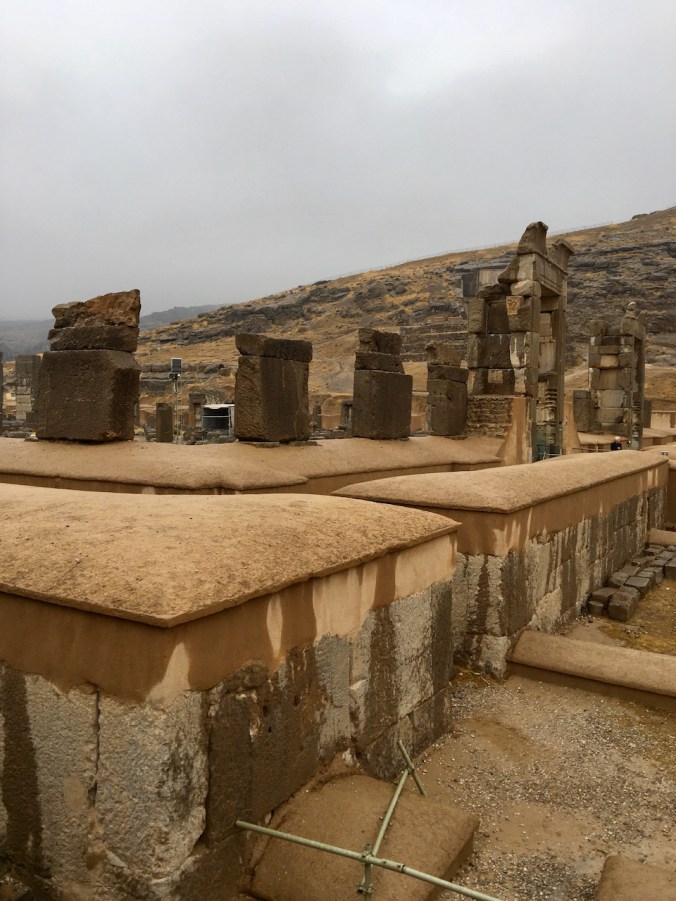
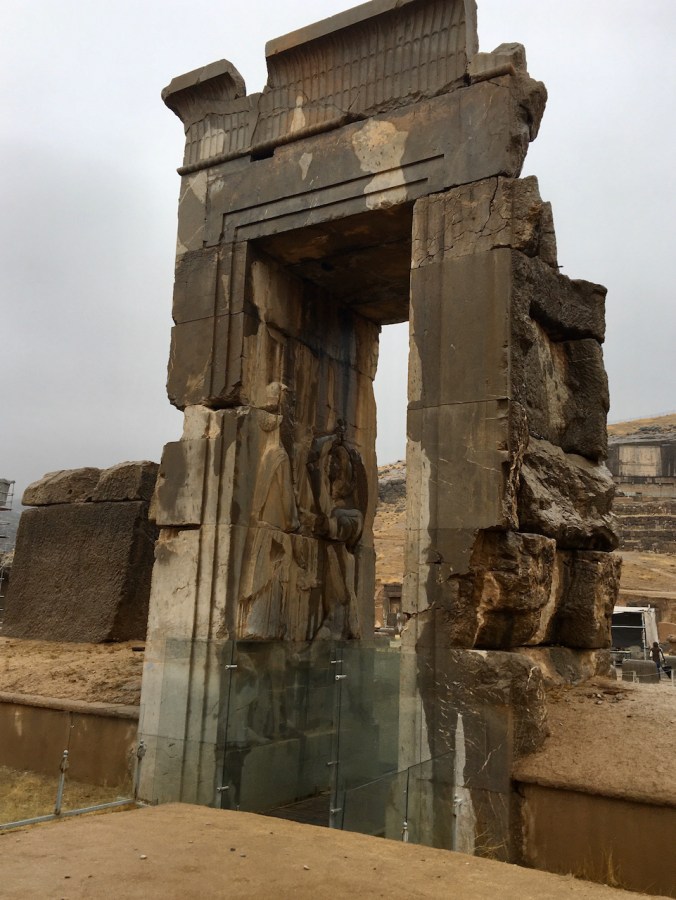
The ruins of the Gate of All Nations
We walked up a grand staircase and through the Gate of All Nations to the level where most of the palaces were located. On one side of the Apadana Palace there is a long frieze of relief sculptures, and Vahid did an excellent job of explaining to us what various elements of the frieze signified.
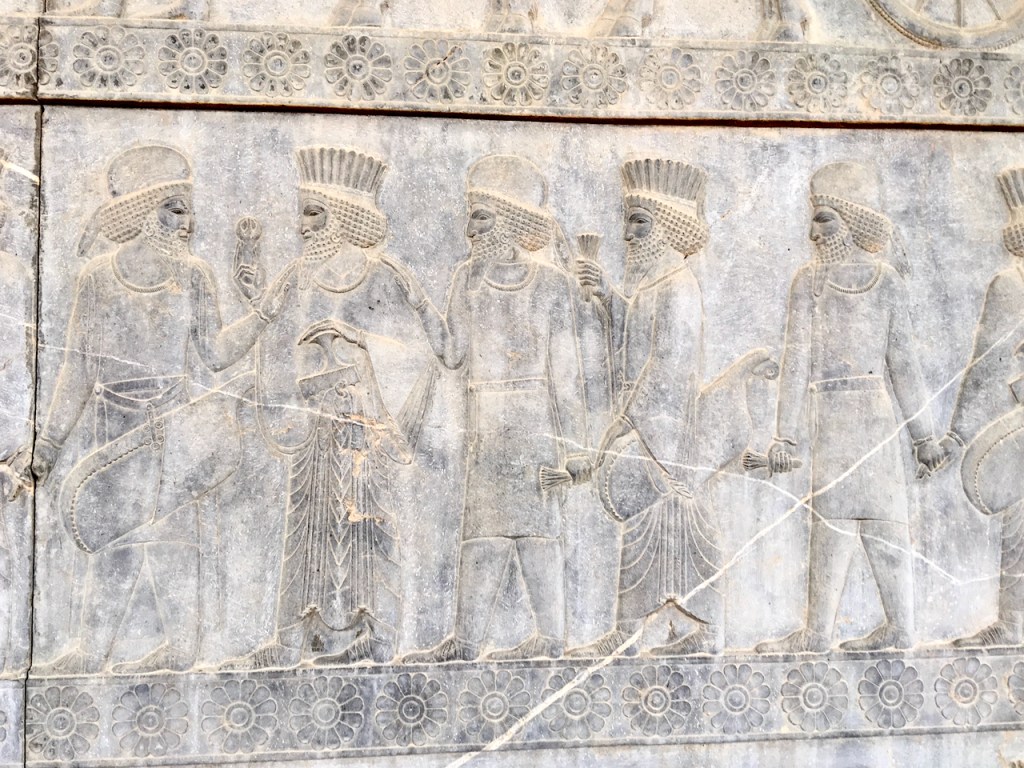
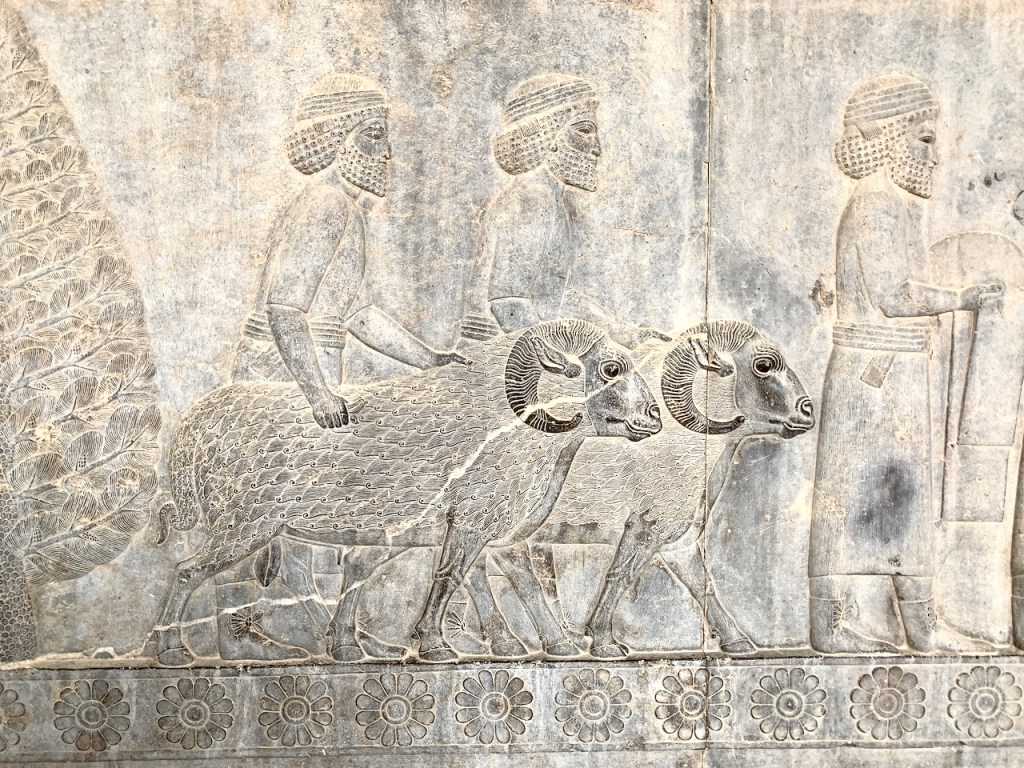
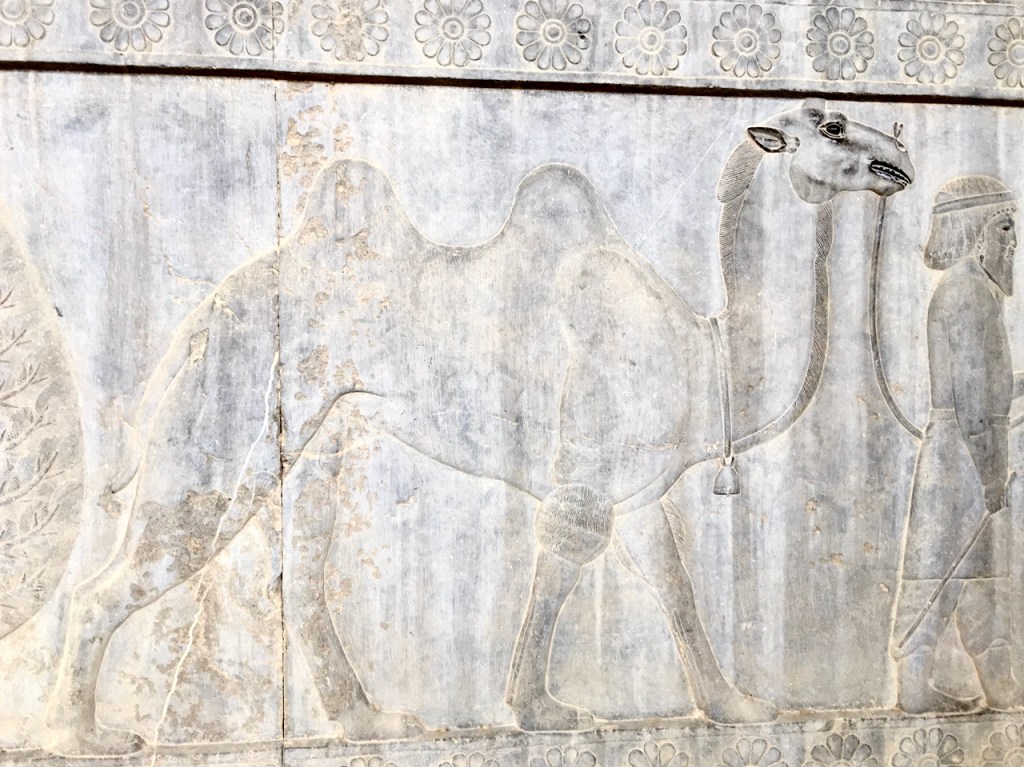
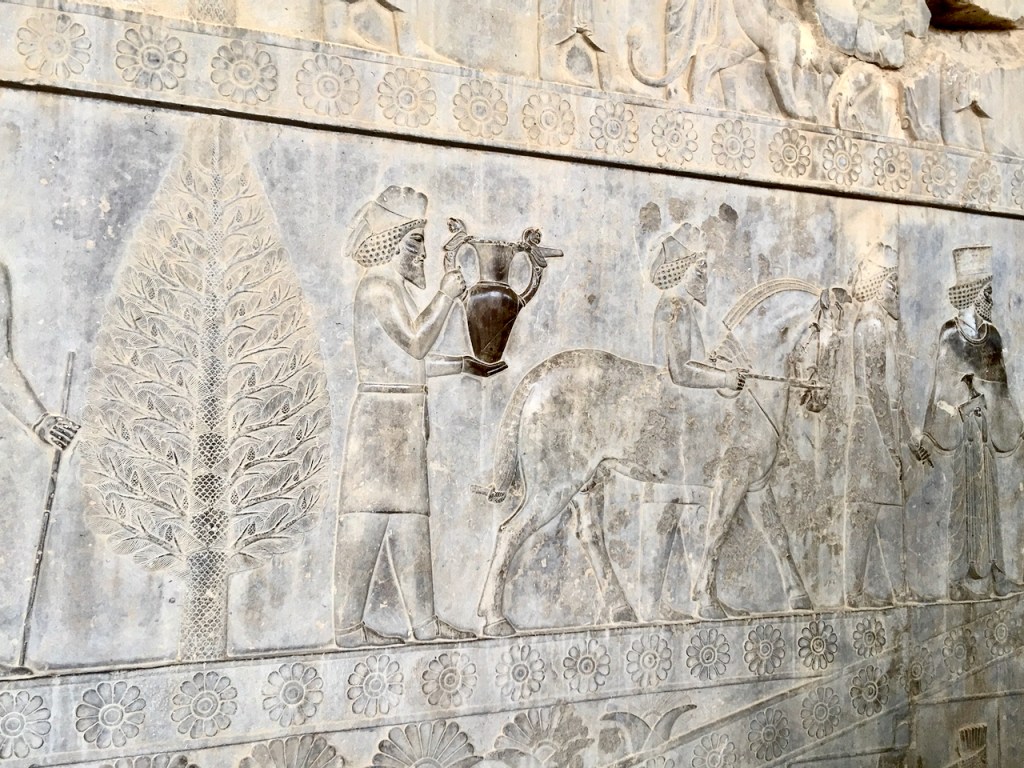
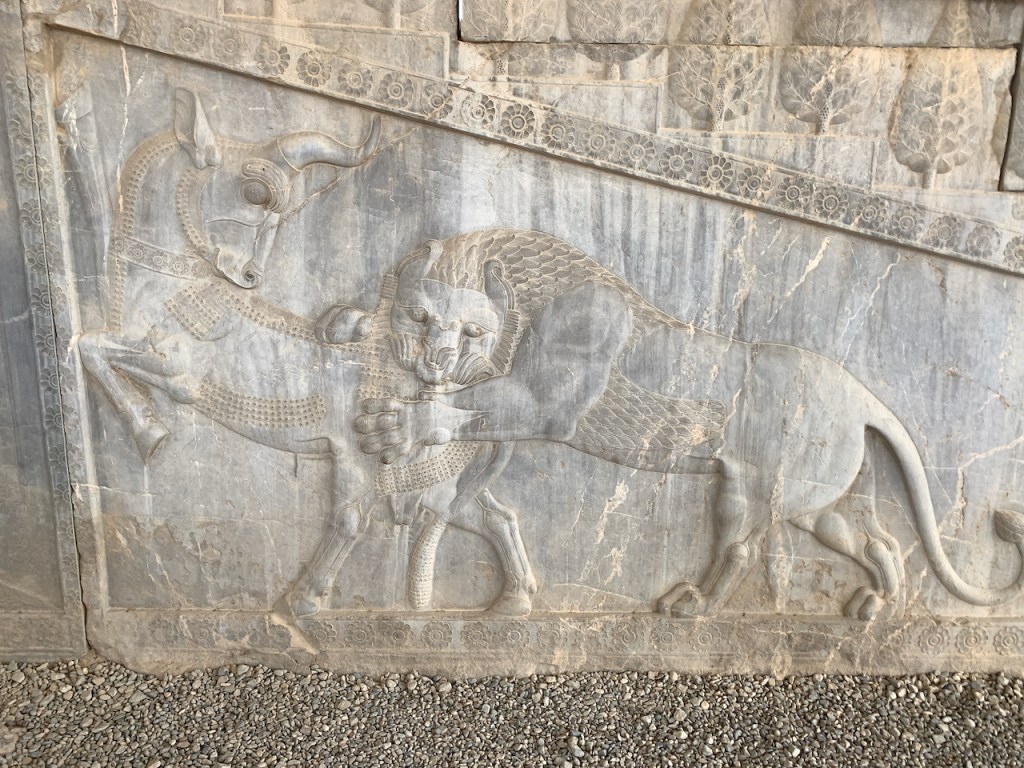
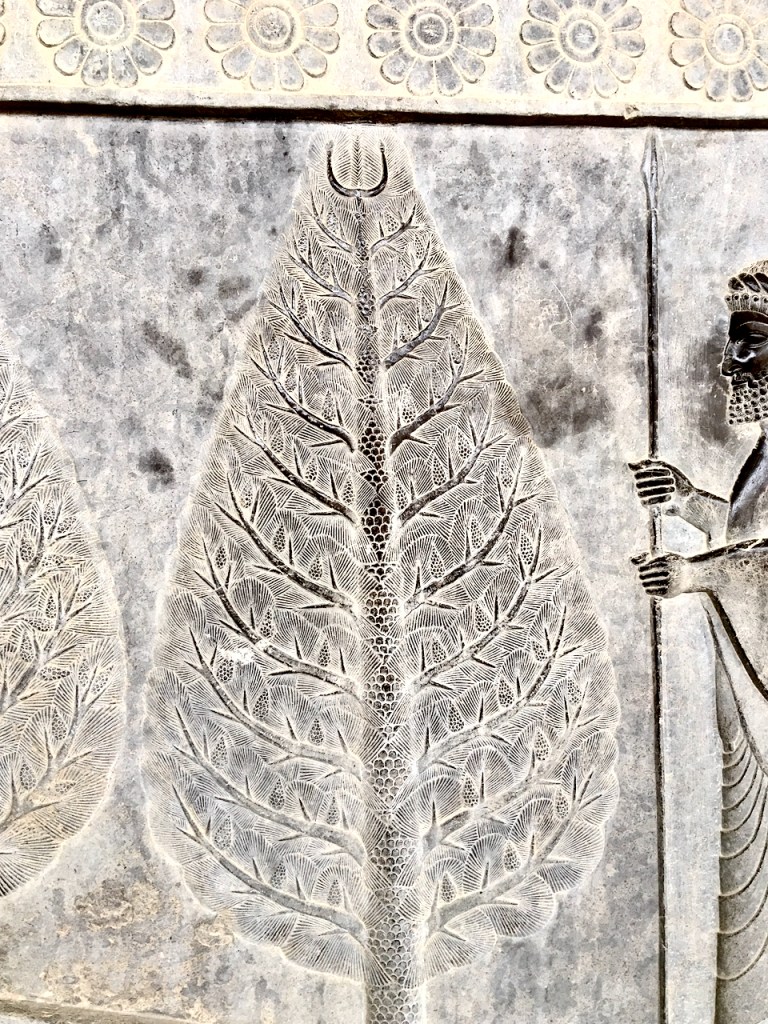
Stylized cypress tree, perhaps the origin of the paisley design
Because of the weather, we did not walk around the entire site, but did pay the additional entrance fee to visit the museum. Its construction incorporated some of the original masonry of the building thought to be the Harem of Xerxes. Modern reconstruction of the columned courtyard helped give us the feel of what it would have been like to actually be inside a palace. Although the museum’s holdings are not extensive, we felt it was very much worth visiting just to get the feel of an ancient Persian building.
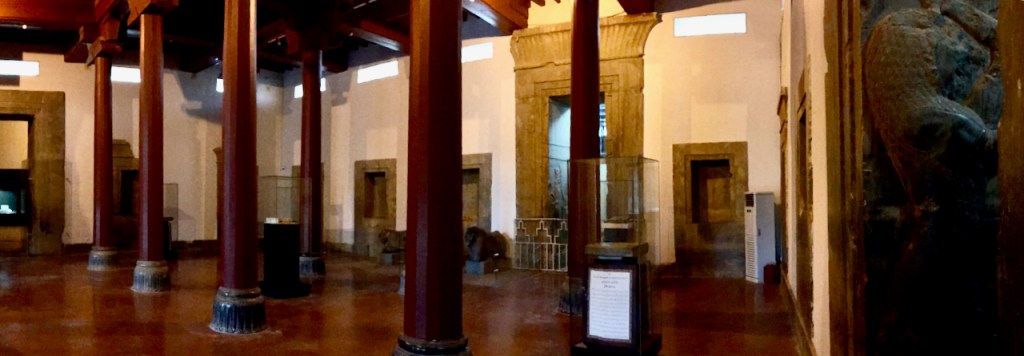
Reconstructed room at Persepolis Museum
On the hillside above the palace area there are two ancient tombs–probably belonging to Artaxerxes II and Artaxerxes III–but we decided not to brave the elements by visiting them. Instead we returned to the hotel and warmed up with some delicious hot chocolates.
We checked out of the hotel around midday and went just a few miles down the road to a place called Naqsh-e Rostam. This is the site of several royal tombs of the Achaemenid period. After his many years of studying ancient history, Tim was quite awed to see the tombs of Darius and Xerxes, who had launched the Persian wars chronicled by the Greek historian Herodotus. The royal tombs are well above ground level; Vahid said that scaffolds had been used to lift the bodies of the kings and the items they were buried with into the tombs.
In the panoramic photo below, going from left to right, the tombs belong to Darius II (ruled 423-404 BCE) , Artaxerxes I (465-424-BCE), Darius I “the Great” (522-486 BCE) and Xerxes I (486-465 BCE). The blank rock face between the last two tombs is the unfinished tomb of Darius III (336-330 BCE). Click on the image below for a larger version.
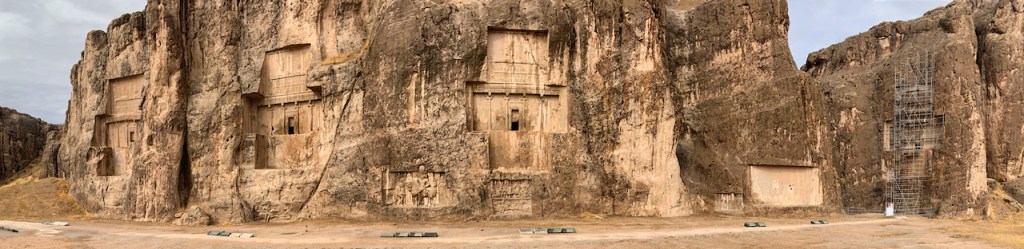
It is hard to overstate the importance of these Great Kings of Persia to all of world history. In the first two decades of the 5th century BCE, Persian armies under first Darius I and then Xerxes I invaded Greece twice and were defeated both times. It is possible to surmise that, if the Persians had won either of these wars, Western History would have been unimaginably different: no classical Greece as we know it; perhaps no Roman Empire or Christianity. This was a major turning point in world history.
In 330 BCE Alexander the Great turned the tables on the Persians and invaded their territory. While on his way to conquer much of what we call the Middle East and Central Asia. he defeated the army of Darius III, whose unfinished tomb is in the photo above.
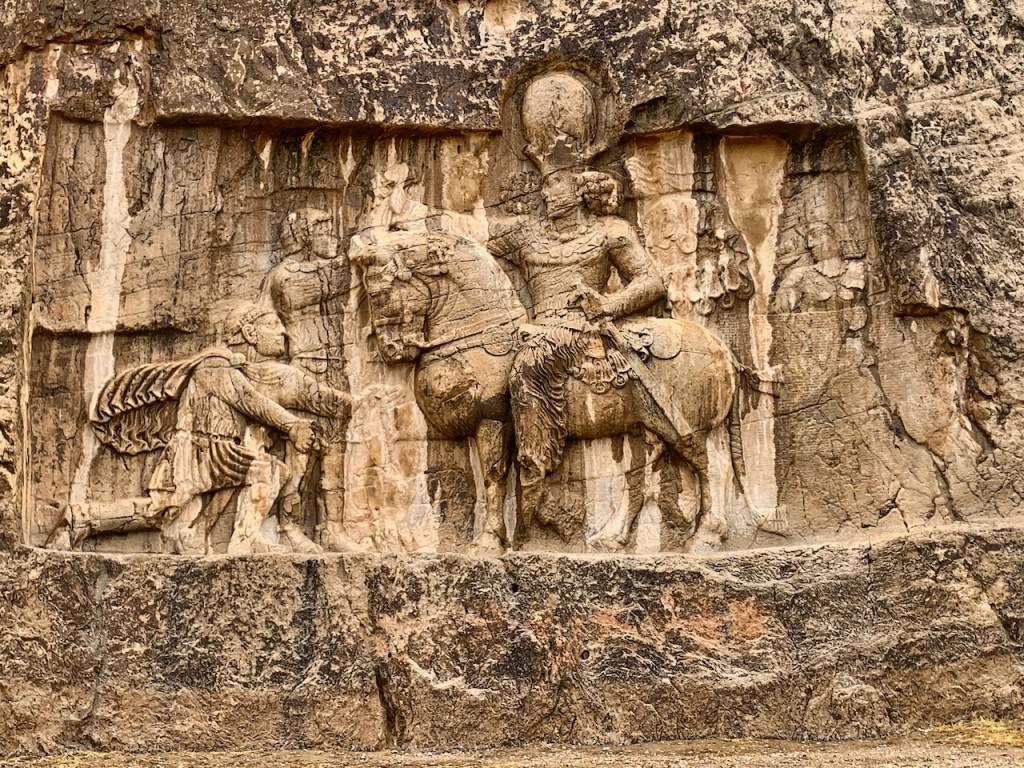
Shapur I and the captive Roman emperor Valerian
Down at ground level, below the entrances to the tombs, are several massive relief sculptures from the Sasanian dynasty, which were carved some 700-800 years after the royal tombs were constructed. The most impressive of these is a relief of King Shapur I who defeated a Roman army led by Emperor Valerian in 257 CE at the Battle of Edessa in upper Mesopotamia. Shapur is shown with Emperor Valerian as his captive, the one and only time that any Roman emperor was captured by a foreign enemy.
Shortly before we left the site, Suzan got out of the bus to take a closer look at two flocks of sheep which were being herded just beyond the fence around the archaeological site. Each sheep had a bell around its neck, which made a lovely sound.
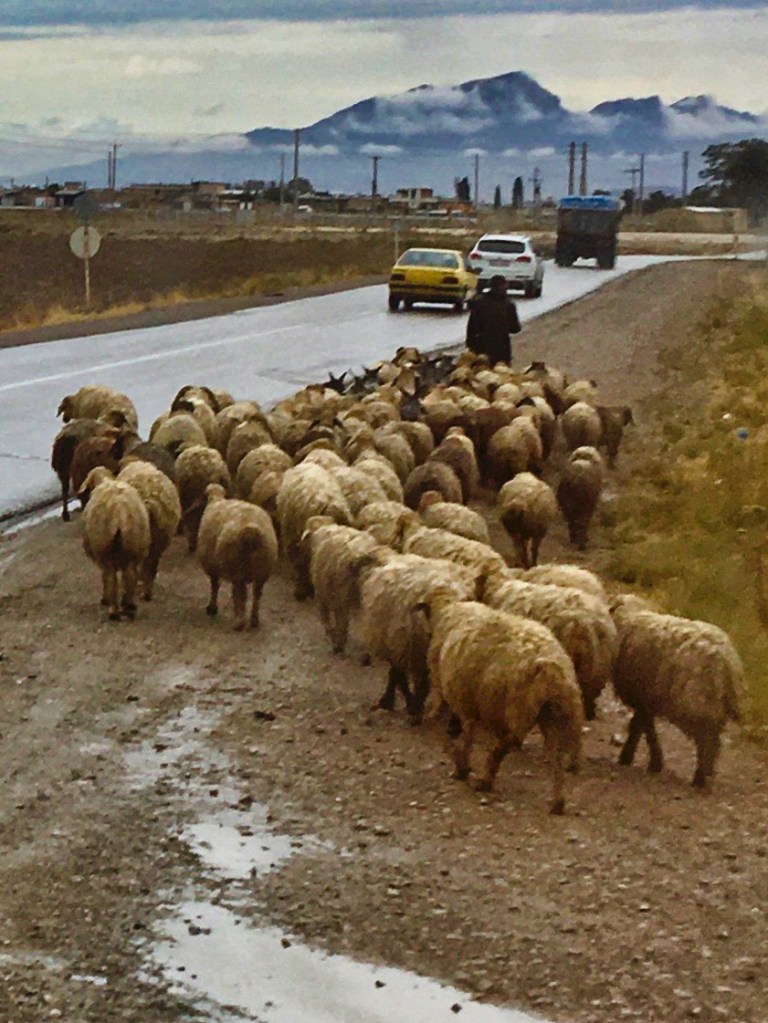
Sheep on the road 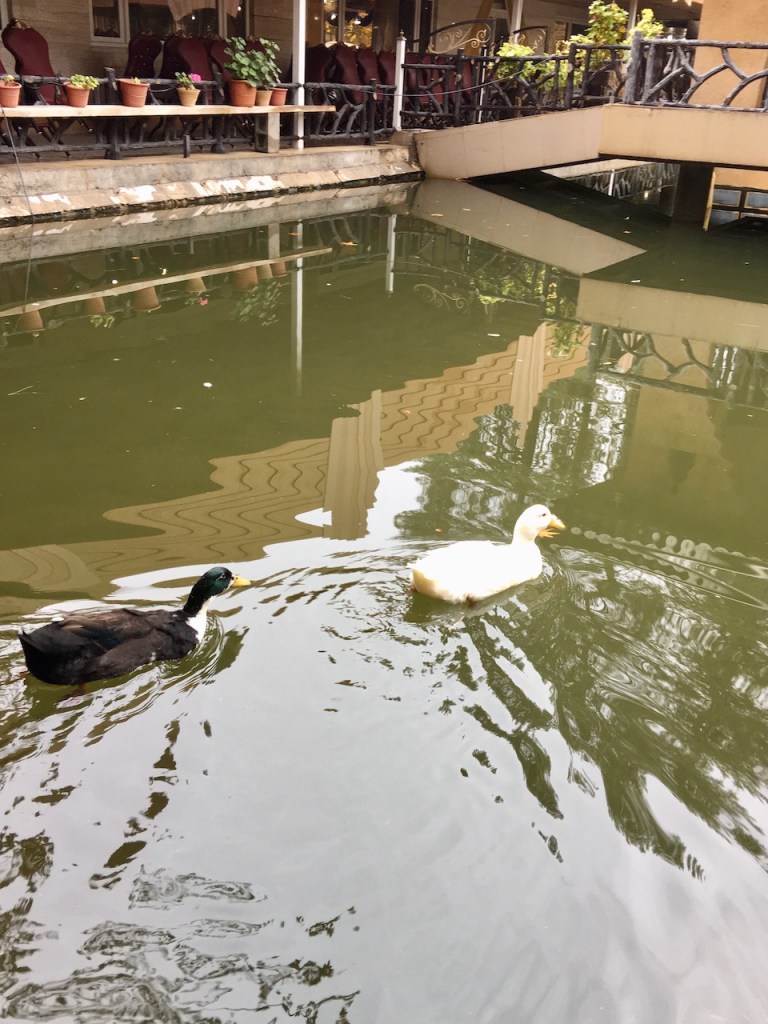
Ducks on the pond
We stopped for lunch, buffet-style, just a few miles from Naqsh-e Rostam. The restaurant included a large pond with several ducks. Water features like this are common in public places in Iran.
After lunch we drove on into Shiraz, which happens to be the hometown of both our guide Vahid and our driver Mori. Our hotel in Shiraz was the Karim Khan Hotel, which was named after one of the rulers of the Zand dynasty in the 18th century. It is a beautifully designed and decorated facility.
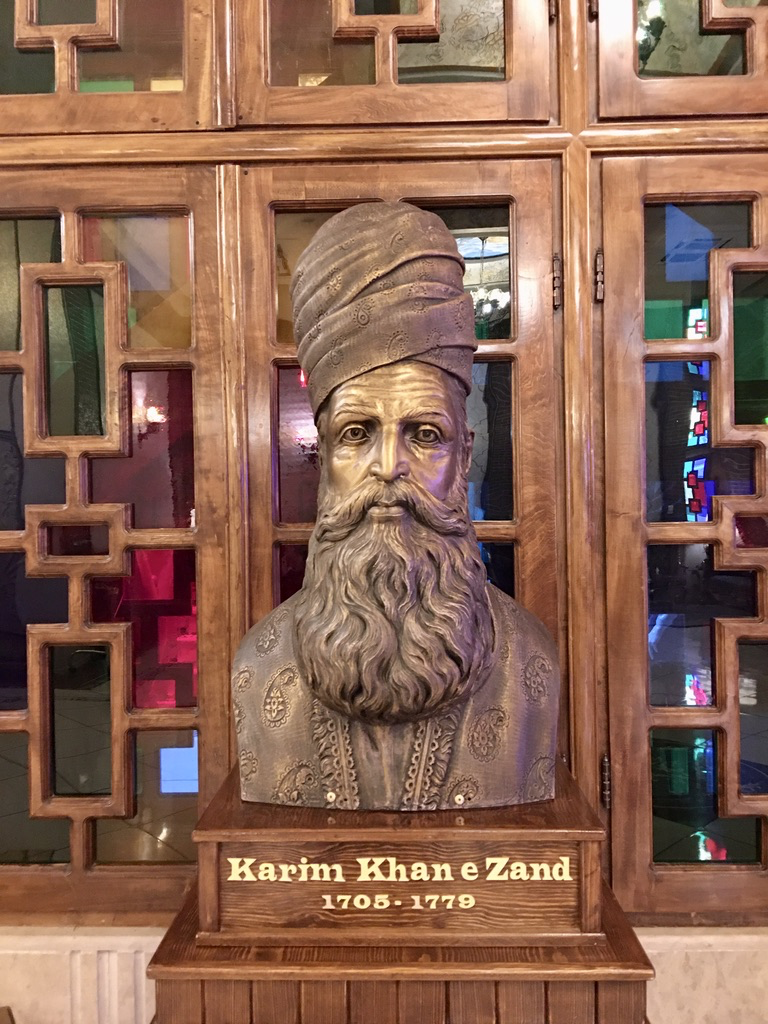
Bust in the hotel lobby 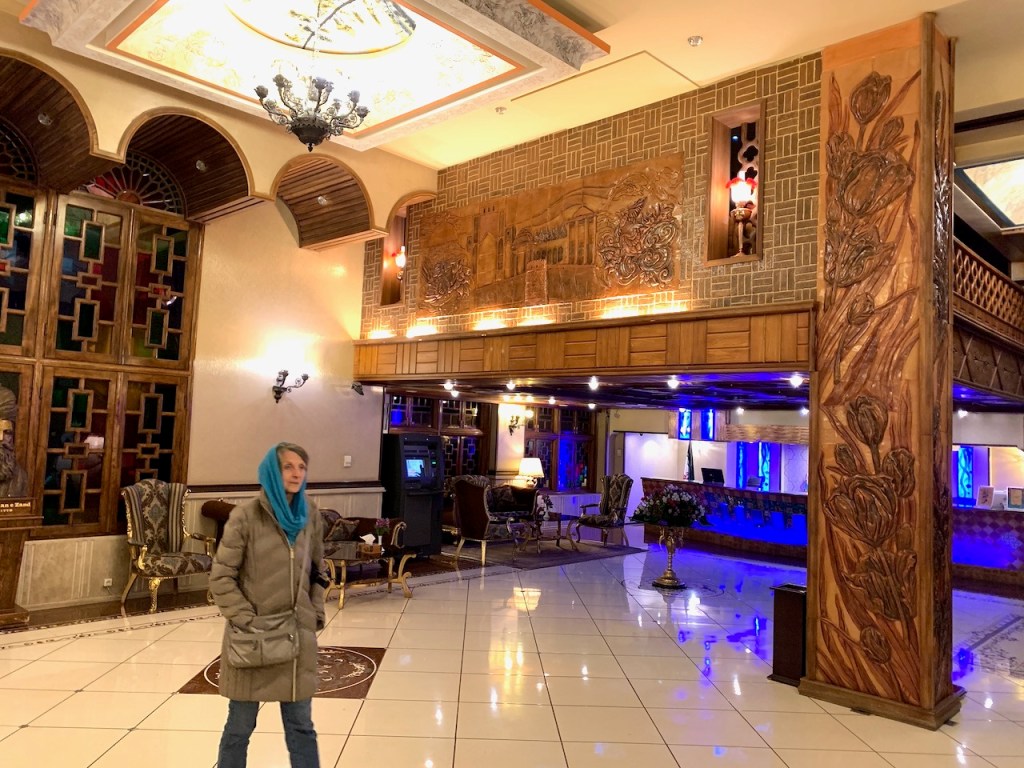
Lobby of Karim Khan Hotel 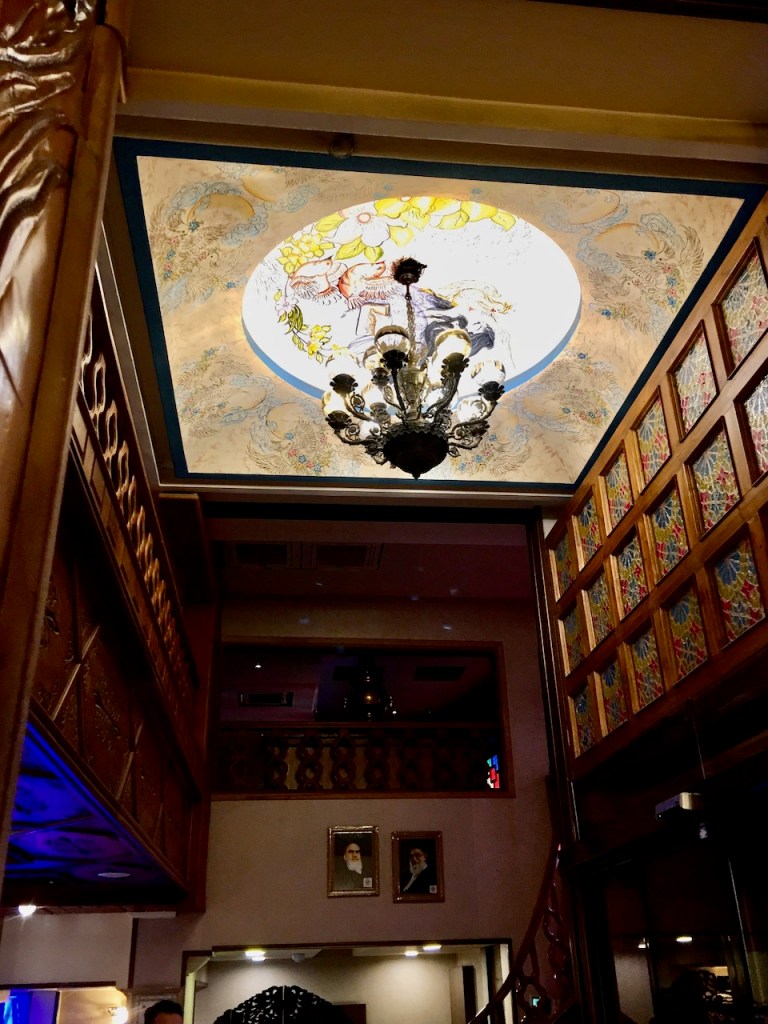
Beautiful ceiling decoration 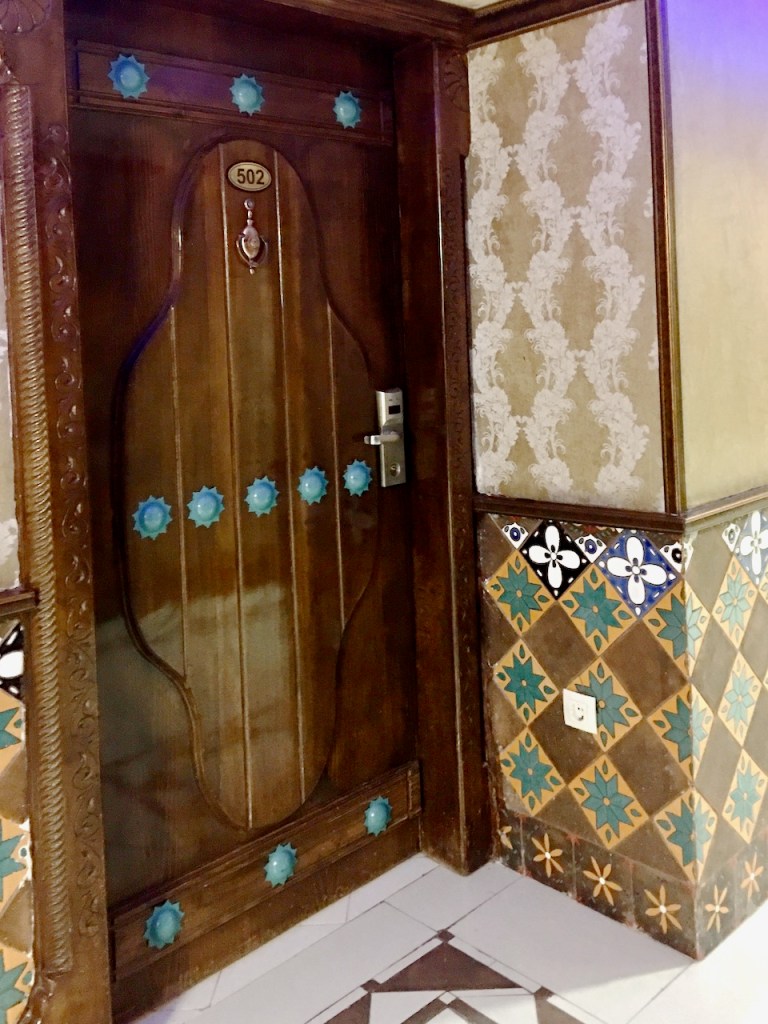
Even the doorways are beautiful 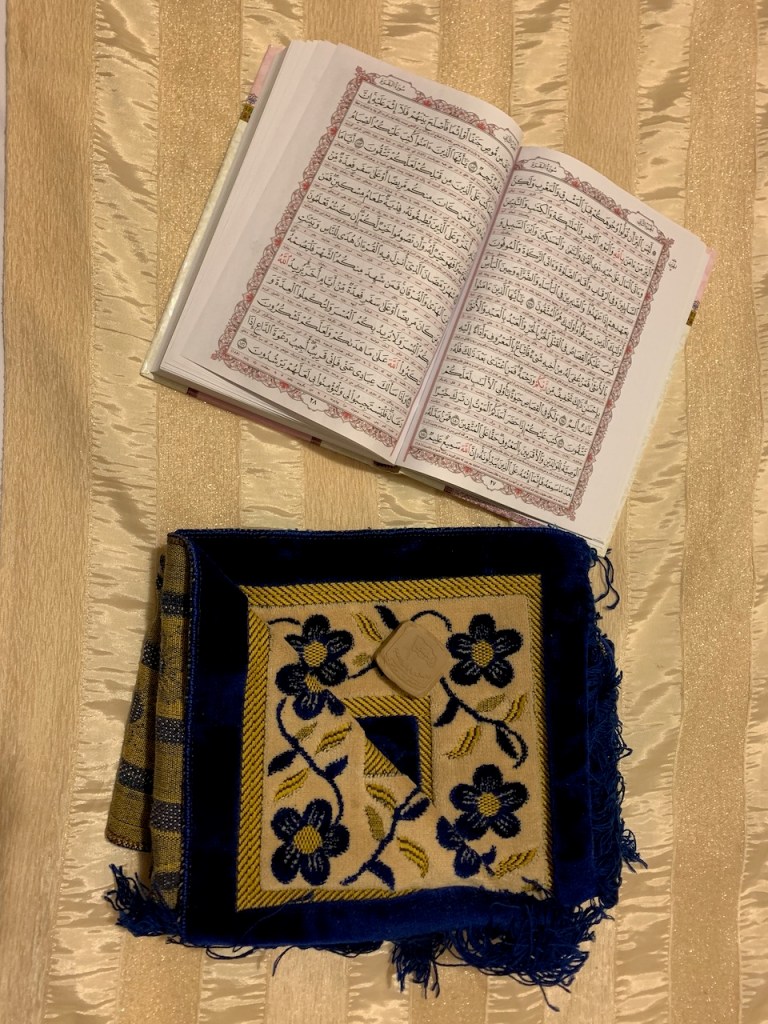
Each room has a Quran, a prayer rug… 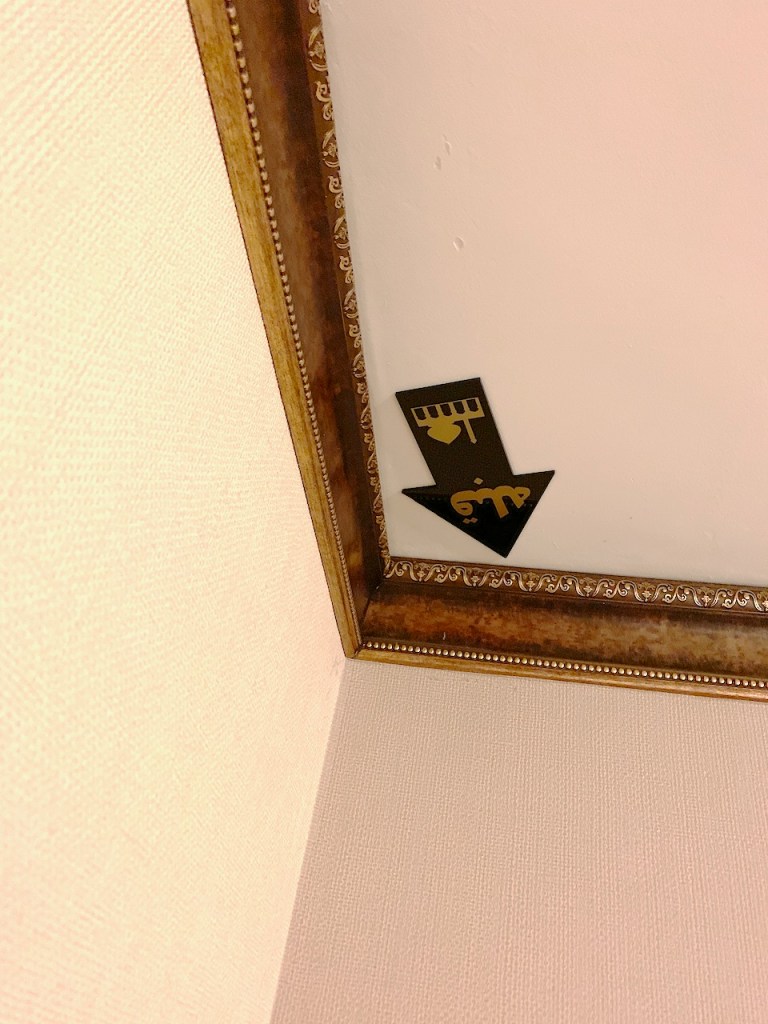
…and an arrow pointing to Mecca
After getting settled in our rooms, around 3:45 pm we set out for the Vakil Bazaar. We actually had some shopping in mind, especially some kind of container in which to transport the clock we’d bought in Esfahan. With Vahid’s invaluable guidance eventually paid all of $5 for a lovely soft-sided bag which was just the right size. It was also small enough, as it happened, to go as carry-on luggage on our flights home.
Some scenes from Vakil Bazaar:
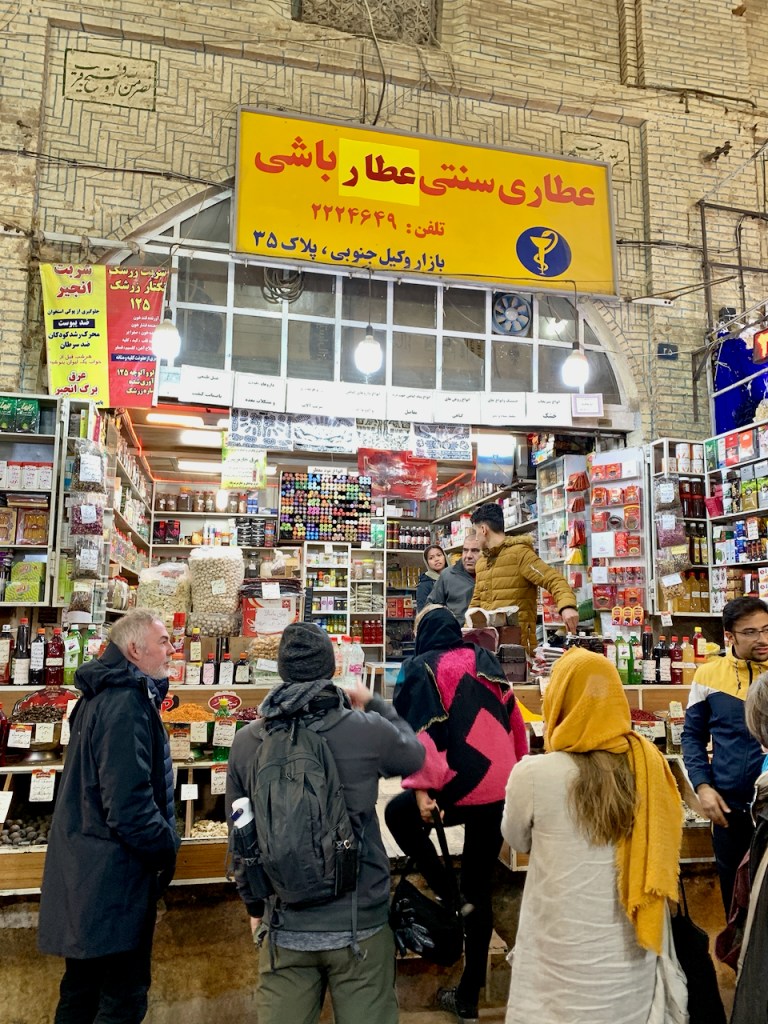
Several of us bought saffron here 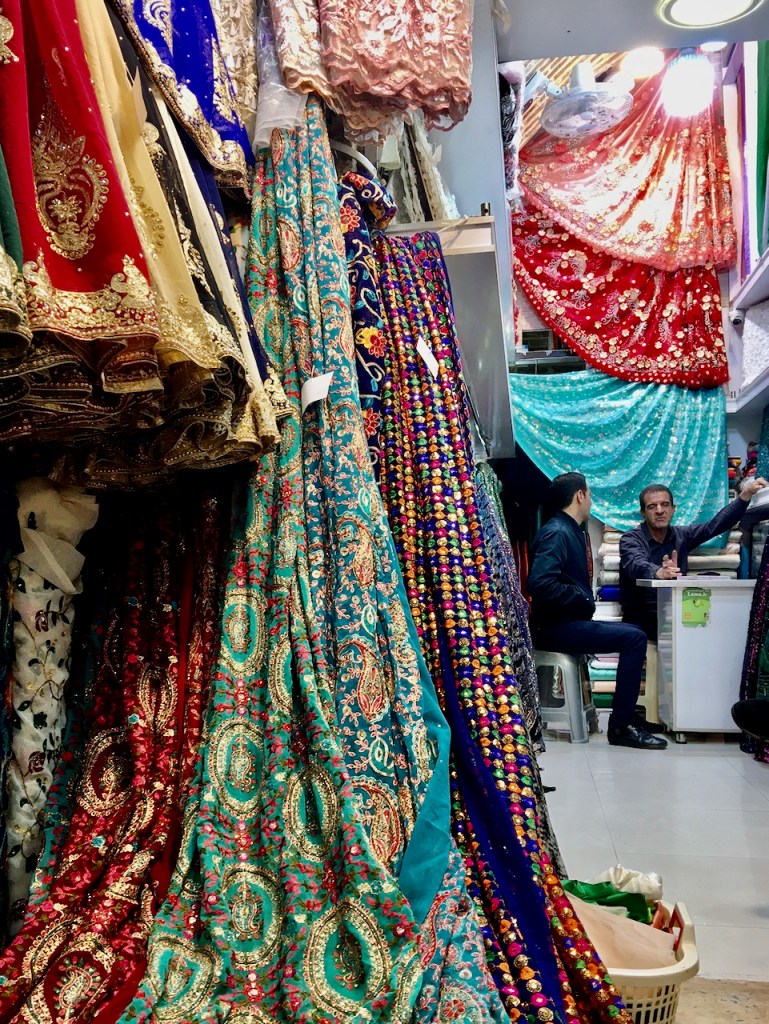
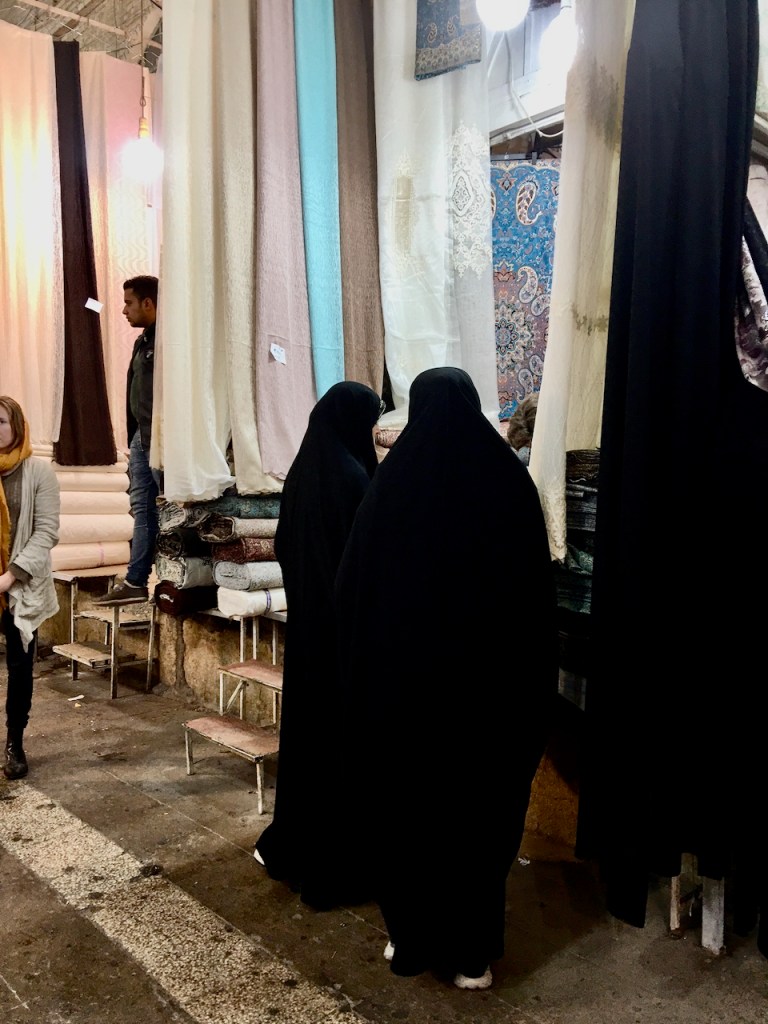
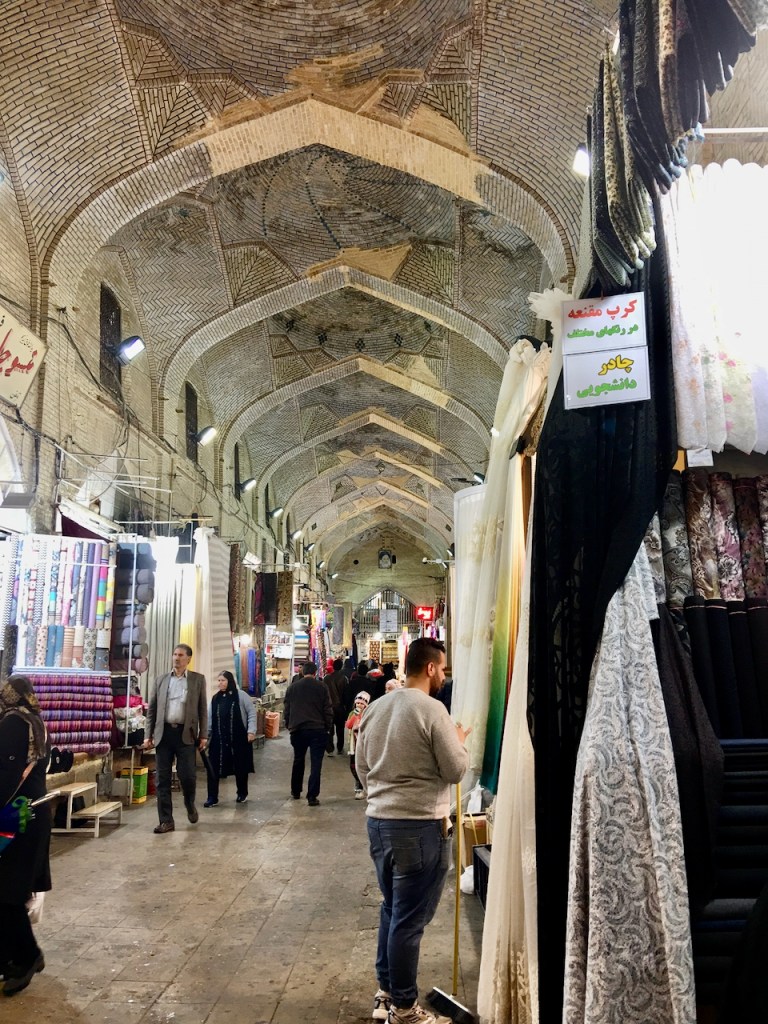
In the bazaar we also sampled the unusual but delicious combination of carrot juice with ice cream. We found two small items to take back to friends. When we were done shopping, Vahid found a taxi for us and we went back to the hotel to rest until dinner.
Around 7pm six of us (plus Nate, Philippa, and Vahid) walked to Cafe Ferdowsi on Ferdowsi Street, which Nate said is his favorite cafe in all of Iran. (Ferdowsi was a famous Persian poet who lived about a thousand years ago and whose epic poem The Shahnameh is the longest poem ever written by a single author.) Like everything else we ate in Iran, the meal here tasted very good.
 Trip to Iran - November 2019